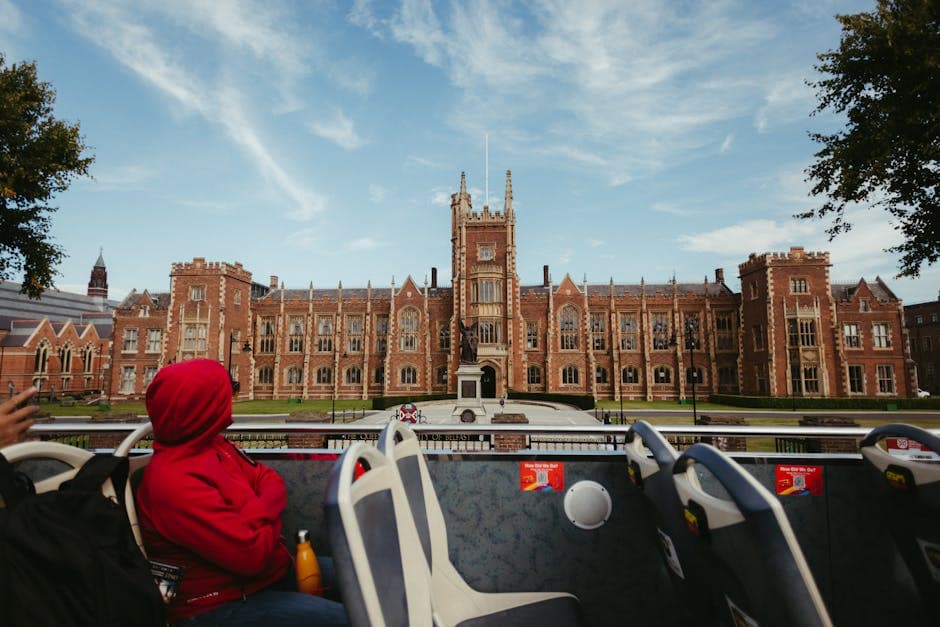
The Global Classroom: Why Indian Students Are Looking Abroad

The decision to study abroad is more than an academic choice; it's a life-altering investment in your future. For students in India, the motivations are clear: access to world-class universities, specialized programs not widely available at home, cutting-edge research opportunities, and the promise of international career mobility. A foreign degree is often seen as a gateway to a global network and a competitive edge in an increasingly interconnected job market.
However, the landscape of international education is vast and complex. Navigating the differences in tuition fees, admission requirements, visa regulations, and post-study work opportunities can be daunting. While traditional destinations remain popular, rising costs and competitive entry barriers are prompting a search for newer, high-value alternatives. This guide provides a rigorous comparison of the best places to study abroad, equipping you with the data needed to make an informed decision.
The Traditional Titans: Analyzing the UK, US, Canada, and Australia
For decades, a handful of English-speaking countries have dominated the study abroad market for Indian students. Their appeal is rooted in prestigious institutions, extensive program offerings, and large, established diaspora communities.
United States: The US boasts the highest number of top-ranked universities globally, according to the QS World University Rankings. Institutions like MIT, Stanford, and the Ivy League offer unparalleled research facilities and academic prestige. The flexible curriculum (majors/minors) is a major draw, as are the networking opportunities in hubs like Silicon Valley and New York. However, it is also the most expensive option, with a complex and often lengthy application process requiring standardized tests like the SAT or GRE.
United Kingdom: With a rich academic history, UK universities like Oxford, Cambridge, and Imperial College London are synonymous with excellence. Master's degrees are typically one year, offering a faster, more focused route to qualification. The Graduate Route visa allows students to stay and work for two years post-graduation (three for PhDs), a significant incentive. The main challenge is the high cost of living, particularly in London.
Canada: Known for its welcoming immigration policies and high quality of life, Canada has become a top choice. Universities like the University of Toronto and McGill offer excellent education at a slightly lower cost than the US. The Post-Graduation Work Permit (PGWP) program provides a clear pathway to permanent residency, which is a primary driver for many Indian students and their families.
Australia: Similar to Canada, Australia offers a high standard of living and strong universities, particularly in fields like engineering, healthcare, and business. The Temporary Graduate visa (subclass 485) allows graduates to stay and work for two to four years. However, recent changes in visa policies and rising costs have made it a more challenging destination.
A Closer Look at Costs: Tuition and Living Expenses Compared

Financial planning is the most critical aspect of the study abroad journey. The total cost can vary dramatically between countries, and understanding the breakdown is essential. The figures below are annual estimates for an international undergraduate student, intended for comparison. Actual costs will depend on the specific university, program, and city.
| Country | Average Annual Tuition (Undergraduate) | Estimated Annual Living Costs | Total Estimated Annual Cost |
|---|---|---|---|
| USA | $25,000 - $55,000 | $15,000 - $22,000 | $40,000 - $77,000 |
| UK | $20,000 - $40,000 | $15,000 - $20,000 | $35,000 - $60,000 |
| Canada | $20,000 - $35,000 | $12,000 - $18,000 | $32,000 - $53,000 |
| Australia | $22,000 - $45,000 | $15,000 - $21,000 | $37,000 - $66,000 |
| Germany (Public Uni) | $0 - $3,500 (Semester Fee) | $11,000 - $14,000 | $11,000 - $17,500 |
| North Cyprus | $3,000 - $8,500 | $4,000 - $6,000 | $7,000 - $14,500 |
As the table illustrates, the financial commitment for traditional destinations is substantial. This data, consistent with findings from sources like the OECD Education at a Glance report, highlights the significant cost barrier that leads many families to take out substantial education loans. This is where emerging destinations like North Cyprus present a compelling financial advantage, offering quality education for a fraction of the price.
Navigating the Visa Maze: Post-Study Work and Immigration Pathways
For many Indian students, the ability to work after graduation is as important as the degree itself. It provides an opportunity to gain international work experience, recoup some of the educational investment, and potentially begin a long-term career abroad. Visa policies are therefore a crucial factor in choosing a destination.
Post-Study Work Options at a Glance
USA: Optional Practical Training (OPT)
Allows up to 12 months of work experience. STEM graduates can apply for a 24-month extension. Transitioning to a long-term work visa (like H-1B) is highly competitive and lottery-based.
UK: Graduate Route
Grants a 2-year post-study work visa (3 years for PhDs) to graduates of UK universities. This visa is unsponsored, meaning you don't need a job offer to apply, offering flexibility in your job search.
Canada: Post-Graduation Work Permit (PGWP)
The duration of the PGWP depends on the length of your study program, up to a maximum of 3 years. It is a key component of the points-based Express Entry system for permanent residency.
Australia: Temporary Graduate Visa (subclass 485)
Allows graduates to live, study, and work in Australia temporarily. The length varies from 18 months to 4 years depending on the qualification. Recent policy changes have tightened eligibility.
These pathways, while attractive, are subject to changing government policies and economic conditions. The application processes are rigorous, requiring proof of funds, health checks, and English proficiency tests. Our student visa guidance team can help you understand the specific requirements for your chosen destination.
Scholarships and Funding: Easing the Financial Burden for Indian Students

While the costs are high, numerous scholarships are available to help meritorious Indian students fund their education. These can range from small tuition fee waivers to fully-funded awards covering all expenses. Competition is fierce, and applications often need to be submitted almost a year in advance.
Some of the most prestigious scholarships include:
- Chevening Scholarships (UK): Government-funded awards for master's degree students with leadership potential.
- Fulbright-Nehru Fellowships (USA): For master's and PhD students, facilitating cultural and academic exchange.
- DAAD Scholarships (Germany): Extensive scholarships for students at all degree levels, promoting German higher education.
- Erasmus Mundus Joint Masters Scholarships (Europe): EU-funded scholarships for students participating in joint master's programs across multiple European countries.
Beyond these, most universities offer their own institutional scholarships based on academic merit or financial need. However, it's important to have a realistic perspective; full scholarships are rare. Most students combine partial scholarships, family funds, and education loans. This is another area where the lower baseline cost of education in North Cyprus provides a significant advantage, as even a partial scholarship makes a much larger proportional impact. You can explore our scholarship support services to see what's available.
Introducing North Cyprus: The Smart, Affordable Alternative
For Indian students seeking a high-quality European education without the prohibitive cost and complex admission hurdles, North Cyprus is a compelling and rapidly growing destination. Located in the Mediterranean, it offers a safe, multicultural environment with English-taught programs across a wide range of disciplines.
The primary advantages are accessibility and affordability. Universities like Eastern Mediterranean University (EMU)—ranked among the top 501-600 universities globally by Times Higher Education—and Near East University (NEU) offer internationally respected programs in Engineering, Pharmacy, Business, and more. Tuition fees typically range from €2,800 to €8,000 per year, and almost all international students receive a 50% scholarship as standard, with opportunities for higher awards.
Crucially, the admission process is straightforward and transparent. Unlike universities in the US, UK, or Canada, North Cyprus universities do not require standardized entrance exams like the SAT, GRE, GMAT, or external English proficiency tests like IELTS or TOEFL for admission. Admission is based directly on your secondary school transcripts (and bachelor's transcripts for postgraduate studies). This removes a significant barrier of stress, time, and expense from the application process, allowing you to focus on preparing your core academic documents.
Degree Recognition and Global Mobility: The North Cyprus Advantage

A common question from students considering an emerging destination is about the value and recognition of the degree. This is where North Cyprus universities offer a unique and powerful combination of accreditations that ensures global mobility for graduates.
First, degrees from North Cyprus universities are fully compliant with the Bologna Process, the framework that standardizes higher education across 49 European countries. Upon graduation, students receive the EU Diploma Supplement, often called the "blue diploma." This document provides a standardized description of your degree, making it easily understood and accepted by universities and employers across the European Higher Education Area (EHEA). This is a critical asset for students who wish to pursue a Master's or PhD in Germany, Sweden, Italy, or elsewhere in Europe.
Second, all universities in North Cyprus are accredited by the Council of Higher Education of Turkey (YÖK). This gives a degree from a university like Cyprus International University (CIU) the same academic standing as a degree from a state university in Istanbul or Ankara. For graduates looking to work or study further in Turkey, a major regional economy, this recognition is invaluable. Together, these dual accreditations provide a powerful passport for your career, opening doors in Europe, Turkey, and beyond.
Life Beyond Lectures: Cultural Fit and Community for Indian Students
Moving to a new country is also a cultural journey. While the large Indian diaspora in the UK or Canada can be comforting, North Cyprus offers a different kind of welcoming environment. Its universities are incredibly diverse, with students from over 100 countries. This creates a truly international atmosphere where you will build a global network of friends and future colleagues.
For students from India, the transition is often smooth. English is the medium of instruction and is widely spoken on campuses and in cities. There is a significant and growing community of students from South Asia, including India, Pakistan, and Bangladesh. This means access to familiar foods, cultural celebrations like Diwali and Holi organized by student societies, and a supportive network of peers who understand your background. The island is known for its low crime rate and friendly locals, providing a safe and comfortable setting for students living away from home for the first time.
Your Application Checklist: Steps to Study Abroad
Regardless of your chosen destination, the application process requires careful planning and organization. Here are the typical steps involved, with notes on how the process for North Cyprus differs.
Key Steps in Your Application Journey
- 1
Research and Shortlisting
Identify countries, universities, and specific programs that match your academic profile and career goals. Use university websites, rankings, and platforms like this one to browse all programs and compare your options.
Prepare for Standardized Tests
For US/UK/Canada etc.: This involves months of preparation for exams like IELTS, TOEFL, SAT, GRE, or GMAT. Book your test dates well in advance. For North Cyprus: This step is not required for admission, saving you significant time and money.
- 3
Compile Application Documents
Gather your academic transcripts, degree certificates, passport copy, statement of purpose (SOP), letters of recommendation (LORs), and CV. For North Cyprus, the core requirements are your transcripts and passport.
- 4
Submit Applications and Await Offers
Complete the online application forms for your shortlisted universities. Pay attention to deadlines, which are often 8-12 months before the start date for Western universities. North Cyprus offers more flexibility with Fall and Spring intakes.
Finance and Visa Application
Once you receive an acceptance letter, you will need to arrange your finances, pay the initial deposit, and begin the student visa application process. This involves extensive documentation of your financial capacity. For visa information, you can consult official sources like the TRNC Ministry of Foreign Affairs.
Frequently Asked Questions
Ready to Explore Your Options in North Cyprus?
Find a globally recognized degree at a price you can afford. Our advisors can match you with the right university and program based on your academic background and career goals.