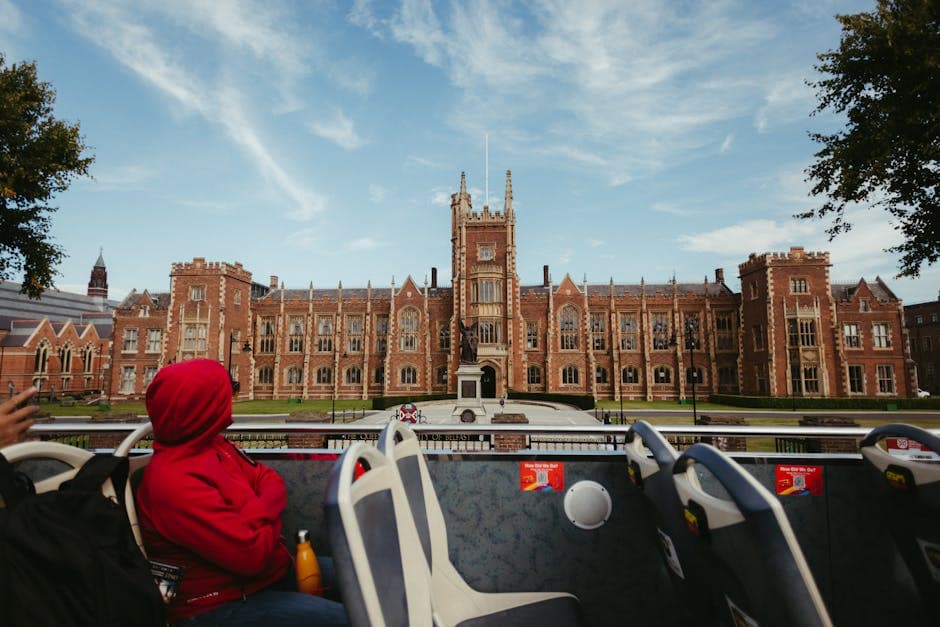
The Global Student Dilemma: Where Should You Study Abroad?

The decision to study abroad is one of the most significant investments you'll make in your future. It's not just about choosing a university; it's about choosing a country, a culture, and a new way of life. For many, the default options seem to be the UK, USA, Canada, or Australia. These destinations have a long-standing reputation, but they also come with intense competition, complex visa procedures, and staggering costs. The search for the best places to study abroad has led students to explore destinations that offer a powerful combination of academic excellence, affordability, and global recognition.
This guide moves beyond the traditional choices to provide a framework for making an informed decision. We will analyze the critical factors that should influence your choice, from tuition fees and degree recognition to admission policies and quality of life. We will then place North Cyprus under this microscope, demonstrating how it has emerged as a compelling and strategic destination for international students seeking a world-class education without the prohibitive barriers often found elsewhere.
Key Factors for Choosing Your Study Abroad Destination
Selecting the right country is a multi-faceted process. Before you fall in love with a specific campus or program, evaluate potential destinations against these core criteria. A balanced assessment will ensure your chosen location aligns with your academic, financial, and personal goals.
Your Study Abroad Decision Checklist
Academic Quality & Degree Recognition
Is the qualification you earn recognized internationally? Look for national accreditation bodies and participation in international frameworks like the Bologna Process. This is non-negotiable for future master's studies or global employment.
Tuition Fees & Cost of Living
The total cost extends far beyond tuition. Analyze accommodation, food, transportation, and healthcare expenses. An affordable tuition fee can be quickly offset by a high cost of living in a major Western city.
Admission Policies & Requirements
How complex is the application process? Does it require standardized tests like the SAT, GRE, IELTS, or TOEFL? Open, transcript-based admission systems reduce stress and barriers for qualified students.
Visa & Immigration Procedures
The difficulty of securing a student visa can vary dramatically. Research the requirements, processing times, and financial proof needed. A streamlined, post-arrival visa process is a significant advantage.
Safety & Quality of Life
Your well-being is paramount. Investigate crime rates, political stability, and the general environment. A safe, welcoming country with a good climate and a vibrant culture enhances the overall student experience.
Career Prospects & Post-Study Opportunities
Consider the potential for internships and part-time work during your studies. Furthermore, how does the degree position you for a career back home or in a third country? The international portability of your degree is key.
A Comparative Look: North Cyprus vs. Traditional Destinations

When we apply the factors above, the value proposition of North Cyprus becomes clear. While destinations like the UK or Canada offer excellent education, they present significant financial and logistical hurdles. North Cyprus provides a strategic alternative, balancing quality with accessibility. Let's compare the raw numbers.
| Factor | North Cyprus | United Kingdom | USA (Public) | Canada |
|---|---|---|---|---|
| Avg. Annual Tuition (Undergraduate) | €3,000 - €8,000 | £15,000 - £28,000 | $25,000 - $40,000 | C$20,000 - C$40,000 |
| Avg. Monthly Living Costs | €400 - €700 | £1,000 - £1,500 | $1,500 - $2,500 | C$1,200 - C$2,000 |
| Standardized Test Requirement (for admission) | None | Often IELTS/TOEFL | Often SAT/ACT/TOEFL | Often IELTS/TOEFL |
| Visa Process Complexity | Low (Post-arrival) | High (Pre-departure) | High (Pre-departure) | High (Pre-departure) |
The data illustrates a stark contrast. An entire year of tuition and living expenses in North Cyprus can often be less than a single year's tuition alone in the US or UK. This financial accessibility, combined with a simpler admission and visa process, removes the primary barriers that prevent many talented students from pursuing an international education. This allows students and their families to invest in education without incurring crippling debt, a crucial factor in today's global economy.
Academic Recognition: The North Cyprus Advantage
Affordability is attractive, but it means nothing without academic credibility. This is where North Cyprus universities have built a powerful and unique foundation of international recognition. Degrees are not just locally accredited; they are embedded in two of the most significant higher education frameworks in the region: the European Higher Education Area (EHEA) and the Turkish system.
Firstly, all major North Cyprus universities issue their diplomas with the EU Diploma Supplement. This document is a key component of the Bologna Process, an agreement between 49 countries to ensure comparability in the standards and quality of higher-education qualifications. The Diploma Supplement makes your degree transparent and easily readable for European universities and employers, facilitating applications for master's and PhD programs across Europe. This 'blue diploma' signals that your education meets a recognized European standard.
Secondly, every university in North Cyprus is fully accredited by Turkey's Council of Higher Education (YÖK). This gives a degree from, for example, Eastern Mediterranean University (EMU) or Near East University (NEU), the same academic standing as a degree from a state university in Istanbul or Ankara. For students who may wish to live, work, or pursue further studies in Turkey, this is a direct and invaluable benefit. Locally, all institutions are also supervised and accredited by the TRNC's own quality assurance body, the Higher Education Planning, Evaluation, Accreditation and Coordination Council (YÖDAK), ensuring standards are maintained on the ground.
This dual-anchor system—European compatibility via the Diploma Supplement and Turkish equivalence via YÖK—creates exceptional international mobility. Graduates are well-positioned for opportunities not just in Europe and Turkey, but globally, particularly in regulated professions like engineering, architecture, and health sciences.
Top Universities in North Cyprus for International Students

North Cyprus is home to a growing number of dynamic universities, each with distinct strengths. The vast majority of programs are taught entirely in English, catering to a diverse international student body from over 140 countries. Here are some of the leading institutions:
Eastern Mediterranean University (EMU): As the oldest and only public university in the TRNC, EMU boasts a strong international reputation. It is consistently featured in global rankings such as the Times Higher Education World University Rankings. With over 100 undergraduate and graduate programs, its strengths lie in Engineering, Architecture, Business, and Tourism.
Near East University (NEU): Located in the capital, Nicosia, NEU is one of the largest universities in the region. It is renowned for its Faculty of Medicine, Dentistry, and Pharmacy, complete with a state-of-the-art teaching hospital. Its sprawling campus also includes a supercomputer, multiple museums, and extensive research facilities, making it a hub for innovation.
Cyprus International University (CIU): Also in Nicosia, Cyprus International University (CIU) is known for its modern, integrated campus and a strong focus on sustainability. CIU offers a wide range of programs and has invested heavily in its infrastructure, including advanced engineering labs and art studios. It offers generous scholarship support, making it a very popular choice.
Girne American University (GAU): Situated in the picturesque coastal city of Kyrenia, Girne American University (GAU) was the first private university in Cyprus. It has a distinctly American-style curriculum and a highly international faculty and student body, with strong programs in Business, International Relations, and Pilotage.
Streamlined Admissions: A Path Without Barriers
One of the most significant advantages of choosing to study abroad in North Cyprus is the remarkably open and straightforward admissions process. Unlike universities in many other countries, North Cyprus institutions have removed the common barriers of standardized testing, making higher education accessible to all qualified students.
Crucially, North Cyprus universities do not require IELTS, TOEFL, SAT, ACT, GRE, or any other external standardized entrance exam for admission. The primary basis for an admission decision is your academic record. For undergraduate applicants, this is your high school transcript (e.g., WAEC, NECO, A-Levels, Baccalauréat). For postgraduate applicants, it is your bachelor's degree transcript. The process is simple: you submit your documents, and if you meet the program's minimum academic criteria, you receive an acceptance letter.
For students who do not already hold an English language qualification, the system is designed to be supportive, not exclusionary. Upon arrival at the university, you will take an in-house English Proficiency Exam. This is a placement test, not an admission hurdle. If you pass, you proceed directly to your faculty. If you do not pass, you are automatically enrolled in the university's English Preparatory School for one or two semesters. After successfully completing the prep program, you continue to your chosen degree course without needing to re-apply. This inclusive model ensures that every admitted student has the linguistic foundation needed for success.
Navigating the Visa Process: Simpler Than You Think

The student visa process for North Cyprus is another area where it stands out from more traditional destinations. While applying for a student visa to the UK, USA, or Schengen Area often involves a stressful, bureaucratic, and lengthy process at an embassy in your home country, the TRNC system is largely handled after you arrive.
The typical procedure is as follows:
- Receive Your Acceptance Letter: After your application is approved, the university issues a formal acceptance letter.
- Travel to North Cyprus: You travel to Ercan Airport (ECN) in North Cyprus, typically via Turkey. At immigration, you present your acceptance letter, passport, and proof of your first tuition payment to receive a temporary entry visa (usually valid for 30-90 days).
- Register at the University: Once on campus, you complete your official registration and pay the remaining fees.
- Apply for Student Residence Permit: With the university's assistance, you then apply online for your student residence permit. This involves a health check and submitting your documents to the local immigration office. The university's international office provides step-by-step guidance.
This post-arrival system significantly reduces the upfront stress and uncertainty associated with visa applications. For official information, students can refer to resources from the TRNC Ministry of Foreign Affairs. This user-friendly approach is a key reason why students find the transition to studying in North Cyprus to be a smooth one.
Student Life in the Mediterranean: More Than Just a Degree
Your time as an international student is defined as much by your life outside the classroom as inside it. North Cyprus offers a unique blend of a relaxed Mediterranean lifestyle, cultural diversity, and modern amenities, creating an ideal environment for students.
Accommodation: Most universities offer a wide range of on-campus student accommodations, from standard shared rooms to private studio apartments, with costs typically ranging from €1,500 to €4,000 per academic year. These dormitories are secure, fully furnished, and include utilities, providing a convenient option for first-year students. Off-campus private rentals are also plentiful and affordable, especially when shared with other students.
Food and Culture: The island's cuisine is a delicious fusion of Turkish and Mediterranean influences. On-campus cafeterias offer subsidized meals, and cities like Nicosia, Kyrenia, and Famagusta are filled with affordable cafes and restaurants. The presence of over 90,000 international students creates a multicultural atmosphere where you can make friends from all over the world.
Transportation and Activities: Universities operate extensive free shuttle bus services connecting their campuses to key points in the city. When not studying, students can explore ancient castles, relax on pristine beaches, or participate in the hundreds of student clubs and sports teams available on campus. The island's compact size makes it easy to explore its natural beauty and historical sites on weekends. For future planning, universities also offer robust career counselling services to help students prepare for the job market.
Frequently Asked Questions
Find Your Place in North Cyprus
Ready to explore one of the best places to study abroad? Let our advisors match you with the right university and program based on your academic goals and budget.