Study Pilotage in North Cyprus
No IELTS or entrance exam required — admission is based on your transcript.

Navigating the Skies: Understanding Pilot Training Durations

The dream of becoming a pilot is shared by many, but the path to the cockpit involves a significant commitment of time, effort, and resources. Prospective students frequently ask, "How many years to study pilot?" The answer is not singular; it depends heavily on the type of license pursued, the training pathway chosen, and the regulatory environment of the country where training occurs. From obtaining a Private Pilot License (PPL) to achieving the coveted Airline Transport Pilot License (ATPL), each stage builds upon the last, demanding specific flight hours, theoretical knowledge, and practical examinations.
For instance, an aspiring pilot aiming for an Airline Transport Pilot License (ATPL) through an integrated program typically completes their training within 2 to 3 years. However, if this training is embedded within a broader university degree, such as an undergraduate program in Aviation Management or Professional Pilotage, the total duration can extend to 4 to 6 years. This comprehensive approach provides not only the flight skills but also a strong academic foundation in aviation principles, management, and safety protocols, enhancing long-term career prospects in a dynamic industry.
What Does 'Study Pilot' Involve? Decoding Aviation Qualifications
To truly understand how many years to study pilot, it's essential to differentiate between the various pilot licenses and ratings. Each qualification unlocks different privileges and responsibilities in the aviation sector. The journey typically begins with foundational licenses and progresses to more advanced certifications required for commercial operations.
Key Pilot Licenses and Their Initial Focus
Private Pilot License (PPL)
This is the entry-level license, allowing you to fly for recreational purposes, carrying passengers but not for hire. It typically requires a minimum of 40-60 flight hours, including solo time and cross-country flights. The theoretical component covers aerodynamics, meteorology, navigation, and air law.
Instrument Rating (IR)
An add-on to the PPL or CPL, the IR permits pilots to fly under Instrument Flight Rules (IFR), relying solely on cockpit instruments. This is crucial for flying in adverse weather conditions or at night. It involves significant simulator and actual instrument flight time.
Commercial Pilot License (CPL)
The CPL is the minimum requirement to be paid for flying. It demands more advanced flight skills, a deeper understanding of aviation theory, and a higher number of flight hours (typically 150-250 hours, depending on the regulatory body like EASA or FAA). This license opens doors to roles such as flight instructor, charter pilot, or aerial survey pilot.
Multi-Engine Rating (MEP)
This rating allows a pilot to fly aircraft with more than one engine, a common requirement for commercial operations. It's often integrated into CPL or ATPL training.
Airline Transport Pilot License (ATPL)
The highest level of pilot certification, the ATPL is required to act as a pilot-in-command (captain) of an aircraft in commercial air transport. It necessitates extensive flight experience (1,500 hours minimum for a 'frozen' ATPL, which becomes 'unfrozen' after reaching the required hours and passing final checks), advanced theoretical knowledge, and rigorous practical exams.
Beyond these core licenses, pilots often pursue additional ratings like Type Ratings (specific to an aircraft model, e.g., Boeing 737 or Airbus A320) and Flight Instructor Ratings (FI) to expand their career options. Each rating adds to the overall training duration and specialized skill set.
How Many Years to Complete Different Pilot Licenses?
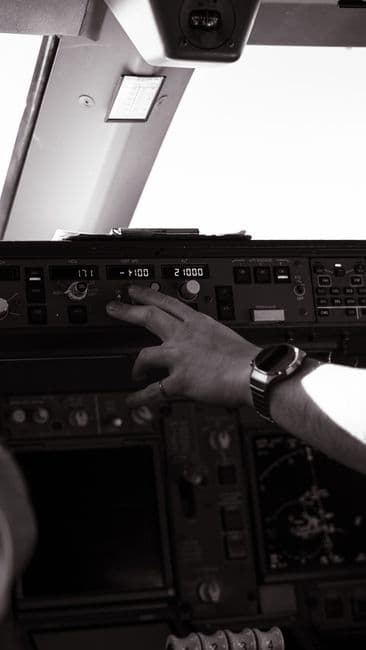
The duration to achieve these licenses varies based on whether you choose a modular or integrated training pathway. Understanding these pathways is key to answering the question of how many years to study pilot.
Modular Training Pathway
Modular training allows students to obtain each license and rating separately, often at their own pace. This flexibility can be appealing for those who need to work concurrently or spread out the financial investment. However, it typically takes longer overall.
- PPL: 3-6 months (part-time)
- IR: 3-6 months
- CPL: 6-12 months
- ATPL Theory: 6-12 months (often done concurrently with CPL/IR flight training)
- Multi-Engine Rating: 1-2 months
The total time for a modular pathway to a 'frozen' ATPL can range from 3 to 5 years, depending on the student's dedication and financial resources. The flight hours required for ATPL are accumulated after the initial training, during employment as a First Officer.
Integrated Training Pathway
Integrated programs are full-time, structured courses that take students from zero flight experience to a 'frozen' ATPL. These programs are intensive and highly regulated, often by bodies like the European Union Aviation Safety Agency (EASA) or the Federal Aviation Administration (FAA). The focus is on rapid progression and a consistent learning environment.
- Zero to 'Frozen' ATPL: 18-24 months.
While faster, integrated programs are typically more expensive upfront and demand a full-time commitment. Many universities, including those in North Cyprus, offer integrated flight training as part of a 4-year bachelor's degree, extending the total duration but providing a comprehensive academic foundation.
Pilot Training Duration in North Cyprus Universities

North Cyprus has emerged as an attractive destination for aspiring international pilots due to its modern aviation programs and competitive tuition fees. Universities like Cyprus International University (CIU), Near East University (NEU), and University of Kyrenia (UK) offer comprehensive pilot training programs that integrate academic study with practical flight instruction.
Typically, a Bachelor's degree in Professional Pilotage or Aviation Management with Flight Training at these institutions spans 4 academic years. This duration includes both theoretical coursework and the practical flight hours required for a Commercial Pilot License (CPL) with Instrument Rating (IR) and Multi-Engine Rating (MEP), leading to a 'frozen' ATPL. For instance, CIU's Pilotage (Flight Training) program is a 4-year Bachelor of Science degree, designed to equip graduates with the necessary qualifications to become airline pilots. Similarly, NEU offers a Bachelor of Science in Pilotage, also a 4-year program.
The curriculum at these universities is structured to meet international aviation standards, often incorporating EASA or ICAO (International Civil Aviation Organization) requirements. Students complete ground school instruction on campus, covering subjects like aviation law, aircraft systems, navigation, and human factors, followed by extensive flight training at affiliated flight schools. This integrated approach ensures that graduates possess both the academic depth and practical skills demanded by airlines worldwide.
Global Recognition: Employability for North Cyprus Pilot Graduates
A significant advantage of pursuing pilot training in North Cyprus universities is the robust international recognition of their degrees. All degrees issued by North Cyprus universities, including those in pilotage, come with the EU Diploma Supplement. This crucial document ensures that your qualification is transparent, readable, and accepted across the European Higher Education Area. For pilot graduates, this means their academic credentials are readily understood by European aviation authorities and potential employers, facilitating further study or employment within Europe.
Furthermore, these degrees are accredited by Turkey's Council of Higher Education (YÖK), granting them academic equivalence to degrees from Turkish state universities. This dual accreditation provides strong international mobility, opening realistic career and further-study opportunities not only across Europe but also in Turkey and globally. For a field like aviation, where cross-border professional standards are common, this recognition is invaluable. Graduates are well-positioned for roles as First Officers, flight instructors, or in aviation management, with their qualifications being credible and evidenced by internationally recognized standards.
Admission Pathway to Pilot Programs in North Cyprus
One of the most appealing aspects of studying pilot programs in North Cyprus is the straightforward and accessible admissions policy. Unlike many other international destinations, North Cyprus universities maintain one of the most open admissions policies in the region, making the dream of becoming a pilot more attainable for a diverse range of international students.
North Cyprus universities do not require external English-language proficiency exams such as IELTS, TOEFL, Pearson PTE, Cambridge English, or Duolingo English Test for admission. Similarly, there are no requirements for standardized entrance exams like SAT, ACT, GRE, or GMAT. Universities also do not administer a competitive entrance exam at the application stage for pilot programs or any other field.
Admission is primarily based on the applicant's secondary-school transcript. Prospective students submit their academic documents, and if they meet the GPA expectations (which can be higher for competitive programs like pilotage, medicine, or dentistry), they receive an offer of admission. Applicants who do not already hold an English-language qualification (such as a high school diploma from an English-medium institution) will take an in-house English Proficiency Exam upon arrival at the university. This is a placement test, not an admission gate. If a student does not pass this in-house exam, they will enter the university's English Preparatory School for typically one academic year before starting their degree program, without needing to re-apply or face a second admission decision.
Typical Documents Required for Pilot Program Admission
Secondary School Diploma/Certificate
Proof of completion of secondary education.
Academic Transcripts
Official records of grades from secondary school. Higher GPA is generally expected for pilotage programs.
Passport Copy
A clear photocopy of your valid passport's data page.
Passport-sized Photographs
Usually 2-4 recent photographs.
Medical Certificate (Class 1)
While not always required for initial university admission, a valid Class 1 Medical Certificate is mandatory before commencing flight training. It's advisable to obtain this early.
For detailed, program-specific requirements and to start your application, it's always best to consult the university's official admissions page or contact our advisors.
Investing in Your Future: Tuition and Scholarships for Pilot Studies
The cost of pilot training is a significant consideration for many aspiring aviators. In North Cyprus, tuition fees for pilot programs are generally competitive compared to many Western countries, especially when factoring in the generous scholarship opportunities available to international students. These scholarships significantly reduce the financial burden, making pilot training more accessible.
For a 4-year Bachelor's degree in Professional Pilotage, annual tuition fees at North Cyprus universities typically range from $6,000 to $12,000 after scholarships. For instance, universities like Cyprus International University and Near East University offer substantial scholarships, often ranging from 50% to 75% for international students, applied directly to the tuition fees. This means that an advertised annual tuition of $15,000-$20,000 might be reduced to $5,000-$10,000 for eligible students. These scholarships are often merit-based or automatically applied upon admission, depending on the university and program.
It is important to note that flight training costs, which include aircraft rental, fuel, instructor fees, and examination fees, are often billed separately from academic tuition. While some university programs may integrate a portion of these costs, students should budget an additional $30,000 to $60,000 (or more, depending on flight hours and aircraft type) over the course of their training. Our scholarship support page provides more details on available financial aid.
Time to Become a Pilot: A Comparative Overview
To provide a broader perspective on how many years to study pilot, here's a comparison of typical training durations across different regions and pathways. This table focuses on achieving a Commercial Pilot License (CPL) with Instrument Rating (IR) and Multi-Engine Rating (MEP), leading to a 'frozen' ATPL.
| Region/Pathway | Typical Duration (Years) | Notes |
|---|---|---|
| North Cyprus (University Integrated) | 4 | Bachelor's degree + CPL/IR/MEP (frozen ATPL) |
| Europe (EASA Integrated ATPL) | 1.5 - 2.5 | Intensive flight school, no academic degree |
| Europe (EASA Modular ATPL) | 3 - 5 | Flexible, self-paced, can combine with work |
| USA (FAA Part 141/61) | 1.5 - 3 | Flight school, often faster if full-time |
| USA (University Degree + Flight Training) | 4 | Bachelor's degree + CPL/IR/MEP (often with R-ATPL eligibility) |
| Canada (Integrated ATPL) | 1.5 - 2 | Intensive program for CPL/IR/MEP |
| Australia (Integrated CPL/ATPL) | 1.5 - 2.5 | Flight school, often leading to 'frozen' ATPL |
It's crucial to remember that these are average durations. Individual progress, weather conditions, aircraft availability, and personal commitment can all influence the actual time taken to complete pilot training. The 4-year university pathway in North Cyprus provides a structured, academically rich environment that prepares students not just for flight but for a comprehensive career in aviation.
Frequently Asked Questions About Pilot Training
Frequently Asked Questions About Pilot Training
Aviation Programs at North Cyprus Universities
Hand-picked programs from North Cyprus universities you can apply to directly.

Ready to Launch Your Aviation Career?
North Cyprus offers world-class pilot training with international recognition and accessible admissions. Tell us your academic background and aspirations, and we'll help you find the perfect program.