Study Pilotage in North Cyprus
No IELTS or entrance exam required — admission is based on your transcript.

Charting Your Course: The Path to Becoming a Pilot
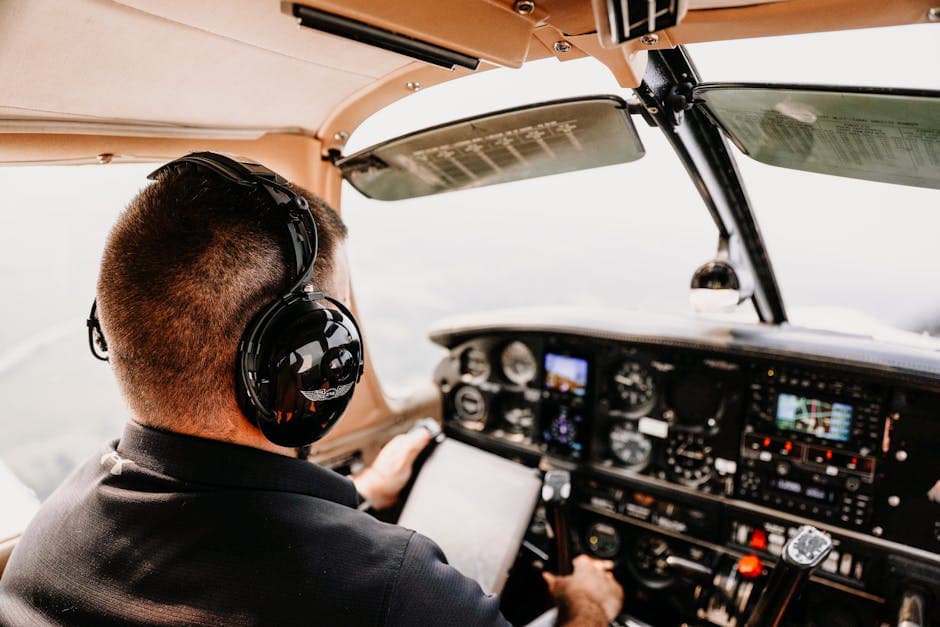
Embarking on a journey to become a pilot is a demanding yet incredibly rewarding endeavor. It requires dedication, significant financial investment, and a structured approach to training and certification. Understanding the definitive steps to become a pilot is crucial for anyone aspiring to command an aircraft, whether for commercial airlines, cargo operations, or private aviation.
This guide will demystify the process, detailing each stage from initial medical evaluations to obtaining your Airline Transport Pilot License (ATPL). We will also explore how academic qualifications, particularly those offered by North Cyprus universities in fields like Aviation Management or Aeronautical Engineering, can provide a strategic advantage in a competitive global industry.
Step 1: Medical Certification – The Foundation of Flight Readiness
Before you even step into a cockpit or ground school, the first and most critical step to become a pilot is obtaining a Class 1 Medical Certificate. This rigorous medical examination ensures that you meet the stringent health standards required for commercial pilots. Administered by an Aviation Medical Examiner (AME), the assessment covers various aspects of your physical and mental health.
Key components of the Class 1 Medical include vision tests (with or without correction), hearing tests, cardiovascular evaluations, neurological assessments, and a comprehensive review of your medical history. Maintaining this certificate is mandatory throughout your career, typically requiring annual renewals. Any condition that could impair your ability to safely operate an aircraft, such as certain heart conditions, severe vision impairments, or neurological disorders, could prevent you from obtaining or retaining this certificate.
Key Requirements for a Class 1 Medical Certificate
Vision
Distant visual acuity of 6/9 (20/30) or better in each eye separately, with or without correction, and 6/6 (20/20) binocularly. Normal color vision is also typically required.
Hearing
Ability to hear conversational voice at 2 meters (6 feet) with each ear separately, or pass an audiogram test within specified limits.
Cardiovascular Health
Normal electrocardiogram (ECG) and blood pressure within acceptable limits. History of certain cardiac conditions may require further assessment.
Neurological & Mental Health
No history of epilepsy, severe head injury, or mental health conditions that could affect flight safety. A thorough psychological evaluation may be part of the assessment.
Step 2: Ground School – Mastering Aviation Theory
With your medical certificate in hand, the next phase in the steps to become a pilot is ground school. This theoretical component of pilot training is essential for understanding the principles of flight, aircraft systems, meteorology, navigation, air law, and human performance. Ground school can be undertaken through a dedicated flight academy, a university aviation program, or even self-study with approved materials.
The curriculum is extensive, covering subjects mandated by regulatory bodies like the International Civil Aviation Organization (ICAO), which sets global standards for air navigation and safety. For instance, an ATPL ground school typically involves over 750 hours of instruction across 14 subjects, culminating in a series of written examinations. Universities such as Near East University (NEU) and University of Kyrenia (UK) integrate this theoretical knowledge into their Aviation Management and Pilotage degree programs, providing a structured academic environment for learning these complex subjects. This foundational knowledge is not just about passing exams; it's about developing a deep understanding that underpins safe and effective flight operations.
Step 3: Flight Training Hours and Licensing Stages

The practical application of ground school knowledge comes through flight training. This is where aspiring pilots accumulate the necessary flight hours and gain hands-on experience under the guidance of certified flight instructors. The process is typically broken down into several licensing stages, each building upon the previous one.
Private Pilot License (PPL)
The PPL is your first major milestone, allowing you to fly an aircraft for recreational purposes, carry passengers, but not for hire or reward. It typically requires a minimum of 45-60 flight hours, including solo flight time and cross-country navigation. The training involves basic maneuvers, takeoffs, landings, and emergency procedures. This license is the entry point for all subsequent pilot qualifications.
Commercial Pilot License (CPL)
To fly professionally and be paid for your services, you need a CPL. This license demands a higher level of proficiency and significantly more flight hours, typically around 200-250 hours, depending on the training route. CPL training focuses on advanced aircraft handling, complex navigation, and operating under more challenging conditions. It includes night flying, instrument flying basics, and multi-engine aircraft experience. Many North Cyprus universities, like the University of Kyrenia (UK), offer Bachelor of Science in Pilotage programs that integrate CPL training directly into the curriculum, preparing students for professional roles.
Instrument Rating (IR)
An Instrument Rating is crucial for commercial pilots, enabling them to fly solely by reference to instruments, without visual contact with the ground or horizon. This is essential for flying in adverse weather conditions or at night. The IR requires approximately 40-50 hours of instrument flight time, often conducted in simulators to maximize efficiency and safety. It is a prerequisite for most airline pilot positions.
Airline Transport Pilot License (ATPL)

The ATPL is the highest level of pilot certification, required to act as pilot-in-command of an aircraft in commercial air transport operations. While the theoretical exams for the ATPL can be taken after CPL, the 'frozen ATPL' becomes 'unfrozen' and fully valid once a pilot accumulates 1,500 flight hours, including specific requirements for multi-engine, cross-country, and night flying. This typically takes several years of flying experience after obtaining a CPL and IR.
Integrated vs. Modular Training Routes: How Long Does It Take to Become a Pilot?
Aspiring pilots have two primary pathways for flight training: integrated or modular. Each approach has distinct advantages in terms of time, cost, and flexibility, directly influencing how long it takes to become a pilot.
Integrated Training
An integrated course is a full-time, structured program offered by an Approved Training Organization (ATO) or a university with an aviation faculty. These programs combine ground school and flight training into a single, continuous curriculum, often leading directly to a 'frozen ATPL'.
Pros: Highly structured, fast-paced, strong peer support, often preferred by airlines for ab-initio (entry-level) pilots. Many university pilotage programs, such as those at Near East University (NEU) and University of Kyrenia (UK), follow an integrated model, blending academic study with flight training. This approach can take approximately 18-24 months to reach a 'frozen ATPL' stage.
Cons: Less flexible, higher upfront cost, requires full-time commitment. The cost for an integrated ATPL program in Europe can range from €80,000 to €120,000 (approximately $85,000-$130,000 USD), while in Turkey, it might be slightly lower, around $70,000-$100,000 USD. Global averages for such programs often fall within this range, depending on the school's reputation and location.
Modular Training

Modular training allows you to complete each license and rating (PPL, CPL, IR, ATPL theory) as separate courses, at your own pace, and often at different flight schools. This offers greater flexibility and allows students to work while training, spreading the financial burden over a longer period.
Pros: Highly flexible, allows for part-time study, can be more cost-effective if managed well, suitable for those with existing commitments. The total time taken can vary significantly, from 3-5 years or even longer, depending on how quickly each module is completed.
Cons: Requires strong self-discipline, less structured, may take longer to complete. The total cost for a modular ATPL can range from €60,000 to €90,000 (approximately $65,000-$98,000 USD) in Europe, potentially lower in other regions, but often requires careful planning to avoid hidden costs or inefficiencies.
| Training Route | Estimated Cost (USD) | Estimated Timeframe | Flexibility |
|---|---|---|---|
| Integrated ATPL (Europe) | $85,000 - $130,000 | 18-24 months | Low |
| Integrated ATPL (Turkey/NC) | $70,000 - $110,000 | 24-30 months | Low |
| Modular ATPL (Global) | $65,000 - $98,000 | 3-5+ years | High |
| University Pilotage Degree (NC) | $70,000 - $120,000 (incl. tuition) | 4 years (Bachelor's) | Medium |
The Role of University Degrees in Aviation Careers
While flight training is paramount, a university degree can significantly strengthen your resume and provide a robust academic foundation for a pilot career. Degrees in Aviation Management, Aeronautical Engineering, or even Bachelor of Science in Pilotage programs offer more than just flight hours; they provide a comprehensive understanding of the aviation industry's operational, technical, and business aspects.
For instance, an Aeronautical Engineering degree, offered by institutions like Eastern Mediterranean University (EMU) and Near East University (NEU), can provide deep insights into aircraft design, maintenance, and aerodynamics. This knowledge is invaluable for pilots, enhancing their understanding of the machines they operate and potentially opening doors to roles beyond the cockpit, such as flight operations management or aircraft safety analysis.
Similarly, an Aviation Management degree, available at universities like Girne American University (GAU) and Cyprus International University (CIU), equips students with business acumen, leadership skills, and an understanding of airline economics, airport operations, and aviation law. This holistic perspective is highly valued by airlines and can accelerate career progression into management positions later in a pilot's career.
North Cyprus as a Gateway to International Aviation Careers
North Cyprus universities offer a compelling proposition for international students aspiring to become pilots or pursue aviation-related careers. Institutions like Near East University (NEU) and University of Kyrenia (UK) have established faculties dedicated to aviation, offering Bachelor of Science degrees in Pilotage, Aviation Management, and Aeronautical Engineering.
A significant advantage of studying in North Cyprus is the international recognition of its degrees. All North Cyprus university degrees are issued with the EU Diploma Supplement, a document that ensures the qualification is transparent and readable across the European Higher Education Area. This means your academic credentials are readily understood and accepted by European universities for further study and by European employers for work, providing strong international mobility for graduates.
Furthermore, these degrees are accredited by Turkey's Council of Higher Education (YÖK), granting them academic equivalence to degrees from Turkish state universities. This dual accreditation by both the EU Diploma Supplement framework and YÖDAK (the TRNC Higher Education Planning, Evaluation, Accreditation and Coordination Council) ensures that a North Cyprus aviation degree provides credible, evidenced career and further-study opportunities not just across Europe and Turkey, but globally. This robust recognition is a key differentiator, enhancing employability in a field that inherently demands cross-border professional standards.
North Cyprus universities also boast a vibrant international student life, with students from over 100 countries. They offer competitive tuition fees and substantial scholarship opportunities, often covering 50% or even 75% of tuition, making quality aviation education accessible. For example, a Bachelor's degree in Aviation Management or Aeronautical Engineering might have annual tuition ranging from $6,000 to $9,000 after scholarships, depending on the university and program. These institutions provide state-of-the-art facilities, including flight simulators and dedicated aviation labs, to ensure students receive comprehensive training.
Practical Steps to Start Your Pilot Journey in North Cyprus
If you're ready to take the definitive steps to become a pilot, especially with the added advantage of a North Cyprus university degree, here's a practical guide:
Your Pilot Pathway in North Cyprus
Research Programs
Explore specific Bachelor of Science in Pilotage, Aviation Management, or Aeronautical Engineering programs offered by North Cyprus universities like Near East University, University of Kyrenia, Eastern Mediterranean University, and Girne American University. Review their curriculum, flight training partners (if applicable), and facilities.
Check Admission Requirements
North Cyprus universities have an open admissions policy. Admission is primarily based on your secondary-school transcript. Crucially, they do NOT require IELTS, TOEFL, SAT, GRE, GMAT, or any competitive entrance exam for admission. If you do not hold an English-language qualification, you will take an in-house English Proficiency Exam upon arrival. If you don't pass, you'll enter the university's English Preparatory School for one academic year before starting your degree.
Apply for Scholarships
Most North Cyprus universities offer significant scholarships to international students, typically 50% or 75% off tuition fees. Explore available scholarships on our scholarship support page and apply early to maximize your chances.
Submit Your Application
Gather your academic transcripts, passport copy, and any other required documents. You can start your application directly through our platform. Typical intake months are September/October for the Fall semester and February/March for the Spring semester.
Secure Your Student Visa
Once you receive your offer letter, begin the student visa application process. The TRNC Ministry of Foreign Affairs (mfa.gov.ct.tr) provides detailed guidance. Our student visa guidance page can also assist you.
Plan Your Arrival
Arrange your travel and accommodation. Universities often provide dormitory options or assistance with finding off-campus housing. Prepare for your in-house English Proficiency Exam upon arrival if you don't have an external English qualification.
Frequently Asked Questions About Becoming a Pilot
Aviation Programs at North Cyprus Universities
Hand-picked programs from North Cyprus universities you can apply to directly.

Ready to Launch Your Aviation Career?
Explore top-tier aviation and pilotage programs at North Cyprus universities. Start your application today and take the first step towards a global career in the skies.