Study Pilotage in North Cyprus
No IELTS or entrance exam required — admission is based on your transcript.

Embarking on an Aviation Career: Why Now?
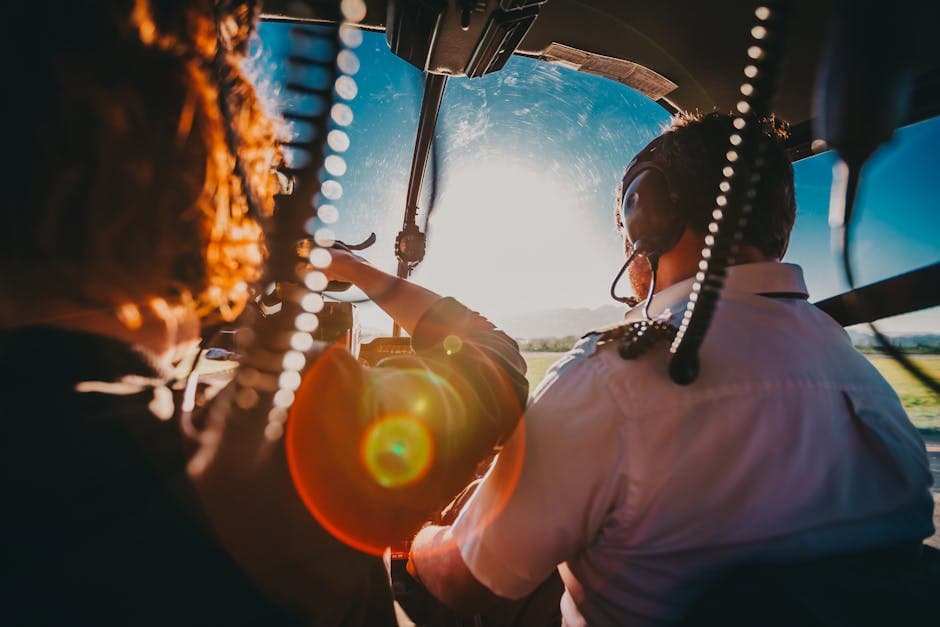
The allure of the cockpit, the thrill of flight, and the promise of a dynamic, well-compensated career draw countless aspiring aviators each year. However, the journey to becoming a commercial pilot is often perceived as complex, expensive, and lengthy. This guide demystifies the process, outlining the essential steps, detailing how long to become a pilot, and highlighting how North Cyprus offers a strategic and accessible pathway to achieve your aviation dreams.
With a robust international outlook and a commitment to high educational standards, North Cyprus universities are increasingly becoming a preferred destination for international students pursuing pilot training and aviation management degrees. The degrees awarded here are not only locally accredited but also hold significant international recognition, providing graduates with strong career mobility across Europe, Turkey, and beyond.
The Path to the Cockpit: How to Become a Pilot
Becoming a pilot involves a structured progression through various licenses and ratings, each building upon the last to equip you with the necessary skills and certifications. While the exact terminology and regulatory bodies may vary slightly by region (e.g., EASA in Europe, FAA in the USA, ICAO globally), the core steps remain consistent.
Key Steps to Becoming a Commercial Pilot
Private Pilot License (PPL)
This is your first step, allowing you to fly an aircraft for recreational purposes, typically in good weather conditions. It involves ground school for theoretical knowledge and flight training for practical skills, culminating in a written exam and a practical flight test.
Instrument Rating (IR)
An Instrument Rating permits you to fly under Instrument Flight Rules (IFR), meaning you can fly in various weather conditions, relying solely on your aircraft's instruments. This rating is crucial for commercial aviation, where flights often occur regardless of visibility.
Commercial Pilot License (CPL)
The CPL is the minimum qualification required to be paid for flying an aircraft. It involves more advanced flight training, building significant flight hours, and passing rigorous theoretical and practical examinations. This license allows you to work as a professional pilot, though often in roles like flight instruction, banner towing, or cargo transport initially.
Multi-Engine Rating (MER)
Most commercial aircraft have more than one engine. This rating qualifies you to fly multi-engine planes, which is essential for almost all airline and corporate pilot positions.
Airline Transport Pilot License (ATPL)
The ATPL is the highest level of aircraft pilot certification, required to act as pilot in command (captain) of an aircraft in scheduled air transport operations. While you can obtain a 'frozen ATPL' after completing a CPL and accumulating sufficient theoretical knowledge, the full ATPL requires significant flight experience (typically 1,500 hours) and further examinations.
Many aspiring pilots opt for an integrated aviation degree program offered by universities, which combines academic study with flight training. This approach streamlines the process, often leading to a 'frozen ATPL' upon graduation, alongside a bachelor's degree in Aviation or Aeronautical Sciences. This integrated approach is a popular choice at institutions like the University of Kyrenia in North Cyprus.
How Long to Become a Pilot: Training Timelines and Pathways
The question of how long to become a pilot depends significantly on the training pathway chosen and whether you pursue it full-time. There are generally two main routes: integrated programs and modular training.
Integrated Programs: A Faster, Structured Approach

Integrated programs are full-time, structured courses offered by flight academies or universities. These programs combine all the necessary licenses and ratings (PPL, IR, CPL, Multi-Engine, and ATPL theory) into one continuous curriculum. They are designed to take a student from zero flight experience to a 'frozen ATPL' holder in the shortest possible time.
Typically, an integrated program takes approximately 18 to 24 months to complete, not including any preparatory English language training if required. When combined with a university degree, such as a Bachelor of Science in Pilotage, the overall duration extends to 4 years. This approach is highly efficient, as it provides a comprehensive education alongside flight training, often resulting in a more holistic understanding of aviation principles and operations. Universities like the University of Kyrenia offer such integrated programs, leading to a Bachelor of Science in Professional Pilotage.
Modular Training: Flexibility and Self-Paced Learning
Modular training allows students to obtain each license and rating separately, often at their own pace. This route offers greater flexibility, enabling individuals to work while studying or spread the costs over a longer period. However, it typically takes longer to complete the entire sequence of licenses required for commercial aviation.
While individual modules can be completed in varying durations, achieving a 'frozen ATPL' through the modular route can take anywhere from 2 to 5 years, depending on the student's commitment and financial resources. This path is often chosen by those who already have some flight experience or prefer a less intensive schedule. Regardless of the chosen path, the ultimate goal is to meet the stringent standards set by international aviation authorities like the International Civil Aviation Organization (ICAO), whose standards form the basis for national aviation regulations worldwide.
Pilot Training Costs: Why North Cyprus Stands Out
Pilot training is a significant investment, with costs varying widely across different countries and institutions. In Western Europe or North America, an integrated ATPL program can range from €80,000 to €120,000 (approximately $85,000 to $130,000 USD) for flight training alone, often excluding living expenses and university tuition if pursuing a degree simultaneously. These figures can be a considerable barrier for many aspiring pilots.
North Cyprus presents a compelling alternative, offering high-quality aviation education and flight training at a significantly more affordable cost. Universities in North Cyprus, such as the University of Kyrenia, provide comprehensive pilotage programs that integrate flight training with academic degrees, often at a fraction of the cost found in other popular study-abroad destinations. This affordability extends not only to tuition but also to the general cost of living, making the overall investment more manageable for international students.
| University | Annual Tuition Range (USD) | Typical Scholarship Potential |
|---|---|---|
| University of Kyrenia (UK) | $6,000 - $12,000 | Up to 75% |
| Eastern Mediterranean University (EMU) | $7,000 - $13,000 | Up to 50% |
| Near East University (NEU) | $6,500 - $12,500 | Up to 75% |
| Girne American University (GAU) | $5,500 - $11,000 | Up to 60% |
Note: The tuition ranges above are general estimates for bachelor's programs. Aviation and pilotage programs, due to specialized flight training and equipment, typically fall towards the higher end of these ranges or may involve additional flight hour fees. Many North Cyprus universities offer substantial scholarships to international students, significantly reducing the net tuition fee. You can explore available scholarships at our scholarship support page.
Leading Aviation Programs in North Cyprus Universities

North Cyprus has developed a strong reputation for its higher education sector, with several universities offering specialized programs in aviation. These institutions are equipped with modern facilities and experienced faculty, providing a conducive environment for aspiring pilots and aviation professionals.
University of Kyrenia (UK): A Hub for Pilotage
The University of Kyrenia stands out as a premier institution for pilot training in North Cyprus. It offers a Bachelor of Science in Professional Pilotage, an integrated program designed to provide students with both academic knowledge and practical flight experience. The university operates its own flight school, providing hands-on training with modern aircraft and simulators. Their program is meticulously structured to meet international aviation standards, preparing graduates for global careers.
Eastern Mediterranean University (EMU): Aviation Management Expertise
Eastern Mediterranean University (EMU), a well-established institution, offers programs such as Aviation Management. While not a direct pilotage program, it provides a strong foundation for careers in airline operations, airport management, and aviation logistics. Graduates often pursue pilot training separately or combine their management degree with flight instruction, offering a versatile career path in the industry.
Near East University (NEU) and Girne American University (GAU)

Both Near East University (NEU) and Girne American University (GAU) also contribute to the aviation sector in North Cyprus by offering Aviation Management programs. These programs are designed to equip students with the business and operational knowledge required to excel in various non-flying roles within the aviation industry, from ground operations to air traffic control. While they may not directly offer pilot training, they provide a valuable entry point into the broader aviation ecosystem.
All these universities operate under the accreditation of the Higher Education Planning, Evaluation, Accreditation and Coordination Council (YÖDAK) of North Cyprus, ensuring quality and adherence to national educational standards. Furthermore, their degrees are recognized by YÖK (Council of Higher Education of Turkey), providing academic equivalence within Turkey, a significant regional aviation hub.
Admission to North Cyprus Aviation Programs
North Cyprus universities maintain one of the most open admissions policies in the region, making them highly accessible for international students. For aviation and pilotage programs, the primary admission requirement is your secondary-school transcript. For graduate programs, a bachelor's transcript is required. Unlike many other countries, North Cyprus universities do not require external English-language proficiency exams like IELTS, TOEFL, or Pearson PTE for admission.
Furthermore, there are no standardized entrance exams like the SAT, ACT, GRE, or GMAT required for admission to North Cyprus universities, including competitive fields like pilotage. Admission decisions are based on the academic merit demonstrated in your previous transcripts. This streamlined process allows students to focus on their studies rather than on preparing for high-stakes entrance tests.
Upon arrival at the university, applicants who do not already hold an English-language qualification (such as an IELTS score of 5.5 or equivalent, which is optional to provide) will take an in-house English Proficiency Exam. This is a placement test, not an admission barrier. If a student does not pass this internal exam, they will enroll in the university's English Preparatory School, typically for one academic year, before commencing their degree program. This ensures all students have the necessary language skills to succeed in their English-medium instruction programs.
Global Employability and Recognized Qualifications
A critical consideration for any international student is the global recognition and employability of their degree. North Cyprus universities offer a distinct advantage in this regard. Degrees issued by these institutions are accompanied by the EU Diploma Supplement. This document provides a standardized description of the nature, level, context, content, and status of the studies successfully completed, making the qualification easily readable and understood across the European Higher Education Area.
The EU Diploma Supplement is invaluable for graduates seeking further study or employment in Europe, as it signals recognition within the Bologna Process framework. This means that an aviation degree from North Cyprus is not just a local qualification but a passport to opportunities across the continent. Coupled with accreditation by Turkey's Council of Higher Education (YÖK), graduates also benefit from academic equivalence to Turkish state-university degrees, opening doors for careers and further education in Turkey, a major aviation market.
The combination of EU Diploma Supplement and YÖK accreditation produces strong international mobility. For a field like aviation, which inherently has cross-border professional standards and a global workforce, this recognition is paramount. It provides graduates with realistic career and further-study opportunities, ensuring their investment in education translates into credible professional pathways worldwide. Given the projected demand for pilots globally, as highlighted by the Boeing Pilot and Technician Outlook, a recognized qualification from North Cyprus positions graduates competitively in the international job market.
Your Next Steps: Applying for Pilot Training in North Cyprus
If you're ready to take to the skies, starting your application for an aviation program in North Cyprus is a straightforward process. Most universities have two main intakes: Fall (starting in September/October) and Spring (starting in February/March). Some may also offer a Summer intake for specific programs or English preparatory courses.
The application process typically involves submitting your secondary-school transcripts, a copy of your passport, and a completed application form. Given the open admission policy, securing an offer is generally quick once your documents are submitted. We recommend starting your application well in advance of your desired intake month to allow ample time for visa processing and accommodation arrangements. You can begin your application journey and explore programs tailored to your aspirations by visiting our apply now section or browsing all programs.
Frequently Asked Questions About Becoming a Pilot in North Cyprus
Explore Aviation Programs in North Cyprus
Hand-picked programs from North Cyprus universities you can apply to directly.

Ready to Launch Your Aviation Career?
Discover the perfect pilot training or aviation management program in North Cyprus. Our advisors can help you navigate the application process, find scholarships, and prepare for your future in the skies.