Study Pilotage in North Cyprus
No IELTS or entrance exam required — admission is based on your transcript.

The Sky's the Limit: Why Pursue a Pilot Career?
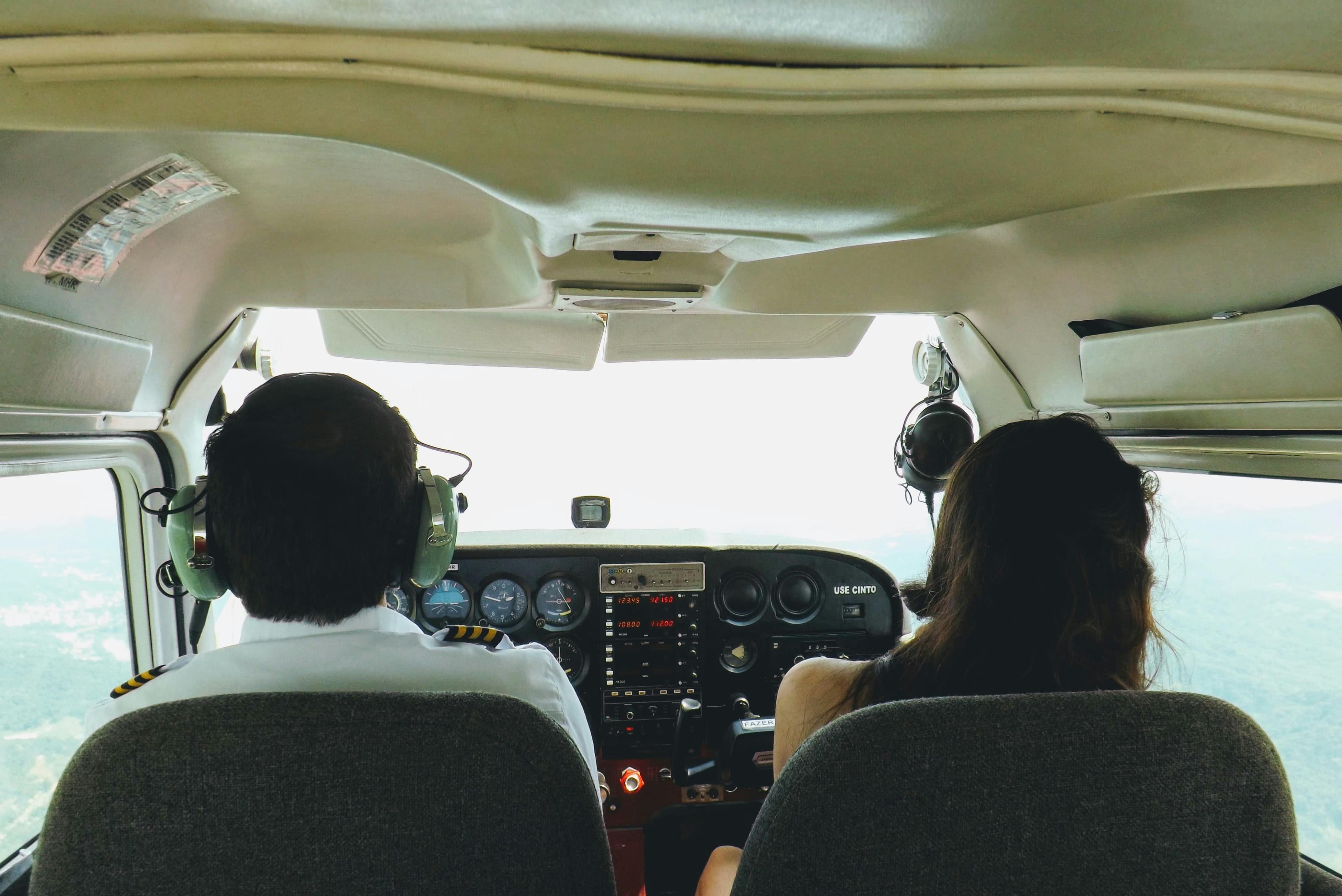
Becoming a pilot is more than just a job; it's a commitment to a dynamic, challenging, and highly rewarding profession. The allure of air travel, the responsibility of commanding an aircraft, and the opportunity to connect the world drive countless individuals to ask: how to become a pilot? This comprehensive guide breaks down the definitive steps to become a pilot, offering insights into the training, costs, and academic pathways available, with a special focus on the advantages of pursuing aviation-related degrees in North Cyprus.
A career in aviation offers unparalleled opportunities for travel, professional growth, and a competitive salary. From commercial airlines to cargo operations, private charter services, and even flight instruction, the roles available to licensed pilots are diverse. The journey demands dedication, precision, and continuous learning, but the rewards—both personal and professional—are substantial.
Essential Prerequisites: Medical Certification and Academic Foundations
Before you even step into a cockpit, the first crucial step to become a pilot is obtaining a Class 1 Medical Certificate. This is a stringent health assessment conducted by an aviation medical examiner, ensuring you meet the high physical and mental standards required for commercial flying. Conditions such as certain vision impairments, heart conditions, or psychological disorders can be disqualifying. Regular renewals are mandatory throughout a pilot's career, typically annually for commercial pilots under 60 years old.
While a specific university degree is not always a mandatory prerequisite for flight training itself, a strong academic background, particularly in subjects like mathematics, physics, and English, is highly beneficial. Many aspiring pilots choose to pursue a university degree in related fields, such as Aviation Management or Aeronautical Engineering, which can provide a deeper understanding of the industry, enhance problem-solving skills, and offer a significant advantage in competitive job markets. Moreover, a degree can serve as a valuable fallback or a pathway to management roles within aviation later in a career.
Decoding Pilot Training Pathways: Integrated vs. Modular Approaches
The path to becoming a licensed pilot typically follows one of two primary training routes: integrated or modular. Understanding the differences is key to choosing the best fit for your circumstances, budget, and learning style.
Integrated Training Programs

Integrated training is an intensive, full-time program offered by a single flight school, taking a student from zero flight experience to a 'frozen' Airline Transport Pilot License (ATPL) in approximately 18-24 months. This route combines all theoretical knowledge and practical flight training into one continuous course. It is often preferred by those seeking a fast-tracked, structured learning environment. Integrated programs are typically more expensive upfront but can lead to quicker entry into the job market.
Modular Training Programs
Modular training offers greater flexibility, allowing students to complete each license and rating (PPL, CPL, IR, ATPL theory) as separate courses, often at different flight schools and at their own pace. This approach can be more affordable as it allows students to work while studying and spread the costs over a longer period, typically 3-5 years. While it requires more self-discipline to manage the various stages, it provides the freedom to tailor the training to individual needs and financial situations.
The Core Steps to Become a Pilot: From Private to Airline Transport Pilot
Key Licensing Stages on the Path to Becoming a Pilot
Private Pilot License (PPL)
This is your first step. The PPL allows you to fly single-engine aircraft for recreational purposes, carrying passengers, but not for hire. It typically requires 45-60 hours of flight time, including solo flights and cross-country navigation, along with passing a written exam and a practical flight test.
Commercial Pilot License (CPL)
The CPL is essential for flying for compensation or hire. It requires a minimum of 200-250 hours of total flight time (depending on the regulatory authority, e.g., EASA or FAA), including more advanced maneuvers, night flying, and instrument flight training. This license involves more rigorous theoretical exams and a comprehensive flight test.
Instrument Rating (IR)
Often obtained alongside or shortly after the CPL, the IR allows you to fly under Instrument Flight Rules (IFR), meaning you can operate an aircraft solely by reference to instruments, crucial for flying in adverse weather conditions or at night. It requires additional instrument flight instruction and a dedicated practical test.
- 4
Multi-Engine Rating (MEP)
While not a standalone license, a Multi-Engine Piston (MEP) rating is usually integrated into CPL or IR training. It qualifies you to fly aircraft with more than one engine, which is standard for most commercial operations.
Airline Transport Pilot License (ATPL) Theory
This is the highest level of pilot certification. While the full ATPL requires 1,500 hours of flight time, aspiring commercial pilots typically complete the ATPL theoretical knowledge exams (often referred to as 'frozen ATPL') during their integrated or modular training. This demonstrates mastery of advanced aviation subjects, from air law to meteorology and flight planning.
- 6
Multi-Crew Cooperation (MCC) Course
This course teaches pilots how to operate effectively as part of a multi-pilot crew in a commercial airline environment, focusing on communication, leadership, and teamwork. It's a vital bridge between individual flight training and airline operations.
Type Rating
Once hired by an airline, pilots undergo specific training on the particular aircraft type they will be flying (e.g., Boeing 737, Airbus A320). This highly specialized training is typically funded by the airline and involves extensive simulator and line training.
Each stage builds upon the last, culminating in the comprehensive skill set required to safely and efficiently operate commercial aircraft. Regulatory bodies like the International Civil Aviation Organization (ICAO) set global standards, while regional authorities such as the European Union Aviation Safety Agency (EASA) or the Federal Aviation Administration (FAA) in the US implement specific regulations and licensing requirements.
Time and Financial Investment: How Long Does It Take to Become a Pilot and What Does It Cost?
The question, "How long does it take to become a pilot?" is frequently asked and depends heavily on the chosen training route and individual pace. Similarly, the financial investment is significant, making it crucial for aspiring pilots and their families to plan meticulously.
Typical Timeframes

An integrated ATPL program typically takes 18 to 24 months of full-time study. Modular training, due to its flexible nature, can extend from 3 to 5 years, or even longer if pursued part-time alongside other commitments. These timeframes do not include the time required to gain the 1,500 flight hours for a full ATPL, which usually occurs once employed by an airline.
Cost Breakdown
Pilot training is a substantial investment. Costs vary significantly by region and training provider. In Europe, an integrated ATPL course can range from €80,000 to €120,000. Modular training, while potentially more spread out, can accumulate to a similar total, often between €60,000 and €100,000. These figures typically cover ground school, flight hours, instructor fees, and examination fees, but may not include living expenses, medical certificate costs, or type ratings.
| Region | Estimated Cost Range (EUR) | Duration (Months) |
|---|---|---|
| Western Europe | €90,000 - €120,000 | 18-24 |
| Eastern Europe / Turkey | €70,000 - €100,000 | 20-28 |
| North America | €75,000 - €110,000 | 18-24 |
| Asia (Selected Countries) | €85,000 - €130,000 | 24-30 |
These figures are estimates for the core flight training. Additional costs for accommodation, food, transport, and personal expenses must be factored in, which can add another €1,000-€2,000 per month depending on the location. Many students seek scholarship support, education loans, or part-time work opportunities to manage these expenses.
Enhancing Your Pilot Career with a University Degree in North Cyprus
While direct flight training is paramount, a university degree can significantly strengthen your resume and provide a robust academic foundation for a pilot career. North Cyprus universities offer programs such as Aviation Management, Aeronautical Engineering, or even Pilotage programs that integrate flight training with academic study. These degrees not only deepen your understanding of aviation principles but also offer a competitive edge in a demanding industry.
Academic Advantage and International Recognition

Studying in North Cyprus provides unique advantages for international students. Degrees from North Cyprus universities are issued with the EU Diploma Supplement. This crucial document enhances the transparency and academic recognition of your qualification within the European Higher Education Area, making your degree easily understood and accepted by European universities for further postgraduate study and by European employers for professional roles. This is particularly valuable in fields like aviation, which often require cross-border professional standards and mobility.
Furthermore, these degrees are accredited by Turkey's Council of Higher Education (YÖK), ensuring academic equivalence to degrees from Turkish state universities. This dual accreditation (EU Diploma Supplement + YÖK) provides strong international mobility, opening realistic career and further-study opportunities across Europe, Turkey, and globally. For an aspiring pilot, this means a qualification that is not only academically sound but also globally recognized, setting a solid foundation for a career that inherently involves international travel and collaboration.
Relevant Programs at North Cyprus Universities
Several prominent North Cyprus universities offer programs that are highly relevant to an aviation career:
- Near East University (NEU): NEU offers a Bachelor of Science in Aviation Management, focusing on the operational, administrative, and economic aspects of the aviation industry. They also have a Faculty of Aeronautics and Astronautics, which includes Pilotage (Flight Training) programs, providing a direct pathway to becoming a pilot. NEU's strong faculty and modern facilities make it a leading choice for aviation studies.
- Eastern Mediterranean University (EMU): EMU provides a Bachelor of Science in Aeronautical Engineering, which equips students with the technical knowledge to design, develop, and maintain aircraft. While not direct pilot training, this degree is invaluable for understanding aircraft systems, which is a significant advantage for any pilot. EMU is known for its international campus and high academic standards.
- University of Kyrenia (UK): The University of Kyrenia is particularly strong in maritime and aviation studies, offering a dedicated Faculty of Aviation and Space Sciences. Their programs include Professional Pilotage, Aviation Management, and Aeronautical Engineering, providing comprehensive pathways for aspiring pilots and aviation professionals.
Student Life and Support for Aspiring Pilots in North Cyprus
Beyond academics, North Cyprus offers a vibrant and supportive environment for international students. Universities like Near East University, Eastern Mediterranean University, and the University of Kyrenia boast diverse student bodies, with students from over 100 different countries. This multicultural atmosphere enriches the learning experience and fosters global networking opportunities.
Scholarships are widely available to international students, significantly reducing tuition costs. Many North Cyprus universities offer partial scholarships, typically ranging from 25% to 75% of tuition fees, to make education more accessible. For instance, both NEU and EMU frequently offer 50% scholarships to eligible international students across various programs, including those in aviation-related fields. These scholarships are often merit-based or need-based, and prospective students are encouraged to inquire directly with the universities or through our platform's scholarship support section.
The cost of living in North Cyprus is also generally more affordable compared to many European countries, allowing students to manage their finances effectively while focusing on their studies and training. Universities provide extensive student support services, including student accommodations, career counseling, and social activities, ensuring a well-rounded and comfortable student life.
Navigating Admissions to North Cyprus Universities
North Cyprus universities maintain one of the most open admissions policies in the region, making the application process straightforward for international students. A core selling point is that these universities do not require external English-language proficiency exams such as IELTS, TOEFL, Pearson PTE, or Cambridge English. They also do not require standardized entrance exams like SAT, ACT, GRE, or GMAT, nor do they administer competitive entrance exams at the application stage.
Admission is primarily based on your secondary-school transcript for undergraduate programs, and your bachelor's transcript for graduate programs. The process is designed to be accessible: submit your academic documents, and you will typically receive an offer. Applicants who do not already hold an English-language qualification (such as a high school diploma from an English-medium institution) will take an in-house English Proficiency Exam upon arrival at the university. This is a placement test, not an admission gate. If a student does not pass this in-house exam, they will enter the university's English Preparatory School for one academic year before commencing their degree program, without needing a second admission decision.
Even for competitive programs like Pilotage, Medicine, or Dentistry, the same policy applies: no external tests, no entrance exams at application. While these programs may have higher GPA expectations on the transcript, the absence of additional testing requirements simplifies the initial application significantly. This streamlined approach allows aspiring pilots to focus on their academic preparation and future flight training without the added burden of external test scores.
Frequently Asked Questions About Becoming a Pilot
Aviation Programs at North Cyprus Universities
Hand-picked programs from North Cyprus universities you can apply to directly.

Ready to Launch Your Aviation Career?
Explore aviation programs in North Cyprus and take the first step towards becoming a pilot. Our advisors can help you navigate the application process and find the right university.