Study Pilotage in North Cyprus
No IELTS or entrance exam required — admission is based on your transcript.

The Global Demand for Pilots and Your Path to the Cockpit

Embarking on a career as a pilot is an ambitious journey, requiring dedication, precision, and the right educational foundation. With the global aviation sector experiencing continuous growth, the demand for highly skilled pilots holding Commercial Pilot Licenses (CPL) and Airline Transport Pilot Licenses (ATPL) remains consistently high. Choosing the right pilot school is the foundational step in navigating this demanding yet rewarding profession.
For international students, the decision extends beyond curriculum to include factors like accreditation, cost, and international recognition. North Cyprus has emerged as a compelling destination for aviation education, offering programs that not only meet international standards but also provide exceptional value. Universities in North Cyprus deliver aviation degrees that include the EU Diploma Supplement, ensuring seamless recognition within the European Higher Education Area for further study or employment across Europe. Additionally, these programs are accredited by the Turkish Council of Higher Education (YÖK), providing equivalence to Turkish state-university qualifications, which is particularly advantageous for career prospects in Turkey.
CPL vs. ATPL: Understanding Your Pilot License Progression

Before enrolling in a pilot school, it's crucial to understand the different types of pilot licenses and their respective roles. The two primary licenses for aspiring professional pilots are the Commercial Pilot License (CPL) and the Airline Transport Pilot License (ATPL). These licenses represent distinct stages in a pilot's career progression, each with specific privileges and requirements.
A Commercial Pilot License (CPL) allows you to fly aircraft for remuneration. This means you can be paid to fly, which is the first essential step towards a professional aviation career. To obtain a CPL, candidates typically need to complete a minimum of 150-200 flight hours, including specific cross-country and instrument flight time, along with passing a series of theoretical exams and a practical flight test. A CPL holder can work as a flight instructor, perform aerial work (e.g., photography, surveying), or act as a first officer in multi-pilot aircraft under certain conditions. The prerequisites usually include holding a Private Pilot License (PPL) and meeting specific age and medical requirements.
The Airline Transport Pilot License (ATPL) is the highest level of aircraft pilot certification, qualifying you to act as pilot-in-command (captain) of an aircraft in airline operations. Most aspiring airline pilots pursue an 'ATPL frozen' status, which means they have passed all the ATPL theoretical exams but have not yet accumulated the required 1,500 flight hours to unfreeze the license. Once the flight hours are met, typically as a first officer for an airline, the ATPL becomes 'unfrozen.' The ATPL curriculum covers advanced aerodynamics, meteorology, air law, and aircraft systems, preparing pilots for the complexities of commercial airline operations. Progression usually involves completing a CPL, gaining significant flight experience, and then undertaking the extensive ATPL theoretical and practical training.
The Integrated Pilot Training Structure: From Ground School to Flight Deck
Integrated pilot training programs are designed to take a student with little or no prior flying experience directly to a 'frozen ATPL' status. This structured approach is often preferred by airlines due to its comprehensive and disciplined nature. The training is typically divided into two main phases: ground school and flight training.
Ground School: This intensive phase focuses on theoretical knowledge, covering subjects such as air law, aircraft general knowledge, flight planning and performance, human performance and limitations, meteorology, navigation, operational procedures, principles of flight, and communications. Students spend hundreds of hours in classrooms, learning the foundational principles of aviation. This phase culminates in a series of rigorous written examinations administered by the relevant aviation authority, such as the European Union Aviation Safety Agency (EASA) for programs aligned with European standards.
Flight Training: Following successful completion of ground school, students progress to practical flight training. This begins with basic flight maneuvers in single-engine aircraft, advancing to instrument flying, multi-engine aircraft operations, and complex scenario training in advanced flight simulators. The flight hours are meticulously logged, gradually building up the experience required for the CPL and eventually the ATPL. This phase includes solo flights, cross-country navigation, night flying, and emergency procedure training. The entire process is supervised by experienced flight instructors, ensuring adherence to strict safety protocols and performance standards.
Key Components of a Comprehensive Pilot School Program
Accredited Curriculum
Ensuring the program meets international aviation standards, such as those set by EASA or ICAO, is paramount. North Cyprus universities offering aviation programs often align their curricula with these global benchmarks, facilitating license conversion and international career mobility.
Experienced Instructors
Highly qualified flight and ground instructors with extensive industry experience are crucial for effective learning and skill development.
Modern Fleet & Simulators
Access to well-maintained, modern aircraft and advanced flight simulators provides realistic training environments and prepares students for contemporary aviation technology.
Safety Culture
A strong emphasis on safety protocols, risk management, and emergency procedures is non-negotiable in aviation training.
Career Support
Assistance with job placement, interview preparation, and networking opportunities with airlines can significantly boost post-graduation employability.
North Cyprus: A Cost-Effective Hub for Aviation Training

The cost of pilot training is a significant consideration for many aspiring aviators. Globally, integrated ATPL programs can range from $70,000 to over $150,000 USD, depending on the country and institution. For instance, reputable flight schools in Western Europe or North America often fall into the higher end of this spectrum, making them financially challenging for many international students.
North Cyprus offers a compelling alternative, providing high-quality aviation education at a more accessible price point. While maintaining rigorous academic and practical standards, the overall cost of tuition and living expenses in North Cyprus is considerably lower than in many traditional study-abroad destinations. This affordability, combined with the international recognition of degrees through the Bologna Process and YÖK accreditation, positions North Cyprus as an attractive option for students seeking a strong return on investment in their education.
| University | Annual Tuition (USD) | Scholarship Potential |
|---|---|---|
| Near East University (NEU) | $7,500 - $9,500 | 50% - 75% |
| University of Kyrenia (UK) | $7,000 - $9,000 | 50% - 75% |
| Cyprus International University (CIU) | $6,800 - $8,800 | 50% - 75% |
It is important to note that these figures represent annual tuition fees for bachelor's degrees in aviation-related fields and do not include flight training costs, which are typically separate and can add significantly to the overall expense. However, even with flight training, the combined cost often remains more competitive than in other regions. Many North Cyprus universities also offer substantial scholarships for international students, frequently covering 50% or even 75% of tuition fees, further enhancing affordability. Prospective students should explore available scholarships directly with their chosen institutions.
Leading Pilot Schools in North Cyprus for CPL/ATPL Training
North Cyprus hosts several reputable universities that offer comprehensive aviation programs, preparing students for CPL and ATPL qualifications. These institutions are equipped with modern facilities and experienced faculty, committed to producing competent and confident pilots.
Near East University (NEU) stands out with its Faculty of Civil Aviation, offering a Bachelor of Science in Pilotage. NEU's program is designed to meet international aviation standards, providing extensive theoretical ground training and practical flight instruction. The university's commitment to modern education ensures that graduates are well-prepared for the demands of the global aviation industry. NEU's aviation school emphasizes a strong academic foundation coupled with hands-on experience, utilizing advanced simulators and a dedicated fleet for flight training.
Similarly, the University of Kyrenia (UK), with its Faculty of Aviation and Space Sciences, offers a Bachelor of Science in Professional Pilotage. The University of Kyrenia is strategically located to provide access to suitable airspace for flight training, benefiting from the island's favorable weather conditions for year-round operations. Their program focuses on developing not only flying skills but also critical decision-making, leadership, and communication abilities essential for a successful career in the cockpit. Both NEU and UK's programs are structured to guide students through the necessary stages to achieve their 'frozen ATPL' status.
These institutions, along with others such as Cyprus International University (CIU) which also offers aviation management degrees, operate under the accreditation of the TRNC Higher Education Planning, Evaluation, Accreditation and Coordination Council (YÖDAK), ensuring local quality standards are met. This dual accreditation (YÖK and YÖDAK) combined with the EU Diploma Supplement for their degrees provides graduates with robust international mobility, enhancing employability across Europe and beyond.
Career Prospects and International Recognition for North Cyprus Aviation Graduates
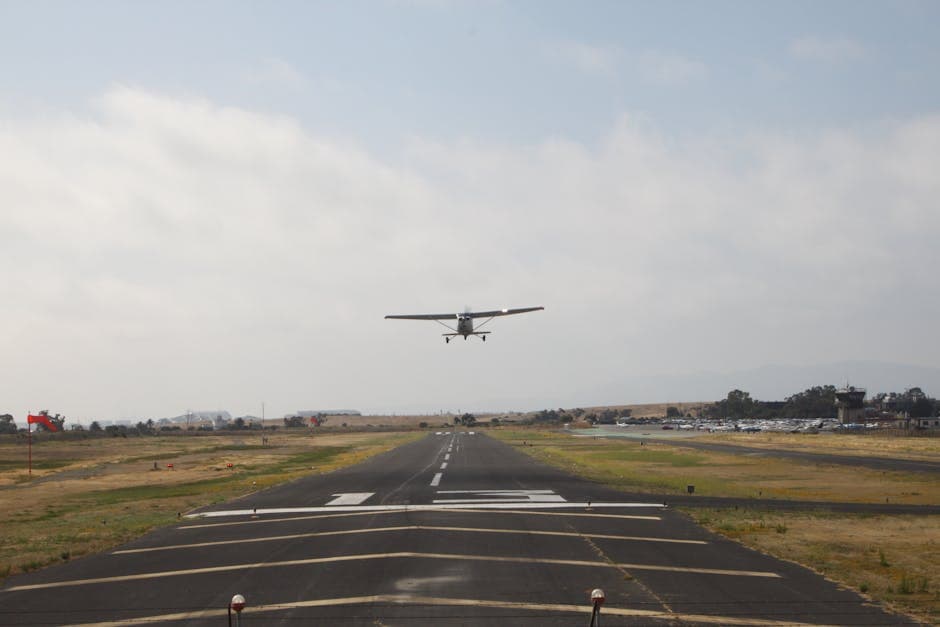
Graduates from North Cyprus pilot school programs are well-positioned for diverse career opportunities within the aviation industry. With a 'frozen ATPL,' pilots can begin their careers as first officers with commercial airlines, cargo operators, or charter companies. The EASA-aligned training often provided by North Cyprus institutions means that graduates' qualifications are recognized across Europe, opening doors to major airlines operating within the European Union Aviation Safety Agency framework.
Beyond airline operations, CPL holders can pursue roles as flight instructors, corporate jet pilots, air ambulance pilots, or engage in various aerial work operations. The strong international mobility afforded by the EU Diploma Supplement ensures that your qualifications are understood and valued by employers across the European Higher Education Area. This, coupled with YÖK accreditation, provides a significant advantage for those looking to work in Turkey or other countries that recognize Turkish higher education standards. The rigorous training and internationally recognized credentials from North Cyprus universities enhance employability in a globally standardized field like aviation.
Navigating Admissions and Student Life in North Cyprus
Applying to a pilot school in North Cyprus is a straightforward process designed to be accessible for international students. North Cyprus universities maintain one of the most open admissions policies in the region. Crucially, they do NOT require external English-language proficiency exams such as IELTS, TOEFL, Pearson PTE, or Cambridge English for admission. Similarly, standardized entrance exams like SAT, ACT, GRE, or GMAT are not required, nor do universities administer competitive entrance exams at the application stage.
Admission is primarily based on your secondary-school transcript. For graduate programs, your bachelor's transcript is the key document. Once you submit your academic documents, you can expect to receive an offer. Students who do not already possess an English-language qualification (such as an IELTS 5.5 or equivalent, which can optionally be provided to skip the in-house test) will take an in-house English Proficiency Exam upon arrival at the university. This is a placement test, not an admission gate. If a student does not pass this in-house exam, they will enter the university's English Preparatory School for typically one academic year before starting their degree program, without needing a second admission decision.
The student visa process for North Cyprus is generally efficient. International students typically apply for an entry permit upon arrival, which is then converted into a student residence permit. The TRNC Ministry of Foreign Affairs website provides detailed guidance. North Cyprus also offers a vibrant student life with diverse cultural activities, modern student accommodations, and a welcoming environment. The cost of living is notably affordable compared to many European countries, allowing students to focus on their studies without undue financial strain. Our platform offers comprehensive student visa guidance and support throughout the application process.
Key Documents for Your North Cyprus Pilot School Application
Secondary School Transcript
Official academic records from your high school, demonstrating your performance.
- •
High School Diploma/Certificate
Proof of completion of your secondary education.
Passport Copy
A clear, valid copy of your passport's biographical page.
- •
Passport-Sized Photos
Recent photographs meeting standard passport photo requirements.
- •
Medical Certificate (Class 1)
While not for university admission, a valid Class 1 medical certificate is essential for flight training and commercial pilot licensing. This is obtained from an approved aeromedical examiner.
Frequently Asked Questions About Pilot School in North Cyprus
Aviation Programs at North Cyprus Universities
Hand-picked programs from North Cyprus universities you can apply to directly.

Start Your Aviation Journey in North Cyprus
Ready to take to the skies? Explore top-tier pilot programs in North Cyprus and benefit from internationally recognized degrees and affordable education. Your path to a global aviation career begins here.