Study Pilotage in North Cyprus
No IELTS or entrance exam required — admission is based on your transcript.

The Global Demand for Pilots and North Cyprus's Unique Proposition

The aviation industry faces a persistent demand for skilled pilots. Boeing's 2023-2042 Pilot and Technician Outlook projects a need for 690,000 new commercial pilots globally over the next two decades. This robust demand underscores the importance of choosing a training pathway that offers both quality instruction and international recognition. North Cyprus has emerged as a compelling destination for aspiring aviators, offering programs that not only provide comprehensive flight training but also award degrees with significant international standing.
Unlike traditional standalone flight schools, several North Cyprus universities, notably the University of Kyrenia (UK), have integrated PPL traiing and EASA ATPL theoretical knowledge into their Bachelor of Science (B.Sc.) in Professional Pilotage programs. This academic integration ensures that students receive a holistic education, combining the practical skills of flying with a deep theoretical understanding of aviation principles, all within a university environment. The blend of academic study and practical flight hours prepares graduates not just for licensure but for long-term career success in a dynamic industry.
The North Cyprus Advantage: EASA ATPL and EU Diploma Recognition
A critical factor for any international student is the recognition and portability of their degree. North Cyprus universities offer a dual accreditation system that significantly enhances the international mobility and employability of their graduates. Degrees issued in North Cyprus come with the EU Diploma Supplement, often referred to as the "blue diploma." This document provides a standardized description of the nature, level, context, content, and status of the studies successfully completed by the holder, making the qualification easily readable and accepted across the European Higher Education Area for further study or professional employment.
Furthermore, these degrees are accredited by Turkey's Council of Higher Education (YÖK), ensuring academic equivalence to degrees from Turkish state universities. This dual accreditation provides graduates with realistic career and further-study opportunities not only across Europe but also in Turkey and globally. For a field like aviation, where international standards and cross-border operations are the norm, this level of recognition is invaluable, offering a credible, evidenced advantage for graduates seeking to work with international airlines or pursue advanced aviation qualifications.
PPL Traiing: Your First Step Towards the Cockpit

The journey to becoming a commercial pilot typically begins with obtaining a Private Pilot License (PPL). In North Cyprus, universities like the University of Kyrenia integrate the PPL traiing phase directly into their pilotage degree programs. This initial phase focuses on fundamental flight skills, navigation, and basic aviation theory, allowing students to gain their first taste of commanding an aircraft solo. The PPL is a prerequisite for more advanced licenses and forms the bedrock of a pilot's practical experience.
Admission to these pilotage programs in North Cyprus is notably accessible. North Cyprus universities do not require external English language proficiency tests such as IELTS or TOEFL, nor do they administer competitive entrance exams like SAT or ACT. Admission is primarily based on your secondary-school transcript. Upon arrival, students who do not already hold an English language qualification will take an in-house English Proficiency Exam. This is a placement test, not an admission gate. If a student does not pass, they will enroll in the university's English Preparatory School for typically one academic year before commencing their degree program, ensuring they have the necessary language skills for success.
Pathway from PPL to EASA ATPL in North Cyprus
Enroll in a Professional Pilotage Degree
Begin by enrolling in a Bachelor's degree program in Professional Pilotage, such as those offered by the University of Kyrenia. These programs are designed to integrate all necessary flight training and theoretical knowledge.
Complete PPL Traiing and Obtain License
The first practical phase involves completing the Private Pilot License (PPL) training, accumulating approximately 45-50 flight hours, including solo flights. This phase culminates in the PPL skill test.
Undertake ATPL Theoretical Knowledge Training
Concurrently with or after PPL, students delve into the extensive EASA ATPL theoretical knowledge modules. This covers 14 subjects, including Air Law, Aircraft General Knowledge, Flight Planning, Meteorology, Human Performance, and Navigation.
Progress through Advanced Flight Training
After PPL, students move to advanced modules like Night Rating, Instrument Rating (IR), Multi-Engine Piston (MEP) rating, and Commercial Pilot License (CPL) training, accumulating approximately 150-200 total flight hours.
Complete Multi-Crew Cooperation (MCC) Course
Towards the end of the program, students undertake an MCC course, which trains them to operate as part of a multi-pilot crew in a jet aircraft environment, essential for airline operations.
Graduate with EASA ATPL (Frozen) and Degree
Upon successful completion, graduates receive their B.Sc. degree with the EU Diploma Supplement and an EASA ATPL (Frozen) license, making them eligible to apply for first officer positions with airlines.
EASA ATPL Theory: Integrating into Degree Programs
The EASA (European Union Aviation Safety Agency) Air Transport Pilot License (ATPL) is the highest level of pilot certification, required for commanding commercial aircraft. The ATPL is typically obtained in two stages: theoretical knowledge and practical flight experience. North Cyprus universities offering pilotage programs, such as the University of Kyrenia, meticulously integrate the extensive EASA ATPL theoretical knowledge modules into their academic curriculum. This ensures that students cover all 14 subjects required by EASA standards, including complex topics like Air Law, Aircraft General Knowledge, Flight Performance & Planning, Meteorology, Navigation, and Operational Procedures.
This integration means that students gain a deep, university-level understanding of aviation science, which goes beyond rote memorization for exams. The theoretical component is typically delivered through lectures, seminars, and simulator sessions, preparing students for the rigorous EASA ATPL examinations. Upon successful completion of these exams and the necessary flight hours, graduates receive an EASA ATPL (Frozen) license, which becomes 'unfrozen' and fully valid once they accumulate 1,500 flight hours in a multi-crew environment. This structured approach ensures that graduates are not only licensed but also possess the comprehensive knowledge base expected of a modern airline pilot, ready to contribute to the global aviation sector.
Cost Comparison: Flight Training in North Cyprus
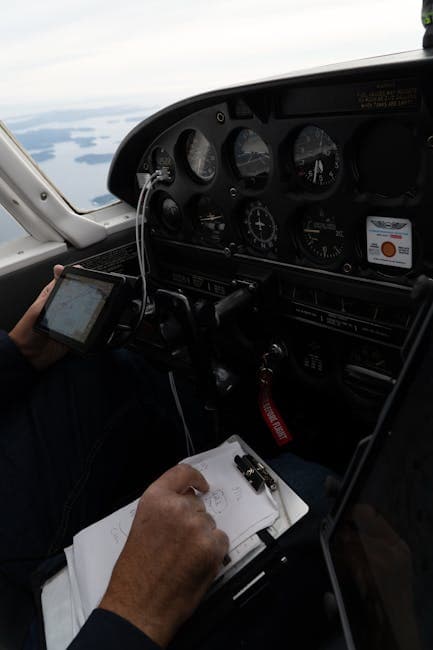
The cost of pilot training is a significant consideration for many aspiring aviators. Flight training, especially for an EASA ATPL, can be substantial, often ranging from €60,000 to €120,000 in many European countries. North Cyprus offers a more affordable alternative without compromising on EASA standards. The integration of flight training into university degree programs can sometimes lead to more structured payment plans and access to academic scholarships, making the overall investment more manageable.
While specific costs vary by university and program structure, the overall living expenses in North Cyprus are also considerably lower than in many Western European countries, further reducing the total financial burden. For instance, student accommodation and daily expenses are often 30-50% less compared to major European cities. This cost-effectiveness, combined with the high quality of EASA-approved training and internationally recognized degrees, positions North Cyprus as an attractive option for pilot training. Students can explore available scholarships which can reduce tuition fees by 25% to 75% at many institutions, further enhancing affordability.
| Location | Estimated Training Cost (EUR) | Estimated Annual Living Cost (EUR) |
|---|---|---|
| North Cyprus (University Program) | €55,000 - €80,000 | €4,000 - €6,000 |
| Eastern Europe (Standalone FTO) | €70,000 - €100,000 | €5,000 - €8,000 |
| Western Europe (Standalone FTO) | €90,000 - €130,000 | €8,000 - €15,000 |
International Recognition and Employability for Pilot Graduates
The dual accreditation of North Cyprus degrees is a cornerstone of their value proposition. The TRNC Higher Education Planning, Evaluation, Accreditation and Coordination Council (YÖDAK) oversees local accreditation, which is then recognized by Turkey's YÖK. This ensures that degrees are fully recognized within the Turkish higher education system. More broadly, the inclusion of the EU Diploma Supplement means that a Bachelor's degree in Professional Pilotage from North Cyprus is readily understood and accepted by aviation authorities and employers across the European Union and beyond.
For pilot graduates, this translates into tangible career advantages. An EASA ATPL (Frozen) obtained through an accredited university program in North Cyprus, coupled with a degree carrying the EU Diploma Supplement, significantly enhances a graduate's profile for airlines operating in Europe, the Middle East, and Asia. Graduates are well-positioned for roles as First Officers with commercial airlines, cargo operators, or corporate aviation departments. The comprehensive academic foundation, combined with EASA-compliant flight training, ensures that North Cyprus pilot graduates are not only technically proficient but also possess the critical thinking and problem-solving skills valued in a highly regulated industry.
Student Life and Support for Aspiring Pilots

Studying in North Cyprus offers a vibrant and supportive environment for international students. All pilotage programs are taught entirely in English, ensuring a smooth transition for students from diverse linguistic backgrounds. Universities provide extensive student accommodations, ranging from modern dormitories to shared apartments, often located within or near campus, offering convenience and fostering a strong sense of community. The cost of living is generally affordable, allowing students to focus on their demanding studies without undue financial stress.
Beyond academics, North Cyprus boasts a Mediterranean climate, rich history, and a welcoming culture. Students can enjoy a variety of recreational activities, from water sports along the coastline to exploring ancient sites. Universities offer robust student support services, including academic advising, career counselling, and health services. For aspiring pilots, this includes dedicated support for flight training progression and career placement assistance, helping them navigate the transition from student to professional aviator. The TRNC Ministry of Foreign Affairs also provides comprehensive information and assistance for international students regarding student visa guidance and residency permits.
Application Process for Pilot Programs
Applying for a pilotage program in North Cyprus is a straightforward process designed to be accessible to international students. The primary requirement is your secondary-school transcript, demonstrating academic aptitude. For graduate programs, a bachelor's transcript is needed. As highlighted, there are no external English language tests (like IELTS or TOEFL) or competitive entrance exams required for admission. This policy simplifies the application for many international candidates.
Key Application Steps for Pilotage Programs
Prepare Your Documents
Gather your secondary-school leaving certificate and transcript. For graduate pilot programs, your bachelor's degree and transcript are required. A copy of your passport is also essential.
Submit Your Application Online
Complete the online application form for your chosen university and pilotage program. Upload all required documents. Many universities have multiple intake periods, typically in September and February.
Receive Your Offer Letter
Upon review of your academic documents, the university will issue an offer letter if you meet the admission criteria. This process is generally swift.
Pay Deposit and Secure Enrollment
To confirm your place, you will typically need to pay an initial tuition deposit. This secures your enrollment and allows the university to prepare your official acceptance documents for visa purposes.
Apply for Your Student Visa
With your official acceptance letter, apply for your North Cyprus student visa. Our student visa guidance page offers detailed steps and requirements.
Arrive and Take English Proficiency Exam (if applicable)
Upon arrival, if you don't hold an equivalent English qualification (e.g., an academic degree taught in English), you will take the university's in-house English Proficiency Exam. If needed, you'll attend the English Preparatory School before starting your pilotage degree.
Frequently Asked Questions About Pilot Training in North Cyprus
Aviation Programs at North Cyprus Universities
Hand-picked programs from North Cyprus universities you can apply to directly.

Ready to Launch Your Pilot Career?
Explore top pilotage programs in North Cyprus that combine academic excellence with EASA-approved flight training. Begin your journey to the skies today.