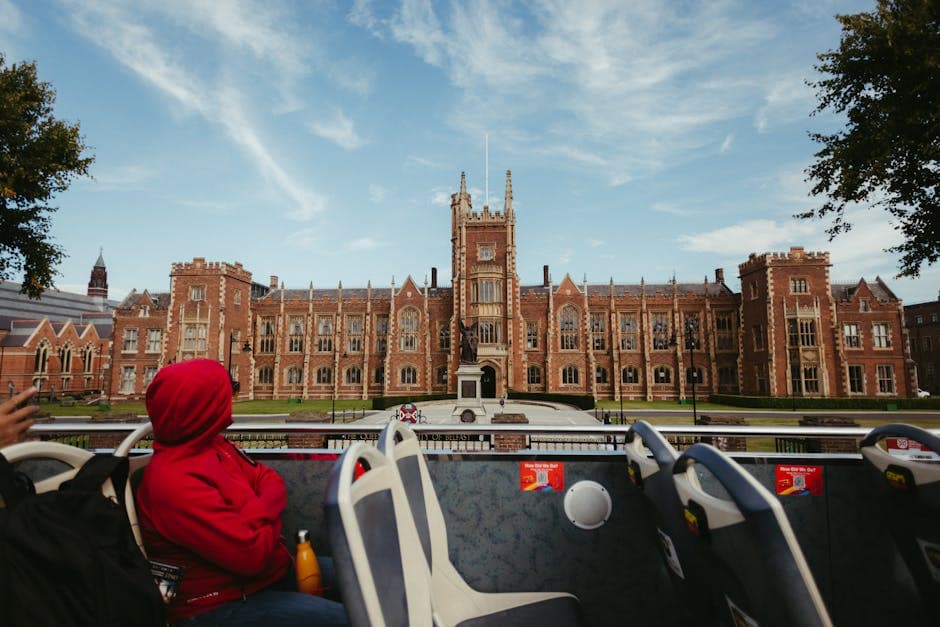
Why 'Study and Work in Australia' is a Global Ambition

For decades, Australia has been a top-tier destination for international students, and the appeal is clear. High-ranking universities, vibrant multicultural cities, and a strong economy create a powerful draw. The phrase 'study and work in Australia' isn't just a search query; it's a life plan for millions of ambitious students worldwide. The ability to earn while learning helps offset the significant financial investment and provides invaluable local work experience.
Universities like the University of Melbourne and the University of Sydney consistently feature in global rankings like the Times Higher Education World University Rankings, offering world-class education. However, this prestige comes with a high price tag and stringent entry requirements. This guide provides a rigorous analysis of the Australian model and introduces a compelling, high-value alternative: North Cyprus, a destination where affordability, accessible admissions, and strategic global degree recognition create a different, yet equally powerful, pathway to career success.
Understanding Part-Time Work Regulations in Australia
The ability to work part-time is a critical component of the plan to study and work in Australia. The Australian government sets clear rules for students on a Student visa (subclass 500). The primary rule is the cap on working hours: 48 hours per fortnight (a 14-day period starting on a Monday) while your course is in session. During scheduled course breaks, such as summer holidays, students are permitted to work unlimited hours. This framework is designed to ensure that study remains the primary focus of the student's time in the country.
The national minimum wage in Australia is set by the Fair Work Commission and is reviewed annually. As of early 2026, this wage is approximately AUD $24 per hour. This allows students working the maximum 24 hours per week to earn a gross income of around AUD $576, which can significantly contribute to living expenses like rent, food, and transportation. Common part-time jobs for students are found in retail (supermarkets, clothing stores), hospitality (cafes, restaurants, bars), tourism, and administrative roles on campus. These roles not only provide income but also help students develop soft skills and build a local network.
It is crucial for students to adhere strictly to these visa conditions. Working more than the allowed hours is a breach of your visa and can lead to serious consequences, including visa cancellation. Employers are also legally obligated to check a student's work rights, which are managed through the Visa Entitlement Verification Online (VEVO) system.
The Post-Graduation Pathway: Australia's Temporary Graduate Visa

A major incentive for studying in Australia is the opportunity to stay and work after graduation. The primary route for this is the Temporary Graduate visa (subclass 485). This visa has two main streams: the Post-Study Work stream and the Graduate Work stream. Most international students who complete a Bachelor, Master, or PhD degree from an Australian institution apply for the Post-Study Work stream.
The duration of this visa depends on the qualification obtained:
- Bachelor's Degree: 2 years
- Master's Degree (by coursework or research): 2-3 years
- Doctoral Degree (PhD): 4 years
This visa provides full work rights, allowing graduates to gain professional experience in their field. This period is often used to qualify for skilled migration visas, potentially leading to permanent residency. However, securing this visa is not automatic. Applicants must meet specific criteria, including age, English language proficiency, and having held a valid student visa within the last six months. The process is competitive and subject to changes in Australian immigration policy, which can be influenced by economic and political factors.
The Financial Reality: Cost of Studying and Living in Australia
While the opportunity to study and work is attractive, the upfront and ongoing costs in Australia are among the highest in the world for international students. A clear financial plan is non-negotiable. Let's break down the major expenses.
Tuition Fees: International student tuition fees vary significantly by university and field of study. For Bachelor's degrees, students can expect to pay anywhere from AUD $22,000 to AUD $45,000 per year. For specialized programs like Medicine or Engineering at top-tier universities, this can exceed AUD $50,000 annually. Master's and PhD programs fall within a similar, or sometimes higher, range.
Living Expenses: The Australian Department of Home Affairs estimates that a single student needs approximately AUD $24,505 per year to cover living costs. This figure is a baseline for visa application purposes. In major cities like Sydney and Melbourne, the actual cost is often higher. Accommodation is the largest expense, with shared apartment rentals in city centers costing AUD $1,200 - $2,000 per month per person. Other costs include food, utilities, public transport, and health insurance (Overseas Student Health Cover - OSHC), which is mandatory and costs around AUD $500-600 per year.
Typical Monthly Budget for a Student in Sydney or Melbourne
Accommodation (Shared)
AUD $1,200 - $2,000
Food & Groceries
AUD $400 - $600
Utilities (Internet, Electricity, Gas)
AUD $150 - $250
Public Transport
AUD $100 - $200
Phone & Miscellaneous
AUD $100 - $200
Total Estimated Monthly Cost
AUD $1,950 - $3,250 (approx. USD $1,300 - $2,150)
Australia vs. North Cyprus: A Strategic Comparison
For students for whom value, accessibility, and long-term global mobility are top priorities, North Cyprus presents a compelling alternative. While Australia offers a high-quality, high-cost model, North Cyprus provides a high-value, accessible model with unique strategic advantages. Let's compare them on the factors that matter most to international students.
Cost of Education and Living

This is the most dramatic point of difference. As detailed above, an Australian education is a major financial undertaking. In contrast, North Cyprus universities offer an exceptionally affordable entry point to high-quality higher education. Most international students receive a standard 50% scholarship upon admission, bringing annual tuition fees for most Bachelor's programs down to a range of €2,500 - €4,000. Even competitive programs like Pharmacy at universities like Cyprus International University (CIU) or Engineering at Eastern Mediterranean University (EMU) fall within this affordable bracket. The cost of living is also significantly lower, with total annual expenses, including tuition, often being less than just the living costs in Australia.
| Expense Category | Australia (Major City) | North Cyprus |
|---|---|---|
| Average Annual Tuition (Bachelor's) | $18,000 - $30,000 | $3,000 - $4,500 (with 50% scholarship) |
| Average Annual Accommodation | $10,000 - $15,000 | $2,000 - $3,500 (University Dorms) |
| Annual Living Expenses (Food, etc.) | $6,000 - $9,000 | $3,000 - $4,500 |
| <strong>Estimated Annual Total</strong> | <strong>$34,000 - $54,000</strong> | <strong>$8,000 - $12,500</strong> |
Admission Requirements: Accessibility vs. Selectivity
Australian universities typically have stringent admission criteria. International applicants are almost always required to provide proof of English proficiency through standardized tests like IELTS (typically requiring a score of 6.0-7.0) or TOEFL. Academic entry is competitive, based on high school grades, and some programs may require standardized tests like the SAT.
North Cyprus operates on one of the most open and accessible admissions policies in the region. Universities here do not require IELTS, TOEFL, SAT, or any other external entrance exams for admission. The primary admission document is your high school transcript (for Bachelor's) or Bachelor's degree transcript (for Master's). This removes a significant barrier of stress, time, and cost for applicants. Students who do not have a prior English qualification simply take an English proficiency test upon arrival at the university. This is a placement test, not a pass/fail gate. Those who need to improve their English are placed in the university's English Preparatory School for one year before seamlessly continuing to their chosen degree program. This approach prioritizes access and potential over standardized test scores.
Post-Graduation Mobility: Visa Pathways vs. Degree Recognition

The Australian model is heavily focused on post-study work visas as the primary means of career mobility within Australia. This pathway is valuable but is tied to the immigration policies of a single country. The North Cyprus model offers a different kind of mobility—one based on the international portability and recognition of the degree itself.
Degrees from leading North Cyprus universities like EMU, CIU, and Near East University (NEU) are anchored by two powerful systems of recognition. First, they are fully accredited by Turkey's Council of Higher Education (YÖK), giving them equivalence to degrees from Turkish state universities. This opens up significant opportunities for work or further study in Turkey, a major regional economy.
Second, and perhaps most importantly for global mobility, graduates receive the EU Diploma Supplement. This document is part of the Bologna Process and is designed to make qualifications easily understandable and comparable across Europe. It doesn't guarantee a job, but it ensures that employers and universities within the European Higher Education Area can accurately assess your degree, significantly smoothing the path for Master's applications or job searches in Germany, Sweden, the Netherlands, and beyond. This dual recognition from YÖK and the EU framework provides graduates with a flexible, global credential that isn't dependent on the visa policies of one nation.
Scholarships: A Key Differentiator
Scholarships in Australia for international students exist but are highly competitive and often cover only a small portion of the tuition fees. They are typically merit-based and reserved for the highest-achieving applicants. Securing a substantial scholarship that significantly alters the financial equation is rare.
In North Cyprus, scholarships are an integral part of the offering for international students. The standard offer for most applicants to most programs is an automatic 50% tuition fee waiver. This isn't a competitive award; it's a standard incentive. Beyond this, students with strong academic records can apply for 75% or even 100% scholarships, making a world-class education nearly free in some cases. This institutional commitment to affordability makes North Cyprus a financially sustainable option for a much broader range of students. You can explore a wide range of available scholarships directly on our platform.
Making Your Decision: Which Path is Right for You?
Choosing between Australia and North Cyprus depends entirely on your personal, academic, and financial circumstances. Australia is an excellent choice if your budget accommodates high tuition and living costs, you meet the stringent academic and English proficiency requirements, and your primary goal is to live and work specifically in Australia post-graduation.
North Cyprus is the superior choice if you are seeking an internationally recognized degree at a fraction of the cost, prefer a straightforward, test-free admission process, and value long-term global mobility. The combination of affordability and a degree recognized across Europe and Turkey provides a strategic advantage for a global career. It allows you to graduate with minimal debt and a qualification that opens doors in multiple economic zones. If this sounds like the right path for you, the next step is to start your application and see what programs and scholarships you qualify for.
Frequently Asked Questions
Ready to Explore a Smarter Path?
Don't let high costs and complex admissions hold you back. Discover how a globally recognized degree from North Cyprus can be your affordable ticket to a world of opportunities. Get free, personalized advice today.