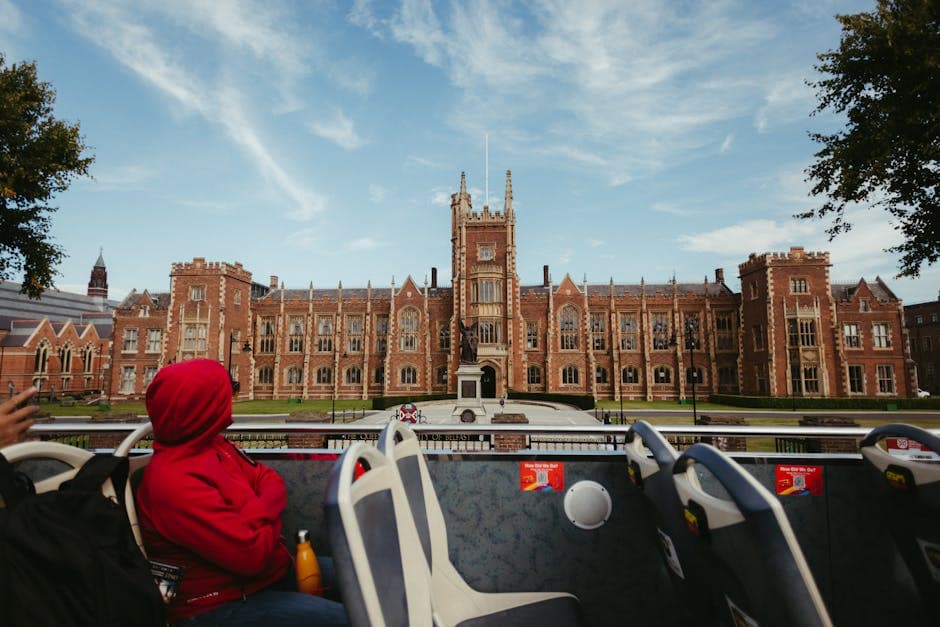
Why a 'Study Abroad' Experience in Europe is More Than Just a Degree

The decision to study abroad is a pivotal moment in any student's life. It represents a commitment not just to academic advancement, but to profound personal growth. To study in Europe is to step into a living museum of history, culture, and innovation. It means trading the familiar for the formative, developing a global perspective that employers increasingly value, and building a network of friends and professional contacts from every corner of the world.
This experience transcends the classroom. It's about navigating a new city's transit system, ordering coffee in a different language, and understanding diverse cultural norms. These challenges build resilience, independence, and cross-cultural communication skills—competencies that are difficult to quantify but invaluable in a globalized economy. A European degree on your CV signals not only academic rigor but also the adaptability and courage to thrive in an international environment.
The Unmatched Advantages of a European Education
Europe's reputation for academic excellence is centuries old, but its modern framework is what makes it a powerhouse. The Bologna Process, a series of agreements between 49 countries, has created the European Higher Education Area (EHEA). This initiative standardizes degree structures (Bachelor, Master, Doctorate) and quality assurance systems, making qualifications from one member country easily recognizable in others. This framework fosters immense student mobility and simplifies the process of continuing education or starting a career anywhere within the EHEA.
Beyond the structural benefits, the continent offers unparalleled cultural diversity. A weekend train ride can take you from the historic avenues of Vienna to the bustling markets of Prague. This proximity allows for immersive learning that extends far beyond your host country. Furthermore, with English being the medium of instruction for thousands of programs, students can gain a world-class education while simultaneously having the opportunity to learn German, French, Spanish, or Italian through immersion, a skill that adds another powerful layer to their professional profile.
A Tale of Three Hubs: Comparing Popular Study Destinations

Choosing where to study in Europe involves weighing prestige, cost, and lifestyle. Three destinations consistently attract the largest numbers of international students, each with a distinct profile.
The United Kingdom: Home to some of the world's most prestigious universities, as consistently featured in the QS World University Rankings, the UK offers academic excellence and a vibrant multicultural environment. However, this comes at a significant cost. For non-EU international students, undergraduate tuition fees typically range from £20,000 to over £40,000 per year, particularly for high-demand subjects like medicine or engineering. Living costs, especially in London, are among the highest in Europe, and the student visa process is stringent and costly.
Germany: A global leader in engineering, technology, and research, Germany's primary appeal is its public university system, which charges no tuition fees for most undergraduate programs (though a semester contribution of €150-€350 is standard). This makes it seem incredibly affordable, but the catch lies elsewhere. Visa requirements mandate proof of around €11,208 per year in a blocked bank account to cover living expenses, which can be a substantial upfront barrier. Competition for places in English-taught programs is fierce, and navigating the bureaucracy can be challenging.
The Netherlands: Known for its innovative, student-centric teaching methods and a high number of English-taught programs, the Netherlands strikes a balance between the UK and Germany. Tuition fees for non-EU students are more moderate than in the UK, generally falling between €8,000 and €20,000 annually. The country is welcoming to internationals, but the cost of living, particularly accommodation in cities like Amsterdam and Utrecht, is a significant financial consideration.
Your European Study Abroad Checklist
Tuition Fees & Scholarships
Research the full cost of tuition for your specific program and nationality. Investigate scholarship opportunities, but be realistic about their competitiveness.
Cost of Living
Look beyond tuition. Factor in accommodation, food, transportation, and health insurance. Costs can vary dramatically between capital cities and smaller towns.
Visa Requirements
Check the specific student visa requirements for your country of citizenship. Pay close attention to financial proof, processing times, and work restrictions.
Program Language & Admission Criteria
Confirm the language of instruction and the academic and language proficiency requirements. Some countries have very high entry barriers, while others offer more accessible pathways.
Degree Recognition
Ensure the degree you earn will be recognized in your home country and in other regions where you might wish to work or study further. Look for markers like the EU Diploma Supplement.
Navigating the Costs: Tuition Fees and Financial Aid in Europe
The financial aspect is often the most daunting part of the plan to study abroad. The cost spectrum across Europe is vast. Nordic countries like Norway offer tuition-free education at public universities, but are accompanied by some of the highest living costs on the planet. Conversely, countries in Central and Eastern Europe may offer lower tuition but have fewer programs available in English. The key is to calculate the Total Cost of Education: Tuition + Living Expenses + Health Insurance + Travel. This comprehensive figure gives a much more realistic picture than tuition fees alone.
While scholarships exist, they are intensely competitive. Programs like the German Academic Exchange Service (DAAD) or the EU's Erasmus Mundus scholarships receive tens of thousands of applications for a limited number of slots. Most international students should budget to be largely self-funded or seek scholarship support at the university level, where institutions often provide partial tuition waivers to attract talented applicants. This is where exploring less-traveled destinations can reveal options that offer an exceptional balance of quality, affordability, and financial aid.
| Country | Average Annual Tuition (Non-EU) | Estimated Annual Living Costs |
|---|---|---|
| United Kingdom | €23,000 - €45,000 | €14,000 - €20,000 |
| Germany | €0 (Public) / €10,000 - €25,000 (Private) | €11,200 - €13,500 |
| Netherlands | €8,000 - €20,000 | €10,000 - €14,000 |
| <strong>North Cyprus</strong> | <strong>€3,000 - €8,000 (after 50% scholarship)</strong> | <strong>€4,500 - €6,500</strong> |
The North Cyprus Advantage: A European Education with Global Mobility

For students seeking a high-quality, affordable European education with outstanding international recognition, North Cyprus presents a compelling and often overlooked alternative. Situated in the Eastern Mediterranean, it offers a unique blend of cultures, a safe and welcoming environment, and a higher education system aligned with European and international standards.
The cornerstone of this value proposition is twofold. First, all degrees from accredited North Cyprus universities are issued with the EU Diploma Supplement. This document, developed by the European Commission, Council of Europe, and UNESCO, makes your qualification transparent and easily comparable across Europe. It ensures that a Bachelor of Engineering from Eastern Mediterranean University (EMU) or a Business degree from Cyprus International University (CIU) is understood and respected by admissions officers at a German master's program or an HR manager in Spain.
Second, these same universities are fully accredited by Turkey's Council of Higher Education (YÖK). This gives graduates academic and professional equivalence within Turkey, a major regional economy and a bridge between Europe and Asia. This dual recognition—anchored in both the European Higher Education Area and the Turkish system—provides graduates from universities like Near East University (NEU) and Girne American University (GAU) with a unique 'mobility passport', opening doors for careers or further study across Europe, Turkey, and globally.
Streamlined Admissions: How North Cyprus Removes Barriers
Perhaps the most significant advantage for many international students is the accessible and straightforward admissions process in North Cyprus. Unlike the vast majority of European universities that mandate high scores on external exams like IELTS, TOEFL, SAT, or ACT, universities in North Cyprus have a policy of open access based on academic merit shown in your transcripts.
Admission is based on your secondary school results (and bachelor's results for postgraduate applicants). There are no competitive entrance exams at the application stage. Students who do not already possess an English language qualification simply take an in-house English proficiency exam upon arrival. This is a placement test, not an admission gate. Those who do not meet the proficiency level for their chosen faculty are not rejected; they are placed in the university's intensive English Preparatory School for one academic year. Upon successful completion, they automatically progress to their degree program. This supportive pathway ensures that every qualified student has a route to success, making a European education more accessible than ever. You can start your application today with just your high school documents.
Addressing Common Concerns for Students and Parents

Language Barriers: This is a minimal concern in North Cyprus. All major universities teach their programs entirely in English. The campus environment is thoroughly international, with students and faculty from over 100 countries, making English the common language for academics and socializing. While learning some Turkish is helpful for daily life, it is not a prerequisite for a successful academic journey.
Homesickness and Safety: North Cyprus is renowned for its low crime rate and welcoming, hospitable culture. The large international student communities at universities provide a built-in support network, with numerous cultural clubs and events that help new students acclimate and feel at home quickly. The smaller scale of the cities also fosters a strong sense of community.
Degree Recognition: This is the most critical question, and it has a definitive answer. The combination of the EU Diploma Supplement and YÖK accreditation, overseen locally by the TRNC Higher Education Planning, Evaluation, Accreditation and Coordination Council (YÖDAK), provides a robust framework for global recognition. Graduates are successfully pursuing master's and PhDs in the UK, Germany, Sweden, and Canada, and working in professions like engineering, architecture, and IT across the Middle East, Africa, and Europe.
Life Beyond the Classroom in North Cyprus
Choosing to study in Europe is also about the quality of life, and North Cyprus excels here. With over 300 days of sunshine a year, stunning coastlines, and a rich history visible in its ancient castles and ruins, there is always something to explore. The cost of living is substantially lower than in Western Europe, meaning a student's budget stretches further, allowing for a comfortable life without constant financial stress. From campus sports facilities and student clubs to vibrant local cafes and festivals, the environment is perfectly suited for a balanced and enriching student experience. You can explore a variety of student accommodations that are both modern and affordable.
Frequently Asked Questions
Ready to Start Your European Journey?
North Cyprus offers a unique blend of quality European education, global recognition, and affordability. Let us help you find the right fit.