Study Pilotage in North Cyprus
No IELTS or entrance exam required — admission is based on your transcript.

The Crucial Role of the ATPL in Your Pilot Career

For anyone aspiring to command a commercial airliner, understanding what is ATPL is the foundational step. The Airline Transport Pilot License (ATPL) represents the highest level of pilot certification, qualifying you to act as pilot-in-command (captain) or co-pilot on multi-crew aircraft in commercial air transport operations. Without an ATPL, your career path in major airlines remains limited to lower roles or smaller aircraft. This license is universally recognized as the gold standard for professional pilots.
The journey to earning an ATPL is rigorous, involving extensive theoretical knowledge and practical flight training. It's a commitment that demands dedication, precision, and a thorough understanding of aviation principles, meteorology, navigation, and aircraft systems. For international students considering a pilot school, selecting a program that aligns with global aviation standards, such as those set by the European Union Aviation Safety Agency (EASA), is paramount for worldwide employability.
Demystifying Frozen vs. Unfrozen ATPL
When discussing the ATPL, you will frequently encounter the terms 'frozen ATPL' and 'unfrozen ATPL'. These distinctions are critical for understanding the progression of a pilot's career.
What is a Frozen ATPL (ATPL(A) Theory Credit)?
A 'frozen ATPL' is not a license in itself but rather a status. It signifies that a pilot has successfully completed all the theoretical examinations for the ATPL and holds a Commercial Pilot License (CPL), a Multi-Engine Instrument Rating (MEIR), and has completed Multi-Crew Cooperation (MCC) training. Essentially, you have passed the academic hurdles for the ATPL but have not yet accumulated the required flight experience. The term 'frozen' implies that the theoretical knowledge is 'banked' until the practical experience requirements are met. Most pilot school graduates initially hold a frozen ATPL.
Achieving an Unfrozen ATPL
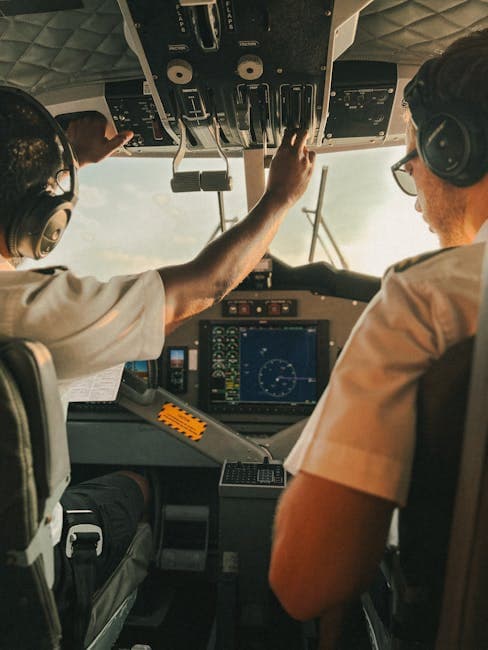
To 'unfreeze' your ATPL and obtain the full Airline Transport Pilot License, you must meet specific flight hour requirements. Under EASA regulations, this typically means accumulating 1,500 hours of flight time in multi-pilot aircraft, including specific hours as pilot-in-command or co-pilot. This experience is usually gained by working as a First Officer (co-pilot) for an airline. Once these hours are logged and verified, the frozen ATPL transitions to an unfrozen, full ATPL, allowing you to serve as a Captain.
Training Pathways: Integrated vs. Modular ATPL Programs
Aspiring pilots have two primary routes to pursue their ATPL: integrated or modular training. Both pathways lead to the same qualification, but they differ significantly in structure, duration, and financial commitment. Understanding these differences is crucial when selecting a pilot school.
Integrated ATPL Training
Integrated ATPL programs are comprehensive, full-time courses designed to take a student with little to no prior flying experience directly to a frozen ATPL. These programs typically last between 18 to 24 months and are highly structured, combining theoretical instruction with practical flight training in a continuous, uninterrupted flow. The curriculum is meticulously planned to ensure all required licenses and ratings (PPL, CPL, MEIR, MCC, and ATPL theory) are obtained sequentially within a dedicated timeframe. Universities like the University of Kyrenia and Near East University in North Cyprus offer such structured programs, often integrating flight training with an academic degree in aviation.
Modular ATPL Training
Modular ATPL training offers greater flexibility. Instead of a single, continuous program, students complete each license and rating as separate modules. For instance, you might first obtain a Private Pilot License (PPL), then accumulate flight hours, followed by ATPL theory, a Commercial Pilot License (CPL), and finally an Instrument Rating (IR) and Multi-Crew Cooperation (MCC). This approach allows students to spread out their training over a longer period, often while working, and manage costs incrementally. While potentially longer in duration (2-5 years), modular training can be more accommodating for those with existing commitments or financial constraints. Both pathways are fully recognized by aviation authorities, including those adhering to Bologna Process standards, which North Cyprus universities follow.
Admission Requirements for North Cyprus Pilot Schools
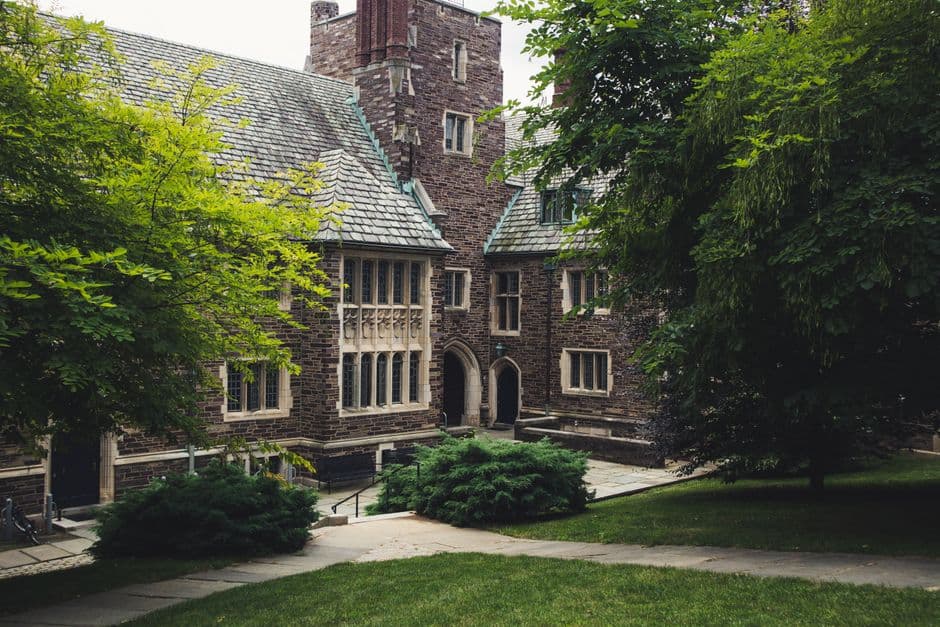
North Cyprus universities maintain one of the most accessible admissions policies in the region, extending this benefit to specialized programs like pilotage. While the academic rigor for aviation is high, the application process is streamlined to welcome international talent without unnecessary barriers.
Crucially, North Cyprus universities DO NOT require external English-language proficiency exams such as IELTS, TOEFL, or Pearson PTE for admission. Similarly, standardized entrance exams like SAT, ACT, GRE, or GMAT are not prerequisites. Admission decisions are primarily based on your secondary-school transcript, with a strong academic record being key for competitive fields like pilotage. For graduate programs, your bachelor's transcript is the main criterion.
Core Requirements for Pilot School Admission in North Cyprus
Age Requirement
Applicants must typically be at least 17 years old to commence training, though you must be 18 to hold a CPL and 21 to hold an ATPL.
Academic Prerequisites
A high school diploma with strong grades in mathematics, physics, and English is generally required. Some universities may have specific GPA expectations for pilotage programs. For instance, the University of Kyrenia's Pilotage program looks for a solid academic foundation.
Medical Class 1 Certificate
This is a non-negotiable requirement for commercial pilots. You must pass a stringent medical examination conducted by an authorized aero-medical examiner to obtain a Class 1 Medical Certificate. This ensures you meet the necessary health standards to safely operate an aircraft.
English Language Proficiency (Internal Assessment)
While external tests are not required for admission, aviation is an English-speaking industry. Upon arrival, students who do not already hold an English-language qualification (like a high school diploma from an English-medium institution) will take an in-house English Proficiency Exam. This is a placement test, not an admission gate. If you do not pass, you will enter the university's English Preparatory School for one academic year before starting your degree, ensuring you have the necessary linguistic skills for aviation studies.
Why North Cyprus Pilot Schools Offer a Strategic Advantage
Choosing where to pursue your pilot training is a significant decision. North Cyprus presents a compelling value proposition for aspiring international pilots, combining cost-effectiveness with robust international recognition.
North Cyprus universities, including those offering aviation programs, provide degrees that come with the EU Diploma Supplement. This 'blue diploma' ensures that your qualifications are transparent, readable, and accepted throughout the European Higher Education Area. This means your pilot school degree from North Cyprus is readily understood for further study or employment by European employers and aviation authorities, significantly enhancing your career mobility across the continent.
Furthermore, these degrees are officially accredited by Turkey’s Council of Higher Education (YÖK). This accreditation grants them equivalence to degrees from Turkish state universities, opening doors for career and further study opportunities within Turkey's dynamic aviation sector. The dual recognition – EU Diploma Supplement and YÖK accreditation – creates a powerful foundation for international mobility, offering credible career pathways not just in Europe and Turkey, but globally, especially in a field with standardized international requirements like aviation.
Leading Pilot School Programs in North Cyprus
Several North Cyprus universities have invested significantly in aviation education, offering comprehensive programs that lead to a frozen ATPL. These institutions combine academic excellence with practical flight training, often in partnership with established flight academies.
The University of Kyrenia (UK) stands out with its Faculty of Aviation and Space Sciences, offering a Bachelor of Science in Pilotage (Professional Pilot Training - ATPL). Their program is designed to meet EASA standards, providing students with both theoretical knowledge and extensive flight hours through its own flight school. Similarly, Near East University (NEU), through its Civil Aviation College, offers a Bachelor's Degree in Pilotage, focusing on training future airline pilots with state-of-the-art facilities and experienced instructors. These universities ensure that their curricula are up-to-date with international aviation regulations, preparing graduates for a global career.
| University | Total Program Cost (USD, estimate) | Scholarship Potential (on tuition portion) |
|---|---|---|
| University of Kyrenia (UK) | $65,000 - $85,000 | 25% - 50% |
| Near East University (NEU) | $70,000 - $90,000 | 25% - 50% |
| Girne American University (GAU) (Aviation Management with flight training options) | $50,000 - $70,000 | 30% - 60% |
It is important to note that pilotage programs are significantly more expensive than standard academic degrees due to the high costs associated with flight hours, aircraft maintenance, and specialized instruction. The figures above are estimates for the entire program duration (typically 4 years for a Bachelor's with integrated flight training). Scholarships are usually applied to the academic tuition portion of the program, with flight training fees often separate. Students are encouraged to visit the specific university pages, such as the Girne American University, for the most current and detailed fee structures and scholarship opportunities.
Navigating Costs, Duration, and Career Prospects

The journey to becoming an airline pilot involves substantial investment in time and finances. Understanding these aspects upfront is vital for planning your education.
Program Duration and Costs
An integrated ATPL program combined with a Bachelor's degree typically spans four academic years. This includes all theoretical modules, simulator training, and actual flight hours required to achieve a frozen ATPL. The total cost, as indicated in the table above, can range from approximately $65,000 to over $90,000 for the entire program, depending on the university and specific flight school arrangements. These costs cover tuition, flight training, examinations, and other associated fees. While substantial, North Cyprus often offers a more cost-effective alternative compared to similar EASA-compliant programs in Western Europe or North America, without compromising on quality or recognition.
Career Prospects and License Conversion
Graduates from North Cyprus pilot schools, equipped with an EASA-compatible frozen ATPL and a university degree carrying the EU Diploma Supplement and YÖK accreditation, possess strong international employability. This dual recognition means your qualifications are well-regarded by airlines in Europe, Turkey, and other countries that recognize EASA standards. Many graduates find opportunities as First Officers with regional or international airlines. The path to an unfrozen ATPL typically involves gaining the necessary 1,500 flight hours as a co-pilot.
Regarding license conversion, EASA licenses are widely accepted. If you plan to work in a country outside the EASA system, you may need to undergo a license validation or conversion process with the local aviation authority. This usually involves passing some local theoretical exams and possibly a flight check. However, the foundational training and international recognition from a North Cyprus institution significantly streamline this process, making graduates highly adaptable to various global aviation markets. You can explore various aviation programs and their specific career outcomes on our platform.
Your Application Journey to a North Cyprus Pilot School
Applying to a pilot school in North Cyprus is a straightforward process designed to be accessible for international students. The key is to prepare your academic documents and medical certificate diligently.
To begin, gather your secondary-school transcripts, passport copy, and any other relevant academic certificates. For pilotage programs, securing your Class 1 Medical Certificate early in the process is highly recommended, as it is a fundamental requirement. You can then submit these documents directly to your chosen university or through an authorized education agent. Remember, there are no external entrance exams or mandatory English proficiency tests like IELTS required for admission. This policy, overseen by the TRNC Higher Education Planning, Evaluation, Accreditation and Coordination Council (YÖDAK), makes North Cyprus an attractive destination for aspiring pilots worldwide.
Once admitted, you will receive an offer letter. For English proficiency, an in-house placement test awaits you upon arrival. Should you not meet the university's English language standard, a one-year English Preparatory School ensures you gain the necessary skills before commencing your pilotage degree, guaranteeing that language is a support system, not a barrier. To start your application, visit our apply now page.
Frequently Asked Questions About ATPL and Pilot School in North Cyprus
Aviation Programs at North Cyprus Universities
Hand-picked programs from North Cyprus universities you can apply to directly.

Ready to Launch Your Aviation Career in North Cyprus?
Explore top-tier pilotage and aviation management programs. Our advisors can help you navigate the application process, scholarship opportunities, and visa guidance.