Study Pilotage in North Cyprus
No IELTS or entrance exam required — admission is based on your transcript.

What Is Pilot Study? Understanding Aviation Education
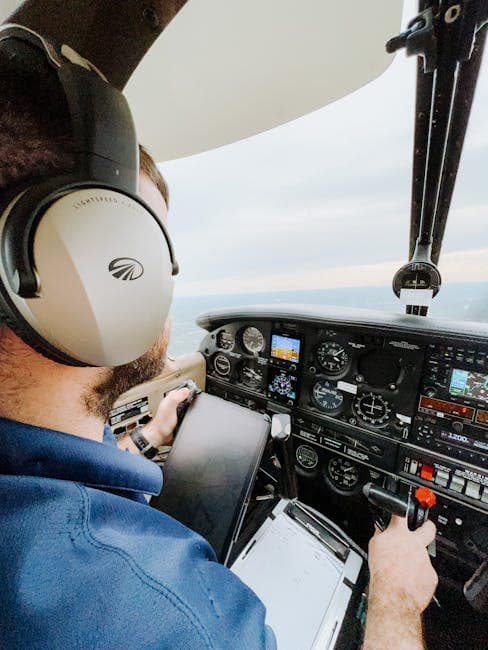
The question, "what is pilot study?" often arises for individuals considering a career in aviation. Fundamentally, pilot study encompasses the rigorous academic and practical training required to become a certified aircraft pilot. This field is distinct from general aerospace engineering or aviation management degrees, as its primary objective is to equip students with the knowledge and skills to operate aircraft safely and efficiently.
In North Cyprus, pilot study programs are typically structured to combine a Bachelor of Science (BSc) degree in Professional Pilotage with the necessary flight training to obtain a commercial pilot license. This integrated approach ensures that graduates possess not only the technical flying skills but also a comprehensive understanding of aviation theory, aerodynamics, navigation, meteorology, air traffic control, and aviation law. This dual qualification enhances a pilot's career prospects, providing a strong academic foundation alongside practical expertise.
Academic Degrees vs. Practical Flight Training
While practical flight training is the core of becoming a pilot, an academic degree offers significant advantages. Standalone flight schools primarily focus on the practical aspects of flying, leading directly to a pilot license. However, universities in North Cyprus, such as the University of Kyrenia (UK) and Near East University (NEU), integrate this practical training within a four-year bachelor's curriculum. This means students graduate with a university degree, which can be crucial for career progression, management roles within airlines, or pursuing further postgraduate studies in aviation.
The academic component provides a broader understanding of the aviation industry, including safety management systems, human factors in aviation, and airline operations. This holistic education prepares pilots not just for the cockpit, but for leadership and analytical roles within the complex global aviation ecosystem, as outlined by organizations like the International Civil Aviation Organization (ICAO), which sets international standards and recommended practices for aviation.
The Airline Cadet Program Model in North Cyprus
A significant draw for aspiring pilots in North Cyprus is the airline cadet program model. These programs are officially approved and supported by major airlines, providing a direct pipeline for graduates into the industry. This model offers students not just theoretical knowledge and flight hours, but also invaluable hands-on training, internship experience, and co-pilot flight practice within an airline environment.
North Cyprus universities offering pilot programs, such as the University of Kyrenia and Near East University, have established connections with prominent airlines. These partnerships often include Turkish Airlines, Pegasus Airlines, AJet (formerly AnadoluJet), SunExpress, and AtlasGlobal. These collaborations mean that students gain exposure to real-world airline operations, from ground handling to flight dispatch, significantly enhancing their employability upon graduation.
Integration with Partner Airlines
The integration with partner airlines is a cornerstone of the North Cyprus pilot study experience. For instance, students might undertake internships at airline maintenance facilities, participate in operational briefings, or even gain initial co-pilot flight experience on actual commercial routes under supervision. This hands-on approach is critical for developing the practical skills and professional demeanor expected of airline pilots. The curriculum is often designed in consultation with these airlines to ensure that graduates meet current industry standards and are immediately ready for entry-level co-pilot positions.
Graduates from these programs receive a widely recognized pilot license, typically the Airline Transport Pilot License (ATPL) or Commercial Pilot License (CPL) with Instrument Rating (IR) and Multi-Engine Rating (ME), depending on the program structure. This license, combined with a bachelor's degree, positions them competitively in the global aviation job market, which is experiencing a significant demand for qualified personnel, as reported by industry bodies like the International Air Transport Association (IATA).
Comprehensive Training Phases: From Ground School to Flight Deck
Pilot training is a multi-stage process, meticulously designed to build skills and knowledge progressively. In North Cyprus, universities offering pilot programs follow a structured curriculum that mirrors international best practices, ensuring students are thoroughly prepared for all aspects of flight operations.
Ground School and Theoretical Knowledge
The journey begins with extensive ground school, where students delve into the theoretical foundations of aviation. This phase covers subjects such as:
- Aerodynamics: Principles of flight and aircraft performance.
- Aircraft Systems: Understanding engines, avionics, and control systems.
- Navigation: Traditional and modern navigation techniques, including GPS.
- Meteorology: Weather phenomena and their impact on flight.
- Aviation Law and Regulations: International and national air traffic rules.
- Human Factors: Pilot psychology, decision-making, and crew resource management.
This academic rigor is often integrated into the bachelor's degree curriculum, providing a deep theoretical understanding before practical flight training commences.
Simulator Sessions and Flight Hours
Following ground school, students transition to simulator sessions. Modern flight simulators replicate various aircraft types and environmental conditions, allowing students to practice maneuvers, emergency procedures, and complex flight scenarios in a safe, controlled environment. These sessions are crucial for developing muscle memory and decision-making skills without the risks associated with actual flight.
Actual flight hours are accumulated progressively, starting with single-engine aircraft for basic maneuvers and visual flight rules (VFR), then advancing to instrument flight rules (IFR) and multi-engine aircraft. Students log hundreds of hours under the guidance of experienced flight instructors, building proficiency and confidence. The total flight hours required typically align with international aviation authority standards, such as those set by the European Union Aviation Safety Agency (EASA), ensuring licenses are globally recognized.
Internships and Co-Pilot Experience

Many North Cyprus pilot programs incorporate internships with partner airlines. These internships provide invaluable exposure to airline operations, from ground support to flight planning. Some advanced programs even offer co-pilot flight practice, allowing students to sit in the right seat of a commercial aircraft, observing and assisting certified pilots on actual routes. This experience is a significant advantage, bridging the gap between training and professional employment.
Key Stages of Pilot Training in North Cyprus
Academic Foundation (Ground School)
Intensive theoretical instruction covering aerodynamics, navigation, meteorology, aviation law, and aircraft systems, often integrated into a BSc degree.
Simulator Training
Practice of flight maneuvers, emergency procedures, and complex scenarios in advanced flight simulators, building critical decision-making skills.
Flight Hours Accumulation
Hundreds of hours of actual flight training in single-engine and multi-engine aircraft under instructor supervision, progressing from VFR to IFR.
Airline Internships
Practical experience with partner airlines like Turkish Airlines, Pegasus, AJet, SunExpress, and Atlas, offering exposure to real-world operations.
Co-Pilot Flight Practice
Advanced students may gain supervised co-pilot experience on commercial flights, a unique advantage for career readiness.
North Cyprus's Distinct Advantage in Pilot Training
When considering where to pursue pilot study, North Cyprus presents a compelling value proposition, particularly in terms of accessibility, cost-effectiveness, and international recognition. Unlike many other global aviation hubs, North Cyprus universities have one of the most open admissions policies in the region, making it an attractive destination for international students.
Streamlined Admission Process
A key advantage of pursuing pilot study in North Cyprus is the straightforward admission process. North Cyprus universities DO NOT require external English-language proficiency exams such as IELTS, TOEFL, Pearson PTE, Cambridge English, or Duolingo English Test for admission. Furthermore, they DO NOT require standardised entrance exams like SAT, ACT, GRE, or GMAT, nor do they administer a competitive entrance exam at the application stage for any program, including specialized fields like pilotage.
Admission is primarily based on the applicant's secondary-school transcript. Students submit their academic documents, and if they meet the GPA expectations for pilotage programs, they receive an offer. Upon arrival at the university, applicants who do not already hold an English-language qualification take an in-house English Proficiency Exam. This is a placement test, not an admission gate. If a student does not pass this in-house exam, they enter the university's English Preparatory School for typically one academic year before starting their degree, without needing a second admission decision. This policy significantly reduces barriers for aspiring international pilots.
Investment in Your Future: Cost and Duration of Pilot Programs
Pilot training is a significant investment, and understanding the cost and duration is crucial for planning. While pilot programs are inherently more expensive than many other academic degrees due to the extensive flight training and equipment involved, North Cyprus offers a competitive edge compared to programs in Europe, North America, or Australia.
The duration of an integrated Bachelor's degree in Professional Pilotage, combined with flight training, typically spans four academic years. This includes both theoretical coursework and practical flight hours. For example, the University of Kyrenia's Professional Pilotage program is designed as an 8-semester (4-year) curriculum, leading to both a BSc degree and the necessary licenses.
Tuition and Scholarships
Tuition fees for pilot programs in North Cyprus are generally higher than for humanities or business degrees, reflecting the specialized nature and high operational costs of flight training. For instance, the University of Kyrenia's Professional Pilotage program has an annual tuition fee of approximately 12,000 EUR per semester, which includes flight training costs. However, North Cyprus universities are known for their generous scholarship opportunities for international students, which can significantly reduce the financial burden. Many universities offer scholarships ranging from 25% to 75% of tuition fees, based on academic merit.
When comparing costs, a similar integrated program in Western Europe or North America could easily range from $80,000 to $150,000 USD or more for tuition and flight training, excluding living expenses. North Cyprus provides a more accessible entry point without compromising on quality or international recognition. Prospective students should explore available scholarships directly with their chosen university.
| University | Program Duration | Typical Scholarship Range | Key Features |
|---|---|---|---|
| <a href="/universities/university-of-kyrenia">University of Kyrenia (UK)</a> | 4 Years (8 Semesters) | 25% - 50% | Integrated BSc with ATPL, strong airline partnerships, modern fleet. |
| <a href="/universities/near-east-university">Near East University (NEU)</a> | 4 Years (8 Semesters) | 25% - 50% | Comprehensive flight training, advanced simulators, YÖK accredited. |
| <a href="/universities/cyprus-international-university">Cyprus International University (CIU)</a> | 4 Years (8 Semesters) | 25% - 50% | Focus on theoretical and practical skills, industry-aligned curriculum. |
Global Recognition: EU Diploma Supplement and YÖK Accreditation
A critical factor for any international student is the global recognition of their degree. North Cyprus universities offer a dual advantage in this regard, ensuring strong international mobility for their graduates, particularly in a globally standardized field like aviation.
EU Diploma Supplement
All degrees issued by North Cyprus universities, including those in pilotage, come with the EU Diploma Supplement. This "blue diploma" is a standardized document that provides a detailed description of the nature, level, context, content, and status of the studies successfully completed by the holder. It is designed to make qualifications transparent and easily understood across Europe and beyond, facilitating academic and professional recognition.
For pilots, this means their academic qualification is readily readable and accepted by European universities for further study (e.g., a Master's in Aviation Management) and by European employers for work. This signals a high level of quality assurance and alignment with the European Higher Education Area (EHEA) framework, established through the Bologna Process.
YÖK Accreditation

In parallel, North Cyprus university degrees are accredited by Turkey's Council of Higher Education (YÖK). This accreditation provides academic equivalence to degrees from Turkish state universities, which is highly beneficial for graduates who may later wish to live, study, or work in Turkey. YÖK accreditation is a rigorous process that ensures educational standards meet the high benchmarks set by the Turkish higher education system.
Together, the EU Diploma Supplement and YÖK accreditation produce strong international mobility. For pilot graduates, this means realistic career and further-study opportunities across Europe, Turkey, and globally. The dual recognition enhances the credibility and transferability of their qualifications, providing a solid foundation for a truly international aviation career. The Higher Education Planning, Evaluation, Accreditation and Coordination Council (YÖDAK) in North Cyprus oversees these accreditation processes, ensuring compliance with both local and international standards.
Leading Aviation Institutions in North Cyprus
Several North Cyprus universities have invested significantly in state-of-the-art facilities and experienced faculty to deliver world-class pilot programs. These institutions are at the forefront of aviation education in the region, attracting students from across the globe.
University of Kyrenia (UK)
The University of Kyrenia is particularly renowned for its Faculty of Aviation and Space Sciences. It offers a Professional Pilotage (BSc) program that integrates academic study with extensive flight training. The university boasts its own modern fleet of training aircraft and advanced flight simulators, providing students with hands-on experience from early stages. Their strong ties with major airlines facilitate internship opportunities and career placement for graduates.
Near East University (NEU)
Near East University also offers a comprehensive Professional Pilotage (BSc) program through its Faculty of Civil Aviation. NEU emphasizes a strong theoretical foundation combined with practical flight training, preparing students for the demands of the modern aviation industry. The university's commitment to research and development in aviation ensures that its curriculum remains current and relevant.
Cyprus International University (CIU)
Cyprus International University offers a Bachelor's degree in Professional Pilotage, focusing on developing highly skilled and ethical pilots. CIU's program structure is designed to meet international aviation standards, providing students with a robust education that combines academic rigor with practical flight experience. The university's diverse international student body also creates a vibrant learning environment.
Prospective students are encouraged to explore the specific curriculum, facilities, and airline partnerships of each university by visiting their respective pages on our platform or directly on the university websites to find the best fit for their aspirations. You can browse all North Cyprus universities to compare their offerings.
Streamlined Admission for Aspiring Pilots
The admission process for pilot programs in North Cyprus is designed to be accessible for international students, focusing on academic merit rather than standardized tests that can often be a barrier. This approach allows a broader range of talented individuals to pursue their dreams of becoming a pilot.
Key Admission Requirements
The primary requirement for admission to a Bachelor's in Professional Pilotage program is a valid secondary-school leaving certificate or its equivalent. Universities typically look for strong academic performance, particularly in subjects like mathematics and physics, which are foundational for aviation studies. For graduate programs in aviation, a bachelor's transcript is required.
Crucially, North Cyprus universities DO NOT require applicants to submit scores from external English proficiency tests (like IELTS or TOEFL) or standardized entrance exams (like SAT or ACT). Admission decisions are made based on the academic documents submitted. This policy significantly simplifies the application process for international students.
English Proficiency Assessment Upon Arrival

For students who do not hold an existing English-language qualification (such as a high school diploma from an English-medium institution), an in-house English Proficiency Exam is administered upon their arrival at the university. This is a diagnostic placement test, not a competitive admission exam. Its purpose is to assess the student's English language level to ensure they can follow the English-taught curriculum.
Students who do not meet the required English proficiency level on this in-house exam are enrolled in the university's English Preparatory School. This typically involves one academic year of intensive English language instruction, after which students seamlessly transition into their chosen Professional Pilotage degree program without needing to reapply or undergo another admission decision. This supportive structure ensures that all students have the necessary linguistic foundation for success.
Career Trajectories and Employability for North Cyprus Pilot Graduates
A career as a pilot offers unparalleled opportunities for travel, professional growth, and a dynamic work environment. Graduates of North Cyprus pilot programs are well-positioned to enter this exciting field, supported by a robust education and internationally recognized qualifications.
Diverse Career Paths
The primary career path for pilot graduates is, of course, as an airline pilot for commercial carriers. With the ongoing global demand for aviators, opportunities exist with major airlines such as Turkish Airlines, Pegasus Airlines, AJet, SunExpress, and AtlasGlobal, as well as other regional and international carriers. Beyond commercial airlines, pilots can find employment in various sectors:
- Cargo Aviation: Piloting freight aircraft for logistics companies.
- Corporate Aviation: Flying private jets for businesses and high-net-worth individuals.
- Flight Instruction: Training the next generation of pilots.
- Aerial Survey and Photography: Operating aircraft for specialized data collection.
- Air Ambulance Services: Piloting medical evacuation flights.
- Military and Government Aviation: Serving in national air forces or government agencies.
The comprehensive nature of pilot study in North Cyprus, combining a bachelor's degree with flight licenses, equips graduates with the versatility to pursue these diverse roles. The academic background provides a deeper understanding of aviation management and safety, which can open doors to leadership positions within airlines or regulatory bodies in the long term.
Enhancing Global Employability
The dual recognition of North Cyprus degrees through the EU Diploma Supplement and YÖK accreditation significantly enhances the global employability of pilot graduates. The EU Diploma Supplement ensures that the academic component of their qualification is transparent and understandable across the European Higher Education Area, making it easier to apply for jobs or further study in EU member states. This is particularly valuable in a field like aviation, where international mobility is often a given.
Furthermore, the accreditation by YÖK provides direct equivalence within Turkey, a major aviation hub with rapidly expanding airlines. This dual recognition means that graduates are not limited to a single region but have credible, evidenced opportunities across Europe, Turkey, and globally. The rigorous training and internationally aligned curriculum ensure that North Cyprus pilot graduates meet the high professional standards required by airlines worldwide, making them attractive candidates in a competitive market.
Student Life and Support for Pilots in North Cyprus
Studying pilot programs in North Cyprus offers more than just academic and flight training; it provides a vibrant student experience in a safe and welcoming environment. International students benefit from comprehensive support services designed to ensure their success and well-being.
Campus Environment and Facilities
North Cyprus universities provide modern campuses with state-of-the-art facilities, including dedicated aviation training centers, flight simulators, and access to training aircraft. Beyond academic resources, campuses typically offer extensive amenities such as libraries, sports complexes, student clubs, and diverse dining options. The multicultural environment, with students from over 100 countries, fosters a rich cross-cultural exchange.
Student accommodations are readily available, ranging from university dormitories to private apartments, catering to various preferences and budgets. Universities often provide student accommodation guidance and support for international students to help them settle in comfortably.
Support Services for International Students
International student offices at North Cyprus universities offer a wide range of support, including orientation programs, academic advising, and personal counseling. They also provide crucial student visa guidance and assistance with local registration processes. Career counselling services are available to help pilot students prepare for job applications, interviews, and navigate the specific requirements of the aviation industry.
The cost of living in North Cyprus is generally more affordable than in many European countries, allowing students to manage their expenses effectively while focusing on their demanding pilot studies. This combination of quality education, practical training, international recognition, and supportive student life makes North Cyprus an excellent choice for aspiring pilots.
Frequently Asked Questions About Pilot Study in North Cyprus
Aviation Programs at North Cyprus Universities
Hand-picked programs from North Cyprus universities you can apply to directly.

Ready to Launch Your Aviation Career?
Discover the pilot program that fits your ambitions. Our advisors can help you navigate the application process and connect you with leading North Cyprus universities.