Degree Label
Degree
Program Language
Program Duration
Tuition Fee / per semester
Fees & Estimates
University-wide fees
Charged by Arkin University of Creative Arts and Design on top of program tuition. Applies to every student at this university.
- English preparatory school
Only charged to students who must complete English prep before starting the program.
2,756 €per semester
All amounts include VAT (KDV) and are indicative. Final fees are confirmed in your offer letter.
Translation Note: If these documents are not in English, official translations are required, along with the original documents.
Passport must be valid for at least 6 months beyond the application date.
- Recent passport‑style photo with plain background, showing full face clearly. Must be high‑quality and suitable for official identification or academic records.Photo
- Official travel document issued by a national authority, serving as proof of identity and citizenship. Requirements vary by country (validity period, biometric features, format), but a minimum of six months’ validity is generally expected for international applications.Passport
- Proof of completion of upper‑secondary education. Each country issues its own equivalent credential (e.g., “High School Diploma” in the U.S., “A‑Levels” in the U.K., “Baccalauréat” in France), all serving as eligibility evidence for higher education admission.High School Diploma
- Official document listing courses taken and grades earned during secondary education. Each country issues its own format (e.g., GPA scale in the U.S., percentage marks in India, letter grades in Europe), but all serve to verify academic performance and readiness for higher education.Transcript
- Official document issued by an authority (school, university, training body, or government) confirming completion of a program or achievement of a qualification. Formats and titles vary worldwide, but all serve as recognized proof of skills, education, or eligibility.Certificate
- Official proof of language proficiency issued by recognized testing bodies (e.g., IELTS, TOEFL, DELF, TestDaF). Each country or institution may accept different exams and levels, but all serve to verify communication ability for academic or professional eligibility.Language Certificate
Program Overview
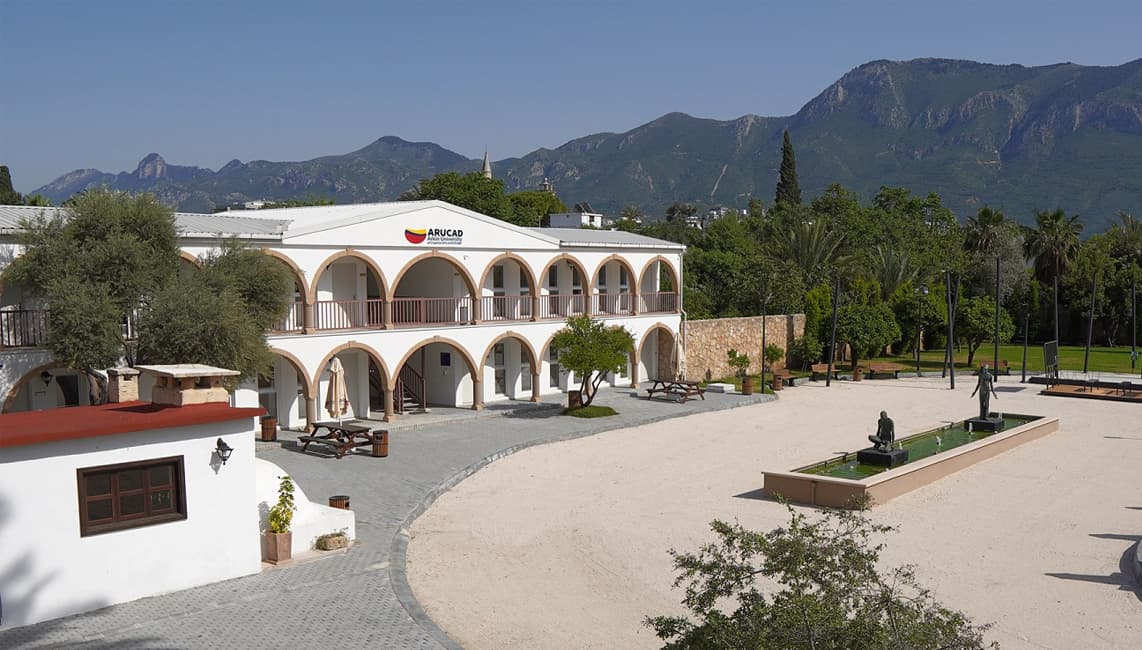
The Bachelor of Arts (B.A.) in Ceramics at Arkin University of Creative Arts and Design (ARUCAD) is a 4-year, on-campus program offered by the Faculty of Arts. Located in Kyrenia, North Cyprus, the program provides a comprehensive education in ceramic art and design, combining traditional craftsmanship with contemporary creative practices. Students develop technical skills in clay manipulation, glazing, and firing techniques while exploring conceptual and aesthetic dimensions of ceramics.
What You'll Study
The curriculum covers a range of topics essential for a career in ceramics, including:
- Ceramic materials and chemistry
- Hand-building and wheel-throwing techniques
- Glaze formulation and application
- Kiln operation and firing methods (e.g., oxidation, reduction, raku)
- 3D design and modeling
- Art history and contemporary ceramic practices
- Professional practice and portfolio development
Students engage in studio-based learning, critiques, and exhibitions, culminating in a final project that demonstrates their artistic and technical proficiency.
Career Outlook
Graduates of the Ceramics program can pursue careers as studio potters, ceramic artists, product designers, or educators. Opportunities exist in art galleries, design studios, manufacturing, and independent practice. The program also prepares students for advanced study in fine arts or ceramics.
Admission Overview
Admission to the B.A. in Ceramics requires a high school diploma or equivalent. Applicants may need to submit a portfolio and/or pass an interview. For specific requirements, prospective students should contact the university admissions office.