Communication & Media Studies

Degree Label
Degree
Program Language
Program Duration
Tuition Fee / per semester
Fees & Estimates
What you'll actually pay — broken down line by line, with the minimum to start studying and the estimated cost to finish the program.
Covers your first 2 courses at 900 € each plus the university's registration & social fund.
All required courses, thesis or term project, seminar, and university-wide fees rolled into one total for the whole 8-course program.
Program tuition
Fees you're charged for this specific program. Optional lines are listed but excluded from the totals above.
- Tuition per course
Minimum 2 courses to enroll; 8 courses to complete the program.
900 €per course - Thesis fee3,600 €across 4 semesters
- Seminar fee300 €one-time
University-wide fees
Charged by Cyprus International University on top of program tuition. Applies to every student at this university.
- English preparatory school
Only charged to students who must complete English prep before starting the program.
4,500 $per year
Notes from the university
Extra details about payment schedules, discounts, refund policy, or anything the university wants you to know before applying.
- Indicated prices include 5% VAT.
- Registration / tuition fees are charged annually (once a year). The €787.50 installment above is paid at registration.
- Per-course fee is 900 EUR and is not included in the registration amount above (scholarship will be applied if available).
- Term-based thesis fee is 3,600 EUR, paid across 4 semesters.
- Seminar fee is 300 EUR.
- Scientific Foundation Program is 300 EUR per course — valid for PhD and only required when the student's background needs foundation courses.
- PhD Environmental Engineering / Environmental Sciences / Bioengineering: additional 600 EUR fee.
All amounts include VAT (KDV) and are indicative. Final fees are confirmed in your offer letter.
Translation Note: If these documents are not in English, official translations are required, along with the original documents.
Passport must be valid for at least 6 months beyond the application date.
- Recent passport‑style photo with plain background, showing full face clearly. Must be high‑quality and suitable for official identification or academic records.Photo
- Official travel document issued by a national authority, serving as proof of identity and citizenship. Requirements vary by country (validity period, biometric features, format), but a minimum of six months’ validity is generally expected for international applications.Passport
- Official document listing courses completed and grades earned during undergraduate study. Formats vary worldwide (e.g., GPA scale in the U.S., percentage marks in India, ECTS credits in Europe), but all serve to verify academic performance and eligibility for postgraduate admission or professional recognition.Bachelor’s Diploma / Academic Record
- Official document listing courses completed and grades earned during undergraduate study. Formats vary worldwide (e.g., GPA scale in the U.S., percentage marks in India, ECTS credits in Europe), but all serve to verify academic performance and eligibility for postgraduate admission or professional recognition.Bachelor’s Transcript / Academic Record
- Official proof of completion of a second‑cycle higher education program. Titles and formats differ worldwide (e.g., “M.A.,” “M.Sc.,” “Magister,” “Master’s Degree”), but all confirm advanced academic achievement and eligibility for doctoral study or professional recognition.Master’s Diploma / Postgraduate Degree Certificate
- Official document listing courses completed, grades earned, and credits obtained during postgraduate study. Formats differ worldwide (e.g., GPA scale in the U.S., ECTS credits in Europe, percentage marks in Asia), but all serve to verify academic performance and eligibility for doctoral programs or professional recognition.Master’s Transcript / Academic Record
- Structured document summarizing education, work experience, skills, and achievements. Formats differ worldwide (e.g., résumé in the U.S., CV in Europe), but all serve to present qualifications and professional background for academic or job applications.Curriculum Vitae (CV) / Résumé
- Formal document written by a teacher, professor, or professional supervisor endorsing the applicant’s abilities, character, and achievements. Formats and expectations vary worldwide, but all serve to provide external validation of academic or professional readiness.Letter of Recommendation
- Official proof of language proficiency issued by recognized testing bodies (e.g., IELTS, TOEFL, DELF, TestDaF). Each country or institution may accept different exams and levels, but all serve to verify communication ability for academic or professional eligibility.Language Certificate
- Official document issued by an authority (school, university, training body, or government) confirming completion of a program or achievement of a qualification. Formats and titles vary worldwide, but all serve as recognized proof of skills, education, or eligibility.Certificate
Program Overview
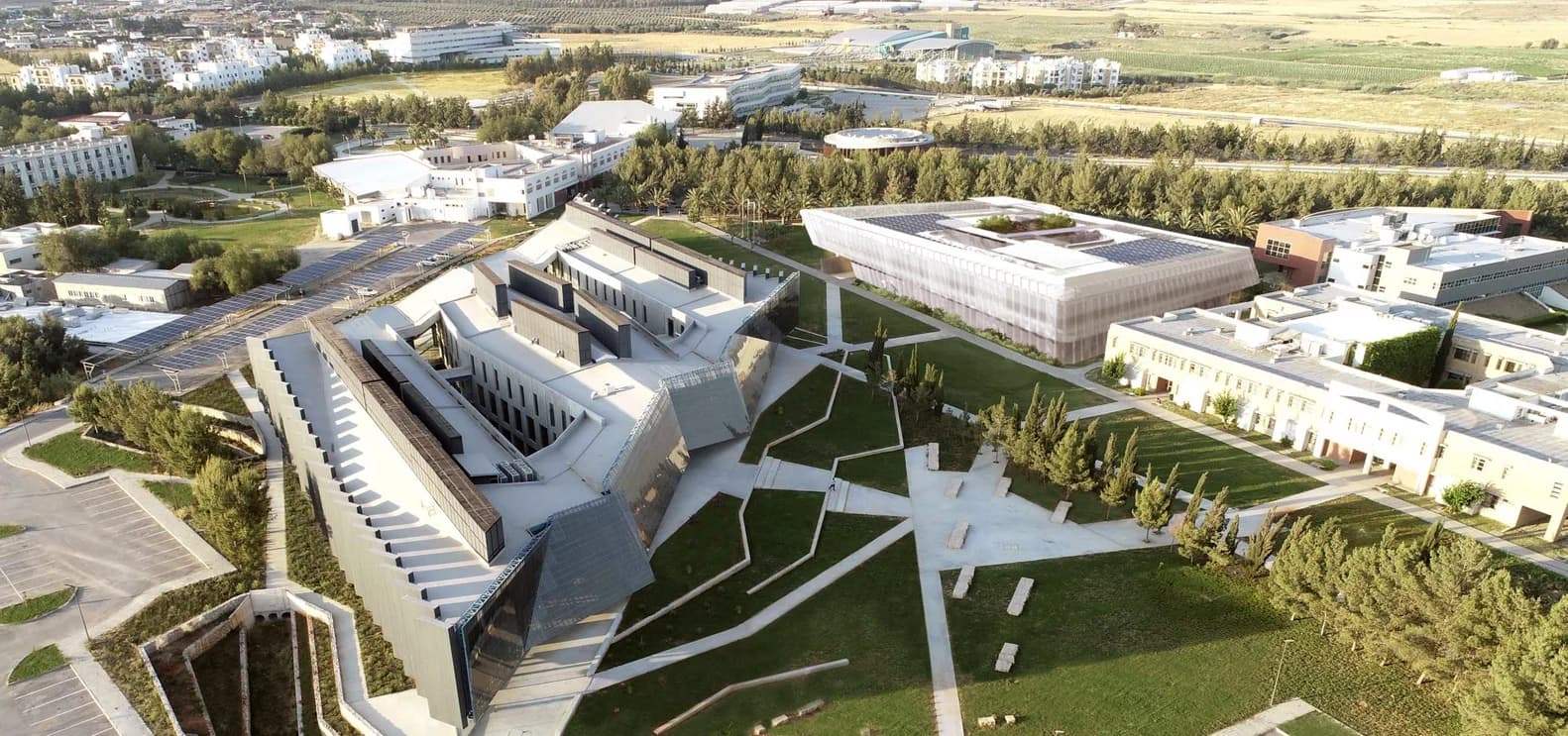
The Ph.D. in Communication & Media Studies at Cyprus International University (CIU), offered through the Institute of Graduate Studies and Research, is a 4-year, on-campus doctoral program designed for scholars and professionals seeking to advance their expertise in the dynamic fields of communication and media. This program provides a rigorous academic framework for original research, critical analysis, and theoretical exploration, preparing graduates for leadership roles in academia, research, and media industries. Students benefit from CIU's location in Nicosia, North Cyprus, a multicultural hub that offers a unique vantage point for studying global media dynamics.
What You'll Study
The curriculum emphasizes advanced theoretical foundations and research methodologies in communication and media studies. While specific course offerings may vary, the program typically covers areas such as:
- Communication theories and paradigms
- Media and society
- Research methods in communication (qualitative and quantitative)
- Digital media and new technologies
- Media policy and ethics
- Global communication and cultural studies
Students engage in intensive seminars, independent research, and dissertation work under the guidance of experienced faculty. The program culminates in a doctoral dissertation that contributes original knowledge to the field. Please note that the program does not require a thesis but focuses on a comprehensive dissertation.
Career Outlook
Graduates of the Ph.D. in Communication & Media Studies are well-prepared for academic careers as university professors and researchers, as well as high-level positions in media organizations, communication agencies, policy institutes, and corporate communication departments. Potential roles include:
- University lecturer or professor
- Research fellow or director
- Media analyst or consultant
- Communication strategist
- Policy advisor in media regulation
The doctoral degree also opens doors to leadership positions in journalism, broadcasting, digital media, and public relations.
Admission Overview
Admission to the Ph.D. program typically requires a master's degree in a related field, along with a strong academic record and research proposal. Applicants may need to demonstrate proficiency in English (if applicable) and submit supporting documents such as transcripts, letters of recommendation, and a statement of purpose. For specific admission requirements and deadlines, prospective students should consult the CIU Institute of Graduate Studies and Research.