Oral and Maxillofacial Surgery

Degree Label
Degree
Program Language
Program Duration
Tuition Fee / per semester
Translation Note: If these documents are not in English, official translations are required, along with the original documents.
Passport must be valid for at least 6 months beyond the application date.
- Recent passport‑style photo with plain background, showing full face clearly. Must be high‑quality and suitable for official identification or academic records.Photo
- Official travel document issued by a national authority, serving as proof of identity and citizenship. Requirements vary by country (validity period, biometric features, format), but a minimum of six months’ validity is generally expected for international applications.Passport
- Official proof of completion of a first‑cycle higher education program. Titles and formats vary worldwide (e.g., “Bachelor of Arts,” “Licence,” “B.Sc.”), but all confirm eligibility for postgraduate study or professional recognition.Bachelor’s Diploma
- Official document listing courses completed and grades earned during undergraduate study. Formats vary worldwide (e.g., GPA scale in the U.S., percentage marks in India, ECTS credits in Europe), but all serve to verify academic performance and eligibility for postgraduate admission or professional recognition.Bachelor’s Transcript
- Official document issued by an authority (school, university, training body, or government) confirming completion of a program or achievement of a qualification. Formats and titles vary worldwide, but all serve as recognized proof of skills, education, or eligibility.Certificate
- Official proof of language proficiency issued by recognized testing bodies (e.g., IELTS, TOEFL, DELF, TestDaF). Each country or institution may accept different exams and levels, but all serve to verify communication ability for academic or professional eligibility.Language Certificate
- Formal document written by a teacher, professor, or professional supervisor endorsing the applicant’s abilities, character, and achievements. Formats and expectations vary worldwide, but all serve to provide external validation of academic or professional readiness.Letter of Recommendation
- Structured document summarizing education, work experience, skills, and achievements. Formats differ worldwide (e.g., résumé in the U.S., CV in Europe), but all serve to present qualifications and professional background for academic or job applications.Curriculum Vitae (CV)
Program Overview
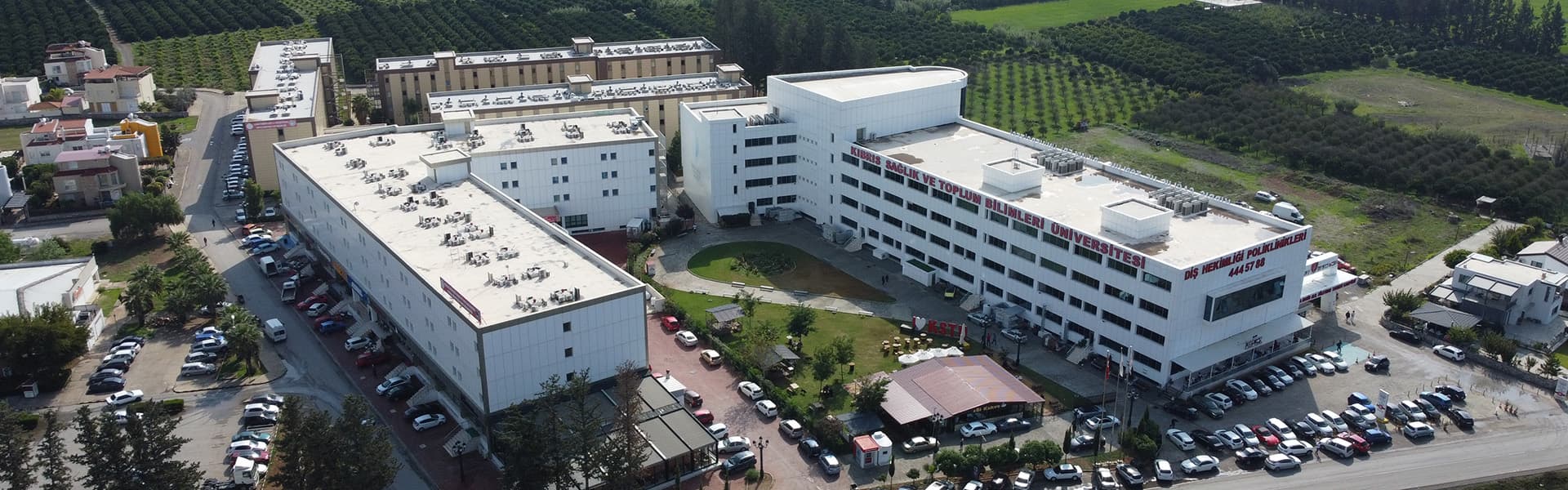
The Master of Science (M.Sc.) in Oral and Maxillofacial Surgery at Cyprus Health & Social Sciences University (CHSSU) is a 2-year, on-campus graduate program offered by the Faculty of Dentistry. This program is designed for dental graduates seeking advanced clinical and theoretical training in the surgical management of diseases, injuries, and defects of the oral and maxillofacial region. Located in Güzelyurt, North Cyprus, the program combines rigorous academic coursework with hands-on clinical practice, preparing students for specialized careers in oral surgery.
What You'll Study
The curriculum covers a comprehensive range of topics essential for oral and maxillofacial surgery practice. Key areas of study include:
- Oral Pathology and Medicine: Diagnosis and management of oral diseases.
- Maxillofacial Trauma: Surgical treatment of facial fractures and soft tissue injuries.
- Dentoalveolar Surgery: Extractions, impacted teeth, and pre-prosthetic surgery.
- Orthognathic Surgery: Correction of dentofacial deformities.
- Temporomandibular Joint Disorders: Diagnosis and surgical intervention.
- Implantology: Surgical placement of dental implants.
- Anesthesia and Pain Management: Local and general anesthesia techniques.
- Research Methodology: Principles of clinical research and evidence-based practice.
The program does not require a thesis, allowing students to focus on clinical skill development and practical training.
Career Outlook
Graduates of the M.Sc. in Oral and Maxillofacial Surgery are prepared for careers as oral surgeons in hospitals, private clinics, and academic institutions. They may also pursue further specialization or research roles. The program provides a strong foundation for clinical practice and board certification in oral and maxillofacial surgery.
Admission Overview
Applicants must hold a dental degree (e.g., DDS or DMD) from an accredited institution. Additional requirements may include transcripts, letters of recommendation, and proof of English proficiency. For specific admission deadlines and application procedures, prospective students should contact the university directly.