
Translation & Interpretation

Degree Label
Degree
Program Language
Program Duration
Tuition Fee / per semester
Fees & Estimates
University-wide fees
Charged by Near East University on top of program tuition. Applies to every student at this university.
- English preparatory school
Only charged to students who must complete English prep before starting the program.
3,225 €per semester
All amounts include VAT (KDV) and are indicative. Final fees are confirmed in your offer letter.
Translation Note: If these documents are not in English, official translations are required, along with the original documents.
Passport must be valid for at least 6 months beyond the application date.
- Recent passport‑style photo with plain background, showing full face clearly. Must be high‑quality and suitable for official identification or academic records.Photo
- Official travel document issued by a national authority, serving as proof of identity and citizenship. Requirements vary by country (validity period, biometric features, format), but a minimum of six months’ validity is generally expected for international applications.Passport
- Proof of completion of upper‑secondary education. Each country issues its own equivalent credential (e.g., “High School Diploma” in the U.S., “A‑Levels” in the U.K., “Baccalauréat” in France), all serving as eligibility evidence for higher education admission.High School Diploma
- Official document listing courses taken and grades earned during secondary education. Each country issues its own format (e.g., GPA scale in the U.S., percentage marks in India, letter grades in Europe), but all serve to verify academic performance and readiness for higher education.Transcript
- Official document issued by an authority (school, university, training body, or government) confirming completion of a program or achievement of a qualification. Formats and titles vary worldwide, but all serve as recognized proof of skills, education, or eligibility.Certificate
- Official proof of language proficiency issued by recognized testing bodies (e.g., IELTS, TOEFL, DELF, TestDaF). Each country or institution may accept different exams and levels, but all serve to verify communication ability for academic or professional eligibility.Language Certificate
Program Overview
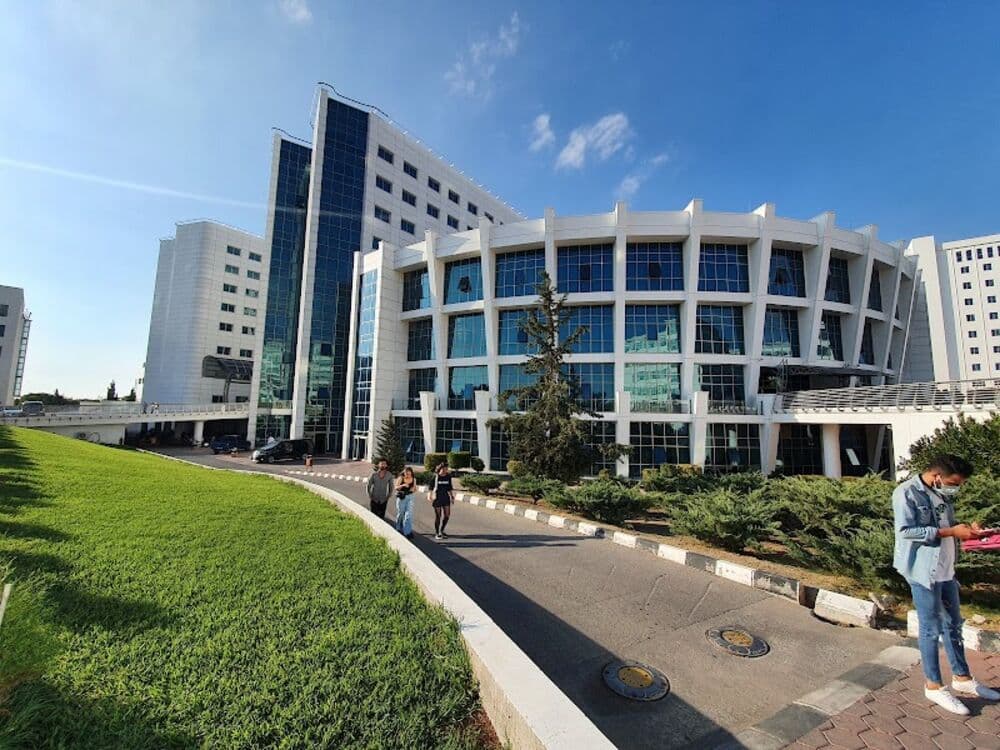
The B.A. in Translation & Interpretation at Near East University (NEU) is a 4-year, on-campus bachelor's degree offered by the Faculty of Arts and Sciences. Located in Nicosia, North Cyprus, this program is designed for students who wish to develop professional competence in translating and interpreting between languages. The curriculum combines theoretical foundations with practical training to prepare graduates for the demands of the global language services industry.
What You'll Study
The program covers core areas of translation and interpretation, including:
- Translation Theory and Practice: Study of translation methodologies, text analysis, and strategies for accurate and culturally appropriate translation.
- Consecutive and Simultaneous Interpreting: Training in interpreting techniques for various settings, such as conferences, business meetings, and legal proceedings.
- Language Proficiency: Advanced courses in source and target languages to enhance linguistic accuracy and stylistic fluency.
- Specialized Translation: Focus on domains such as legal, medical, technical, and literary translation.
- Cultural Studies: Exploration of cultural contexts that influence language use and translation decisions.
- Technology in Translation: Introduction to computer-assisted translation (CAT) tools and terminology management systems.
Students engage in hands-on projects, workshops, and simulated interpreting scenarios to build real-world skills.
Career Outlook
Graduates of the Translation & Interpretation program can pursue careers in:
- Professional translation and interpreting agencies
- International organizations and diplomatic missions
- Media and publishing houses
- Corporate communication departments
- Freelance translation and interpretation services
- Localization and language technology companies
The program also provides a strong foundation for further academic study in translation studies, linguistics, or related fields.
Admission Overview
Admission to the B.A. in Translation & Interpretation at Near East University requires a high school diploma or equivalent. Applicants must demonstrate proficiency in the language of instruction (typically English or Turkish, depending on the program track). Specific entry requirements and application deadlines are available on the university's official website. International students should also check visa and residency regulations for North Cyprus.