Study Pilotage in North Cyprus
No IELTS or entrance exam required — admission is based on your transcript.

The Sky's the Limit: Why Choose an Airline Pilot School?

A career as an airline pilot offers more than just a job; it promises a dynamic lifestyle, competitive remuneration, and the unique opportunity to travel the world. For many, the allure of the cockpit represents the pinnacle of professional achievement and adventure. However, the journey to becoming a commercial pilot is rigorous, demanding specialized training from an accredited pilot school.
The aviation sector, while experiencing fluctuations, consistently demonstrates long-term growth. Factors like increasing global travel, cargo demand, and the retirement of an aging pilot workforce contribute to the continuous need for new talent. Choosing the right airline pilot school is the foundational step in navigating this exciting, yet challenging, career landscape. It involves understanding the different types of licenses, the structure of training programs, and the international recognition of your qualifications.
Navigating Pilot Licenses: PPL, CPL, and ATPL Explained
Pilot training is structured around a series of licenses, each granting increasing levels of privilege and responsibility. Understanding these is crucial when evaluating an airline pilot school curriculum.
Private Pilot License (PPL)
The PPL is the first step for any aspiring pilot. It allows you to fly an aircraft for recreational purposes, but not for hire or reward. Training typically involves 40-60 hours of flight time, including solo flights, cross-country navigation, and instrument training. While not a commercial license, it forms the bedrock of all subsequent pilot qualifications, teaching fundamental flight principles and safety protocols.
Commercial Pilot License (CPL)

The CPL is the minimum requirement for flying an aircraft for remuneration. This license allows you to act as pilot-in-command of an aircraft engaged in commercial operations, such as charter flights, aerial photography, or flight instruction. CPL training expands significantly on PPL knowledge, requiring a minimum of 200-250 flight hours (depending on the regulatory authority, such as the European Union Aviation Safety Agency EASA or the International Civil Aviation Organization ICAO standards), advanced maneuvers, and instrument ratings. Many pilot school programs integrate CPL training as a core component.
Airline Transport Pilot License (ATPL)
The ATPL is the highest level of pilot certification and is required to act as pilot-in-command of an aircraft in scheduled airline operations. While you typically obtain a 'frozen ATPL' upon completing an airline pilot school program (meaning you've passed all theoretical exams but haven't met the flight hour requirements), you can 'unfreeze' it after accumulating 1,500 hours of flight time, including specific multi-crew and jet experience. ATPL theory covers a vast range of subjects, from air law and meteorology to aircraft systems and navigation, preparing pilots for the complexities of airline operations.
Pilot School Training Pathways: From Zero to Airline Pilot
Aspiring pilots have two primary routes to pursue their ATPL: integrated or modular training. Each pathway has distinct characteristics in terms of duration, cost, and flexibility.
Integrated ATPL Programs
Integrated programs are full-time, intensive courses designed to take a student with no prior flying experience directly to a 'frozen ATPL' in approximately 18-24 months. These programs are highly structured, often conducted at a single airline pilot school, and combine theoretical knowledge with practical flight training in a continuous, fast-paced curriculum. Students typically complete all PPL, CPL, Multi-Engine Rating (MEP), Instrument Rating (IR), and ATPL theoretical exams as part of a cohesive package. This method is often preferred by those seeking a direct and streamlined path to airline employment.
Modular ATPL Programs
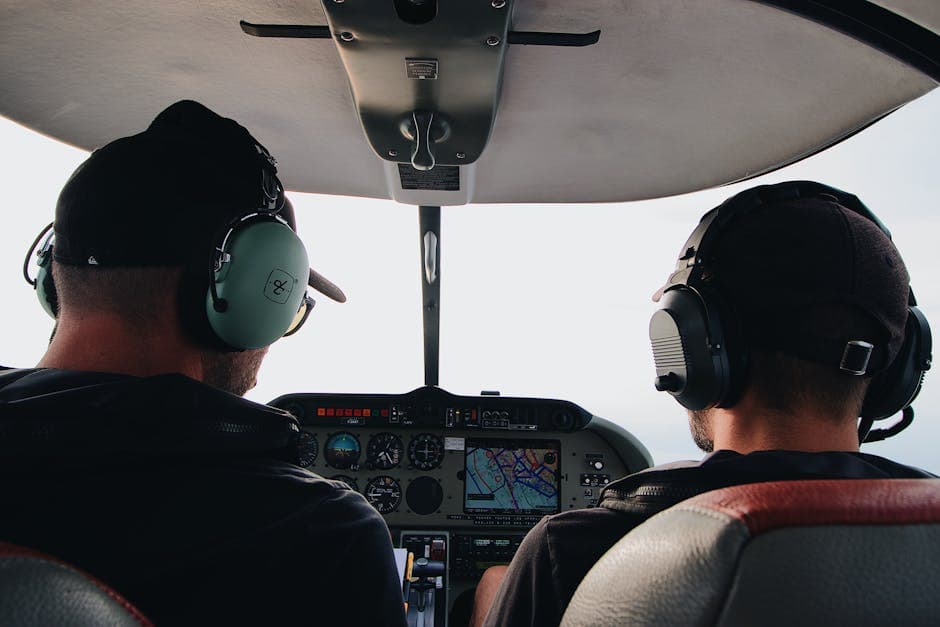
Modular training offers greater flexibility, allowing students to complete each license and rating (PPL, CPL, IR, ATPL theory) as separate modules, often at different flight schools and at their own pace. This approach is suitable for individuals who need to work alongside their training, or who prefer to spread the financial burden over a longer period. While potentially more time-consuming (often 2-4 years or more), modular training can be more cost-effective overall and allows for greater personalization of the training experience. Both pathways lead to the same 'frozen ATPL' qualification, making the choice dependent on individual circumstances and learning styles.
North Cyprus: A Strategic Hub for Pilot Training
North Cyprus is emerging as an attractive destination for international students seeking high-quality aviation education. Its universities offer robust pilot training programs that align with international standards, providing a unique blend of affordability, comprehensive curriculum, and strong global recognition. The region's clear skies and favorable weather conditions also provide an ideal environment for consistent flight training.
Institutions like Near East University (NEU) and University of Kyrenia (UK) are prominent in offering aviation programs, including professional pilotage degrees. These universities integrate theoretical ATPL knowledge with practical flight experience, often in collaboration with established flight academies. Their curricula are designed to meet the rigorous standards set by aviation authorities, ensuring graduates are well-prepared for their careers.
Advantages of Pilot Training in North Cyprus
International Recognition
Degrees from North Cyprus universities, including aviation programs, are issued with the EU Diploma Supplement. This document enhances the transparency and academic recognition of your qualification within the European Higher Education Area, making it easier for graduates to pursue further studies or employment in European countries.
YÖK Accreditation
Furthermore, these degrees are accredited by Turkey's Council of Higher Education (YÖK), ensuring academic equivalence to degrees from Turkish state universities. This dual accreditation provides exceptional international mobility, opening doors for career and further study opportunities across Europe, Turkey, and globally, particularly in a field like aviation with cross-border professional standards.
No External English Test Required
North Cyprus universities maintain one of the most open admissions policies in the region. They do NOT require IELTS, TOEFL, or any other external English-language proficiency exam for admission to their pilot programs. Admission is based on your secondary-school transcript. Students without an existing English qualification take an in-house English Proficiency Exam upon arrival, with a preparatory school option if needed, ensuring language is not a barrier to entry.
Cost-Effectiveness
Compared to pilot schools in Western Europe or North America, North Cyprus offers a significantly more affordable pathway to becoming a commercial pilot without compromising on training quality or international recognition. This makes a high-demand career accessible to a wider range of international students.
Comparing Pilot School Costs and Duration: North Cyprus vs. Global Benchmarks
The cost of pilot training is a major consideration for aspiring aviators. An integrated ATPL program can be a substantial investment, varying widely by region and institution. In North Cyprus, the total cost for a 'frozen ATPL' program, including all flight hours, ground school, and examinations, is generally more competitive than in many other popular study destinations.
For instance, an integrated ATPL program in the United States or Canada can range from $70,000 to $100,000 USD, while in Western Europe, costs often climb to €80,000 – €120,000 EUR. These figures typically do not include living expenses, which can add significantly to the overall burden. North Cyprus offers a compelling alternative, with tuition fees and living costs that present a more accessible entry point into professional aviation.
| University | Estimated Annual Tuition (USD) | Program Duration |
|---|---|---|
| Near East University (NEU) | $8,000 - $10,000 | 4 years (Bachelor's with ATPL theory) |
| University of Kyrenia (UK) | $7,500 - $9,500 | 4 years (Bachelor's with ATPL theory) |
It is important to note that these tuition figures generally cover the academic portion of a Bachelor's degree in Professional Pilotage, which includes ATPL theoretical knowledge. The practical flight training component, involving actual flight hours and simulator time, is typically an additional cost and can range from $40,000 to $60,000 USD, depending on the flight school partnership and specific program structure. Therefore, the total investment for a full 'frozen ATPL' in North Cyprus, combining university tuition and flight training, can be estimated to be in the range of $70,000 - $90,000 USD, making it a highly attractive option.
Admission to Pilot School in North Cyprus: Your Step-by-Step Guide
The admission process for an airline pilot school in North Cyprus is designed to be straightforward and accessible for international students. Unlike many other global destinations, North Cyprus universities do not impose competitive entrance exams or require standardized tests like SAT or ACT for admission into their pilotage programs.
Key Admission Requirements

Admission is primarily based on your academic performance in secondary school. Prospective students should submit their high school transcripts, diplomas, and any relevant academic certificates. For graduate programs, a bachelor's transcript is required. A minimum GPA equivalent to a 'good' pass is typically expected, especially for demanding fields like aviation. You can start your application to various programs through our platform's apply now section.
English Language Proficiency
Crucially, North Cyprus universities do NOT require external English language proficiency tests such as IELTS or TOEFL for admission. Students who do not hold an existing English qualification (e.g., a high school diploma from an English-medium institution) will take an in-house English Proficiency Exam upon their arrival at the university. This is a placement test, not an admission barrier. If a student does not pass this internal exam, they will enroll in the university's English Preparatory School for one academic year before commencing their degree program, ensuring they have the necessary language skills for success.
Student Visa Guidance
Securing a student visa for North Cyprus is a relatively smooth process. Upon receiving your acceptance letter from a North Cyprus university, you will typically need to gather documents such as your passport, academic transcripts, proof of financial means, and a medical certificate. The TRNC Ministry of Foreign Affairs website provides up-to-date information on visa requirements. Our platform offers dedicated student visa guidance to assist you through every step of the application.
Career Prospects and Global Employability for North Cyprus Pilots
Graduating from an airline pilot school in North Cyprus opens doors to a wide array of career opportunities in the global aviation industry. The international recognition of degrees, bolstered by the EU Diploma Supplement and YÖK accreditation, significantly enhances the employability of graduates.
With a 'frozen ATPL' and a Bachelor's degree in Professional Pilotage from universities like Near East University or University of Kyrenia, graduates are well-positioned to apply for First Officer roles with airlines worldwide. The global demand for pilots, as highlighted by industry reports from sources like Boeing and Airbus, ensures that skilled and qualified aviators are highly sought after. Airlines are actively recruiting, and pilot placement rates from reputable flight schools remain strong.
The dual accreditation means your qualification is not only understood and accepted across the European Higher Education Area for further study and by European employers, but also holds academic equivalence in Turkey. This broadens your career horizon, allowing for realistic career and further-study opportunities across Europe, Turkey, and beyond. Whether you aspire to fly for major international carriers, cargo airlines, or regional operators, a North Cyprus aviation degree provides a credible and evidenced advantage in a competitive global market. Explore more about available scholarships and support on our scholarship support page.
Frequently Asked Questions About Pilot School Training in North Cyprus
Aviation Programs at North Cyprus Universities
Hand-picked programs from North Cyprus universities you can apply to directly.

Ready to Launch Your Aviation Career?
Discover accredited pilot programs, compare tuition, and start your application to North Cyprus universities today. Our team is here to guide you through every step.