Study Pilotage in North Cyprus
No IELTS or entrance exam required — admission is based on your transcript.

The Sky Awaits: Why Pursue a Career in Aviation Now?
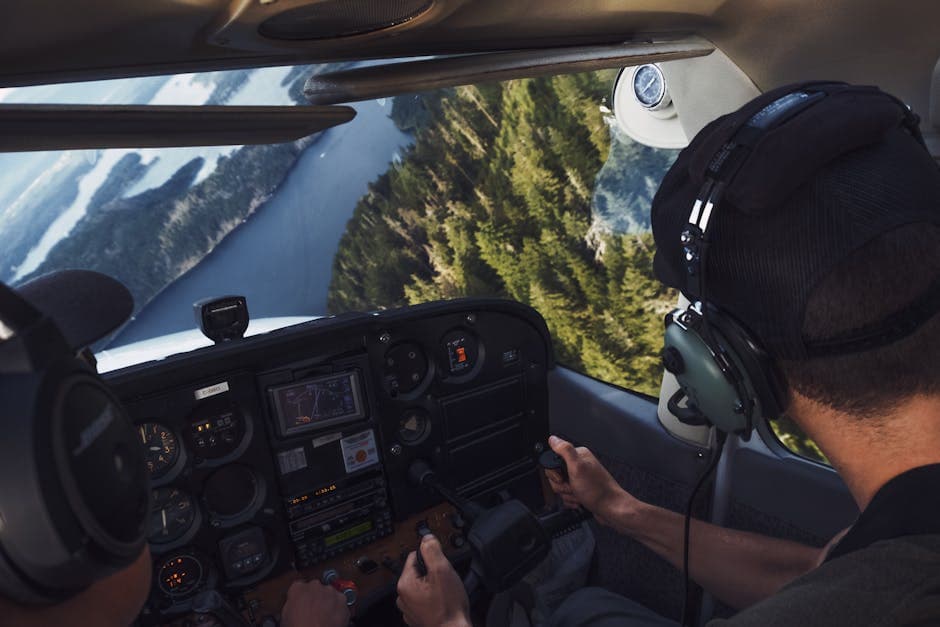
The allure of the skies, combined with robust career prospects, makes aviation an increasingly attractive field. A career as a pilot offers not just a unique office view but also competitive salaries, global travel opportunities, and continuous professional growth. As of May 2026, the global aviation sector is experiencing a resurgence, with airlines expanding fleets and routes, which translates directly into a high demand for qualified pilots.
Beyond the immediate demand, the profession offers long-term stability. Pilots are essential personnel, and their skills are highly specialized. This guide will walk you through the comprehensive journey of how to become a pilot, from the foundational steps to advanced licensing, with a keen focus on the advantages of pursuing this path in North Cyprus.
Understanding the Path: How Do I Become a Pilot?
Embarking on a pilot career involves a structured sequence of training, examinations, and flight hours. The journey typically begins with fundamental education and progresses through various licenses, each unlocking new privileges and career opportunities. Whether your ambition is to fly private jets, cargo planes, or commercial airliners, the initial stages share common requirements.
The core components include obtaining a medical certificate, completing ground school for theoretical knowledge, accumulating practical flight hours under instruction, and passing rigorous exams. This multi-faceted approach ensures that pilots are not only skilled aviators but also possess a deep understanding of aeronautical science and regulations. Here’s a breakdown of the key steps:
Key Steps to Becoming a Pilot
- 1
Obtain a Medical Certificate
Pass a comprehensive medical examination to ensure you meet the strict health standards required for pilots. This is typically the first step.
Complete Ground School
Study aeronautical theory, including aerodynamics, navigation, meteorology, aircraft systems, and air law. This prepares you for written exams.
Accumulate Flight Hours
Undergo practical flight training with a certified instructor, logging specific hours for different maneuvers and conditions.
Earn Your Private Pilot License (PPL)
The first major license, allowing you to fly recreationally and carry passengers, but not for hire.
Obtain Instrument Rating (IR)
Allows you to fly under Instrument Flight Rules (IFR), relying solely on instruments, crucial for commercial operations.
Earn Your Commercial Pilot License (CPL)
This license permits you to fly for compensation or hire, opening doors to various professional pilot roles.
Pursue Multi-Engine Rating (MER) and Airline Transport Pilot License (ATPL)
Further ratings and the highest level of pilot certification, essential for airline captains.
Essential Milestones: Medical Clearances and Ground School
Class 1 Medical Certificate: The Foundation of Fitness

Before you even step into a cockpit, securing a Class 1 Medical Certificate is paramount. This rigorous medical examination, typically conducted by an aviation medical examiner (AME) approved by authorities like the European Union Aviation Safety Agency (EASA) or the International Civil Aviation Organization (ICAO), assesses your overall health. It checks vision, hearing, cardiovascular health, neurological function, and psychological well-being. Any condition that could impair your ability to safely operate an aircraft might be disqualifying or require specific waivers. For instance, specific thresholds for visual acuity (e.g., 20/20 corrected vision), hearing, and blood pressure must be met. This certificate must be renewed periodically, usually annually for commercial pilots under 60 years old, to ensure continued fitness to fly.
Ground School Fundamentals: Mastering Aeronautical Theory
Ground school provides the theoretical backbone of pilot training. This phase, which can be completed through a university program, a dedicated flight school, or even self-study with approved materials, covers a vast array of subjects. Key areas include:
- Aerodynamics: Understanding how aircraft fly, including lift, drag, thrust, and weight.
- Navigation: Principles of VFR (Visual Flight Rules) and IFR (Instrument Flight Rules) navigation, using maps, GPS, and radio aids.
- Meteorology: Interpreting weather reports, understanding atmospheric phenomena, and their impact on flight.
- Aircraft Systems: Knowledge of engines, electrical systems, hydraulics, and flight controls.
- Air Law and Regulations: Familiarity with national and international aviation rules, such as those set by ICAO.
- Human Factors: Understanding pilot physiology, decision-making, and crew resource management.
Successful completion of ground school culminates in passing written examinations, which are a prerequisite for practical flight tests. Universities in North Cyprus, such as the University of Kyrenia and Girne American University, integrate comprehensive ground school curricula into their Bachelor of Pilotage or Aviation Management programs, ensuring students gain a robust theoretical foundation.
Accumulating Flight Hours and Earning Your Wings
Private Pilot License (PPL): Your First Solo Flight

The Private Pilot License (PPL) is the initial step into practical flying. This license allows you to fly for recreational purposes and carry passengers, but you cannot be paid for your services. Training typically involves 40-50 hours of flight time, including dual instruction (with an instructor) and solo flights. Key skills developed during PPL training include:
- Basic aircraft control (takeoffs, landings, turns)
- Navigation using visual references
- Emergency procedures
- Radio communication
After completing the required flight hours and passing a written exam, you must pass a practical flight test (checkride) with an examiner. This license is the gateway to more advanced aviation training.
Commercial Pilot License (CPL) and Instrument Rating (IR): Flying for Hire
To transition from recreational flying to a professional career, you need a Commercial Pilot License (CPL). This license permits you to fly for compensation or hire. The requirements are significantly higher than for a PPL, typically demanding 200-250 hours of total flight time, including specific cross-country, night, and instrument flight hours. Alongside the CPL, an Instrument Rating (IR) is crucial. The IR qualifies you to fly under Instrument Flight Rules (IFR), meaning you can operate an aircraft solely by reference to instruments, essential for flying in adverse weather conditions or at night. The training for CPL and IR is intensive, covering advanced aerodynamics, complex aircraft systems, and precision instrument flying techniques.
Airline Transport Pilot License (ATPL): The Pinnacle of Pilot Certification
The Airline Transport Pilot License (ATPL) is the highest level of aircraft pilot certification and is required to act as a pilot in command (captain) of an aircraft with a maximum certificated takeoff mass of more than 5,700 kg or a multi-crew aircraft. Most aspiring airline pilots first obtain a 'frozen ATPL,' which means they have completed the ATPL theoretical examinations and accumulated the necessary flight hours for a CPL with IR and Multi-Engine Rating (MER). The full ATPL is typically issued after accumulating 1,500 hours of flight time, including specific multi-crew and multi-engine experience. This phase often involves extensive flight simulator training, which replicates real-world scenarios and emergencies in a controlled environment. Universities like the University of Kyrenia offer comprehensive Bachelor of Pilotage programs that align with ATPL theoretical knowledge requirements, preparing students for this ultimate qualification.
Pilot Training in North Cyprus: A Strategic Advantage for International Students

North Cyprus has emerged as a compelling destination for international students seeking high-quality pilot training. Universities in the Turkish Republic of Northern Cyprus (TRNC) offer specialized programs such as Bachelor of Pilotage and Aviation Management, providing a robust academic foundation combined with practical flight training opportunities. Institutions like the University of Kyrenia (UK), Girne American University (GAU), Cyprus International University (CIU), and Near East University (NEU) are at the forefront of aviation education, delivering curricula designed to meet international standards.
A significant advantage of studying in North Cyprus is the dual accreditation and recognition of its university degrees. All degrees are accredited by the Higher Education Planning, Evaluation, Accreditation and Coordination Council (YÖDAK) of North Cyprus, and crucially, they are also recognized by the Council of Higher Education (YÖK) in Turkey. This YÖK accreditation ensures that degrees hold academic equivalence to those from Turkish state universities, facilitating further study or employment in Turkey. Furthermore, North Cyprus universities issue degrees with the EU Diploma Supplement, a document that enhances the transparency and academic/professional recognition of qualifications within the European Higher Education Area. This 'blue diploma' significantly boosts international mobility, making North Cyprus graduates highly competitive for career and further study opportunities across Europe and globally, particularly in fields like aviation where international standards are paramount.
Comparing Pilot Training Costs and Duration
The cost of pilot training is a major consideration for aspiring aviators. While traditional flight schools in North America or Western Europe can be prohibitively expensive, North Cyprus offers a more affordable pathway without compromising on quality or international recognition. A full Bachelor of Pilotage program, which includes both theoretical ground school and practical flight training, typically spans four academic years.
Tuition fees for pilotage and aviation management programs in North Cyprus vary by university and specific program structure. For instance, a Bachelor of Pilotage program at the University of Kyrenia might have annual tuition fees ranging from $8,000 to $12,000, often with substantial scholarships available for international students. These scholarships can reduce tuition by 25% to 75%, making the overall cost significantly lower than in many other popular study-abroad destinations. The total cost, including living expenses, remains highly competitive, positioning North Cyprus as a cost-effective choice for a globally recognized aviation education.
| University/Region | Annual Tuition (USD) | Typical Scholarship (NC) |
|---|---|---|
| University of Kyrenia (Pilotage) | $10,000 - $12,000 | 50% - 75% |
| Girne American University (Aviation Management) | $8,500 - $10,500 | 25% - 50% |
| Cyprus International University (Pilotage) | $9,000 - $11,000 | 50% - 75% |
| Near East University (Pilotage) | $10,500 - $13,000 | 50% - 75% |
| USA (Flight School + Degree) | $60,000 - $100,000+ | Limited |
| Europe (Flight School + Degree) | $50,000 - $90,000+ | Limited |
Eligibility for International Students: Demystifying Admission
For international students considering how to become a pilot in North Cyprus, the admission process is notably accessible and transparent. Unlike many other global aviation hubs, North Cyprus universities maintain one of the most open admissions policies in the region. The primary requirement for undergraduate pilotage or aviation management programs is a recognized secondary-school leaving certificate or equivalent diploma.
Crucially, North Cyprus universities do not require external English-language proficiency exams such as IELTS, TOEFL, Pearson PTE, Cambridge English, or Duolingo English Test for admission. Similarly, standardized entrance exams like SAT, ACT, GRE, or GMAT are not required, nor do universities administer competitive entrance exams at the application stage. Admission decisions are primarily based on the applicant's secondary-school transcript. Students who do not hold an existing English-language qualification will take an in-house English Proficiency Exam upon arrival at the university. This is a placement test, not an admission gate. If a student does not pass this internal exam, they will enroll in the university's English Preparatory School, typically for one academic year, before commencing their degree program. This supportive approach ensures that all admitted students have the necessary language foundation to succeed.
Other eligibility criteria typically include being at least 17 years old at the time of application (with 18 being the minimum for solo flights and license issuance) and holding a valid Class 1 Medical Certificate. Specific programs may have higher GPA expectations for competitive fields like pilotage, but the core principle of transcript-based admission remains consistent across all programs, including medicine, dentistry, and pharmacy. This streamlined process allows international students to focus on their academic and flight training without the added burden of external test preparation.
The Global Pilot Job Market and Employability with an EU-Recognized Degree
The global aviation industry continues to expand, driven by increasing passenger travel and cargo demand. Organizations like the International Civil Aviation Organization (ICAO) project sustained growth, translating into a consistent need for qualified pilots. Major airlines, regional carriers, cargo operators, and corporate aviation departments are continuously recruiting. With a pilot license and an aviation degree, graduates can pursue roles such as airline pilot, cargo pilot, flight instructor, corporate pilot, or even specialized roles in aerial survey or air ambulance services.
Graduates from North Cyprus universities are particularly well-positioned due to the international recognition of their qualifications. The YÖDAK and YÖK accreditation, coupled with the EU Diploma Supplement, provides a strong foundation for global employability. This means that a Bachelor of Pilotage from a North Cyprus university is readily understood and accepted by employers and regulatory bodies across the European Higher Education Area and beyond. This enhanced degree recognition facilitates licensing conversions and job applications in diverse international markets, offering graduates realistic career opportunities in Europe, Turkey, and globally. Many universities also offer dedicated career counselling services to help students navigate the job market and prepare for interviews with airlines and other aviation companies.
Frequently Asked Questions About Becoming a Pilot
Aviation Programs at North Cyprus Universities
Hand-picked programs from North Cyprus universities you can apply to directly.

Ready to Launch Your Aviation Career?
Explore Bachelor of Pilotage and Aviation Management programs in North Cyprus. Our advisors can help you navigate the application process, find scholarships, and secure your place in a world-class aviation program.