Study Pilotage in North Cyprus
No IELTS or entrance exam required — admission is based on your transcript.

The Sky's the Limit: Understanding the Pilot Career Path

Becoming a pilot is a dream for many, offering a career filled with adventure, responsibility, and significant rewards. The journey, however, is structured and demands dedication, rigorous training, and a substantial financial investment. Understanding the different licenses and career paths is the first step in charting your course toward the cockpit.
Pilot careers are diverse, ranging from commercial airline captains flying international routes to cargo pilots, flight instructors, or even corporate jet pilots. Each path requires a specific set of qualifications and licenses, building upon foundational skills and knowledge. The aviation sector is dynamic, continually evolving with technological advancements and increasing global connectivity, ensuring a consistent need for skilled professionals.
Essential Pilot Licenses: PPL, CPL, and ATPL
The pilot training journey typically progresses through several key licenses, each granting increasing privileges and responsibilities:
- Private Pilot License (PPL): This is the entry-level license, allowing you to fly single-engine aircraft for recreational purposes, carrying passengers but not for hire. It involves approximately 40-60 hours of flight time, ground school instruction, and written and practical exams.
- Commercial Pilot License (CPL): Building on the PPL, the CPL allows you to fly aircraft for compensation or hire. This license requires more advanced flight training, including instrument rating (IR) and multi-engine rating (MER), typically accumulating 150-250 hours of flight time. This is the minimum qualification for most paid flying jobs, such as charter pilots, flight instructors, or aerial tour pilots.
- Airline Transport Pilot License (ATPL): The highest level of pilot certification, the ATPL is required to act as a captain or co-pilot for scheduled airline operations. It demands significant flight experience, often 1,500 hours or more, including extensive cross-country and instrument flight time. Many aspiring airline pilots pursue an integrated ATPL program, which combines all necessary training into a single, comprehensive course.
Navigating the Costs: How Much It Cost to Become a Pilot
The question of how much it cost to become a pilot is complex, with figures varying widely based on location, flight school, type of program (modular vs. integrated), and individual learning pace. However, a general breakdown can help aspiring pilots budget for this significant investment.
Private Pilot License (PPL) Cost Breakdown

The PPL is the most accessible and least expensive license. Costs typically range from $8,000 to $15,000 USD. This includes:
- Flight Hours: Approximately 40-60 hours at $150-$250 per hour for aircraft rental and instructor fees.
- Ground School: Classroom instruction or online courses, usually $500-$1,500.
- Materials: Textbooks, charts, logbooks, and pilot supplies, around $300-$700.
- Exam Fees: Written exam ($150-$200) and practical flight test (checkride) with an examiner ($400-$800).
- Medical Certificate: A Class 3 medical certificate is required, costing $100-$200.
Commercial Pilot License (CPL) Cost Breakdown
The CPL, including instrument rating (IR) and multi-engine rating (MER), is a more substantial investment. The total cost can range from $25,000 to $50,000 USD, on top of PPL expenses. Key components include:
- Flight Hours: Accumulating 150-250 hours, often involving more complex aircraft, at rates from $180-$350 per hour.
- Instrument Rating: Specialized training for flying solely by reference to instruments, typically 40-50 hours, adding $10,000-$15,000.
- Multi-Engine Rating: Training on aircraft with more than one engine, usually 10-15 hours, costing $3,000-$7,000.
- Ground School & Materials: Advanced courses and materials, $1,000-$3,000.
- Exam Fees: Written and practical exams for CPL, IR, and MER, totaling $1,000-$2,000.
- Medical Certificate: A Class 2 medical certificate, costing $150-$250.
Airline Transport Pilot License (ATPL) Cost Breakdown
For those aiming for an airline career, the ATPL is the ultimate goal. An integrated ATPL program, which takes a student from zero flight experience to a 'frozen ATPL' (meaning all theoretical exams passed, awaiting sufficient flight hours for the full ATPL), typically costs between $70,000 and $120,000 USD. This comprehensive package usually covers:
- All flight training from PPL to CPL with IR and MER.
- ATPL theoretical knowledge instruction (ground school).
- Simulator training.
- All necessary exams and materials.
- A Class 1 medical certificate, which is more stringent and costs $200-$400 annually.
Modular ATPL programs, where each license is obtained separately, can sometimes be slightly less expensive overall but require more self-discipline and time management.
Factors Influencing Total Pilot Training Cost
Flight School Location
Costs vary significantly by country and region. North America and Europe can be expensive, while some regions offer more competitive pricing.
Aircraft Type
Training on older, less complex aircraft is generally cheaper than using modern, glass-cockpit planes. Multi-engine aircraft are also more expensive to rent.
Program Structure
Integrated programs are often more expensive upfront but can be faster. Modular programs offer flexibility but may incur additional costs if not managed efficiently.
Individual Progress
Some students require more flight hours or ground instruction than the minimums, which directly impacts the total cost.
Accommodation & Living Expenses
Especially for international students, living costs during training can add a substantial amount to the overall budget.
Flight School Tuition Comparison: Why North Cyprus Stands Out

When considering how much it cost to become a pilot, comparing flight school tuition across different regions is crucial. While countries like the United States and Canada are popular choices, their costs can be prohibitive for many international students. North Cyprus, with its emerging aviation education sector, presents a compelling and cost-effective alternative.
Pilot training programs in North Cyprus, particularly at institutions like the University of Kyrenia and Near East University, offer competitive tuition fees without compromising on quality or international recognition. These universities provide state-of-the-art flight simulators, modern training aircraft, and experienced instructors, adhering to international aviation standards.
| Region/Country | Estimated Total Cost (USD) | Average Duration |
|---|---|---|
| United States | $80,000 - $120,000 | 18-24 months |
| United Kingdom | £80,000 - £120,000 ($100,000 - $150,000) | 18-24 months |
| Australia | AUD 100,000 - AUD 150,000 ($65,000 - $100,000) | 24-30 months |
| North Cyprus | €40,000 - €70,000 ($43,000 - $75,000) | 24-36 months |
As the table illustrates, North Cyprus offers a significantly more affordable pathway to an ATPL, often at nearly half the cost of some Western counterparts. This cost efficiency extends beyond tuition, with lower living expenses and accommodation costs contributing to a more manageable overall budget for international students. The TRNC Ministry of Foreign Affairs provides general guidance on living costs, which are notably lower than in many European countries.
Choosing the Right Program and University for Pilot Training
Selecting the right pilot training program is a critical decision that impacts both your financial investment and your career trajectory. In North Cyprus, several universities have established strong aviation departments. The University of Kyrenia, for instance, offers a Bachelor of Science in Pilotage, providing comprehensive theoretical and practical training. Similarly, Near East University, through its Civil Aviation College, offers programs designed to meet international standards.
When evaluating programs, consider:
- Accreditation: Ensure the program is accredited by relevant national and international aviation authorities. In North Cyprus, programs are overseen by the TRNC Higher Education Planning, Evaluation, Accreditation and Coordination Council (YÖDAK) and recognized by Turkey's Council of Higher Education (YÖK).
- Fleet and Facilities: Investigate the type and condition of training aircraft, simulator technology, and classroom facilities.
- Instructor Experience: Experienced instructors are invaluable for practical flight training.
- Program Structure: Decide whether an integrated (university-based) or modular (flight school-based) approach suits your learning style and financial situation. University programs often offer a more structured academic environment alongside flight training.
Financing Your Dream: Scholarships and Student Support
Given the significant investment required, exploring financing options and scholarships is essential for many aspiring pilots. North Cyprus universities are particularly supportive of international students, offering a range of financial aid opportunities.
Most North Cyprus universities, including the University of Kyrenia and Near East University, provide substantial tuition fee scholarships to international students. These often range from 50% to 75% for bachelor's programs, significantly reducing the overall cost of education. For example, a program with a stated tuition of €10,000 might be reduced to €5,000 or even €2,500 after scholarship application. These scholarships are typically awarded based on academic merit from previous studies. Students can find detailed information on eligibility and application processes through our scholarship support section.
Beyond scholarships, students may explore:
- Student Loans: Government-backed or private student loans are available in many home countries to finance overseas education.
- Part-time Work: While pilot training is intensive, some students may find opportunities for part-time work during ground school phases, subject to visa regulations.
- Sponsorships: In some cases, airlines or aviation companies may offer sponsorships to promising cadets, often with a commitment to work for the sponsor after graduation.
Admission to Pilot Programs in North Cyprus: A Clear Path Forward
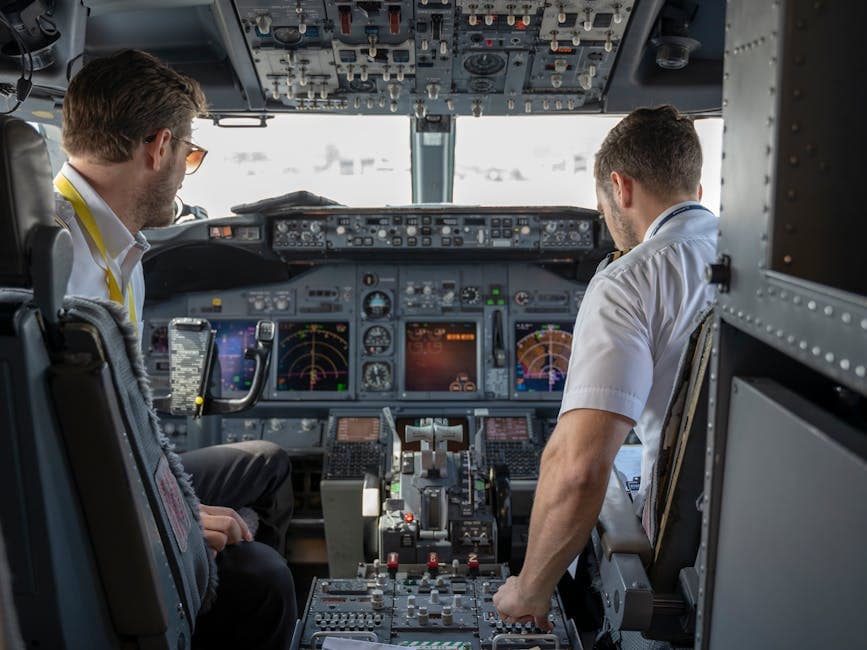
One of the most attractive aspects of pursuing aviation education in North Cyprus is the streamlined and accessible admissions process for international students. North Cyprus universities operate with one of the most open admissions policies in the region, designed to welcome talent from around the globe.
Crucially, North Cyprus universities do not require external English-language proficiency exams such as IELTS, TOEFL, Pearson PTE, Cambridge English, or Duolingo English Test for admission. Nor do they require standardized entrance exams like SAT, ACT, GRE, or GMAT. Admission decisions are primarily based on your secondary-school academic transcript. For graduate programs, your bachelor's transcript is the key document.
Required Documents for Pilot Program Admission
Essential Documents for Your Application
Secondary School Certificate & Transcripts
Official copies of your high school diploma and academic records. For graduate programs, your bachelor's degree and transcripts.
Passport Copy
A clear, scanned copy of the biodata page of your valid international passport.
Passport-sized Photographs
Recent photographs meeting standard passport photo requirements.
Medical Certificate
A valid Class 1 or Class 2 medical certificate, depending on the program level, confirming your fitness to fly.
Optional English Proficiency Proof
If you hold an IELTS 5.5 or equivalent, you may submit it to skip the university's in-house English Proficiency Exam upon arrival. Otherwise, you'll take the in-house test, which is a placement test, not an admission gate.
Upon arrival, if you do not already hold an English language qualification (like an IELTS 5.5), you will take an in-house English Proficiency Exam. This is a placement test, not an admission barrier. If you don't pass, you'll attend the university's English Preparatory School for typically one academic year before commencing your degree program, without needing to re-apply for admission. This policy ensures that all students have the necessary language skills to succeed academically.
Global Employability: Career Prospects After Graduation
A pilot license from a North Cyprus university opens doors to a wide array of international career opportunities. The global demand for pilots, as highlighted by organizations like the UNESCO Institute for Statistics, ensures that qualified graduates are highly sought after across continents.
A key advantage of a North Cyprus aviation degree is its strong international recognition. All degrees are issued with the EU Diploma Supplement, which signals recognition within the European Higher Education Area. This means your qualification is readily understood and accepted by European universities for further study and by European employers for work. Concurrently, these degrees are accredited by Turkey's Council of Higher Education (YÖK), granting them academic equivalence to Turkish state-university degrees. This dual accreditation provides exceptional international mobility, offering realistic career and further-study opportunities across Europe, Turkey, and globally.
Graduates with an ATPL from a North Cyprus institution can pursue roles as First Officers with major international airlines, cargo carriers, or charter companies. The rigorous training and internationally recognized qualifications prepare you for diverse roles, from commercial aviation to corporate flying and flight instruction. The growing aviation hubs in the Middle East, Asia, and Europe are particularly keen on recruiting pilots with internationally recognized credentials.
Life as an Aviation Student in North Cyprus
Studying to become a pilot in North Cyprus offers more than just quality education and cost savings; it provides a unique and enriching student experience. Universities like the University of Kyrenia and Near East University boast modern campuses with excellent student accommodations, sports facilities, and vibrant cultural activities. The Mediterranean climate and the island's natural beauty offer a conducive environment for both study and relaxation.
International students benefit from a multicultural environment, interacting with peers from over 100 different countries. The student support services, including student accommodations, visa guidance, and career counselling, are designed to ensure a smooth transition and successful academic journey. The relatively low cost of living, coupled with the scholarship opportunities, makes North Cyprus an attractive destination for aspiring pilots worldwide.
Frequently Asked Questions About Becoming a Pilot in North Cyprus
Aviation programs at North Cyprus universities
Hand-picked programs from North Cyprus universities you can apply to directly.

Ready to Launch Your Aviation Career?
Explore pilot training programs and scholarships at North Cyprus universities. Your journey to the skies starts here.