Study Pilotage in North Cyprus
No IELTS or entrance exam required — admission is based on your transcript.

The Sky's the Limit: Why Pursue a Pilot Career?
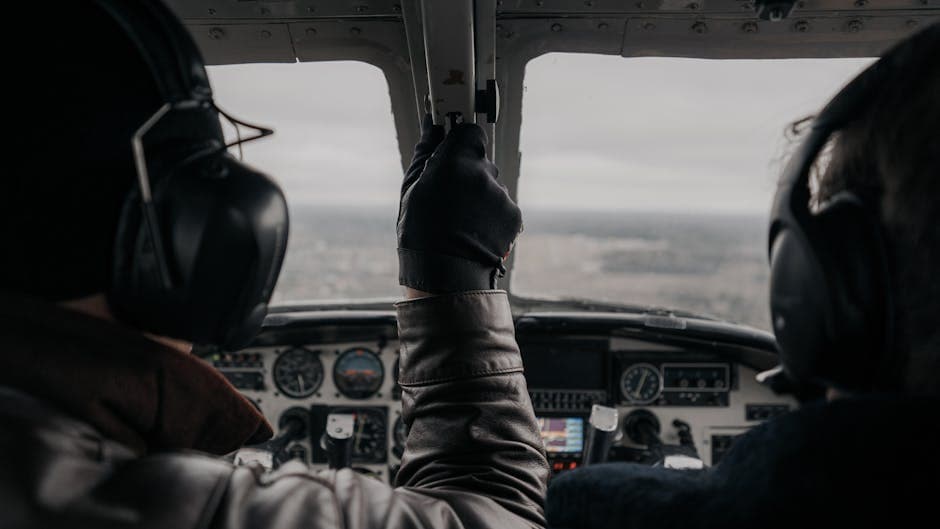
Becoming a pilot is more than just a job; it is a commitment to a dynamic, challenging, and profoundly rewarding profession. The allure of the cockpit, the responsibility of commanding an aircraft, and the opportunity to travel the world captivate many. Beyond the romantic notion, the aviation sector offers robust career stability and competitive remuneration, making it an attractive long-term prospect for individuals seeking a high-skill, high-impact role.
The global connectivity facilitated by air travel continues to expand, driven by increasing passenger numbers and cargo logistics. This expansion directly translates into a sustained demand for qualified pilots across commercial airlines, cargo operations, corporate aviation, and specialized roles such as flight instruction or aerial surveying. Aspiring pilots today enter a field with clear growth trajectories, provided they undergo rigorous training and secure internationally recognized qualifications.
Your Flight Path: A Step-by-Step Guide on How to Become a Pilot
The journey to become a pilot involves a structured progression through various licenses and ratings, each building upon the last. Understanding these stages is crucial for planning your pilot school education and career trajectory. The path typically starts with foundational flight experience and culminates in the advanced certifications required for commercial operations.
Key Stages to Becoming a Commercial Pilot
1. Student Pilot License (SPL)
This is the first step, typically obtained after a medical examination and basic ground instruction. An SPL allows you to fly an aircraft solo under the supervision of a Certified Flight Instructor (CFI). It's a foundational permit, not a full license, and sets the stage for practical flight training.
2. Private Pilot License (PPL)
The PPL is your first full pilot license, enabling you to fly for pleasure or personal transport, but not for hire or reward. Requirements typically include a minimum of 40-50 hours of flight time (with at least 10 hours solo), successful completion of a written exam, and a practical flight test (checkride). This license establishes fundamental aeronautical knowledge and flight skills.
3. Instrument Rating (IR)
An Instrument Rating permits you to fly under Instrument Flight Rules (IFR), meaning you can fly in conditions with limited visibility, relying solely on your aircraft's instruments. This rating is essential for professional piloting, requiring additional flight hours (often 40-50 hours of instrument time) and another written and practical exam.
4. Commercial Pilot License (CPL)
The CPL is the minimum qualification required to fly for compensation or hire. This involves more advanced flight training, typically accumulating 200-250 total flight hours (depending on the regulatory authority and training path), a more comprehensive written exam, and a rigorous practical test. With a CPL, you can pursue roles like charter pilot, flight instructor, or aerial tour pilot.
5. Multi-Engine Rating (MER)
Most commercial aircraft have multiple engines. A Multi-Engine Rating is an add-on to your CPL or ATPL, allowing you to operate aircraft with more than one engine. This involves specific training on multi-engine aerodynamics and emergency procedures.
6. Airline Transport Pilot License (ATPL)
The ATPL is the highest level of pilot certification, required to act as a pilot-in-command (captain) of an airline aircraft. This license demands significant flight experience, typically 1,500 hours of flight time, including specific cross-country, night, and instrument flight hours. It also involves extensive theoretical knowledge and practical examinations, often integrated into airline-specific training programs.
Each stage requires dedication, financial investment, and a commitment to continuous learning. The specific hour requirements and examination structures can vary slightly based on the regulatory body under which the pilot school operates, such as the European Union Aviation Safety Agency (EASA) or the Federal Aviation Administration (FAA).
Choosing the Right Pilot School: Key Considerations
Selecting the appropriate pilot school is a pivotal decision that will shape your training experience, career prospects, and overall success. It is essential to evaluate institutions based on several critical factors, moving beyond initial impressions to scrutinize the quality and relevance of their programs.
Accreditation and Regulatory Compliance
The accreditation of a pilot school is paramount. Ensure the institution is recognized by relevant national and international aviation authorities. For instance, in North Cyprus, universities offering aviation programs are accredited by the Higher Education Planning, Evaluation, Accreditation and Coordination Council (YÖDAK) of the Turkish Republic of Northern Cyprus, and their degrees are recognized by Turkey's Council of Higher Education (YÖK). This dual accreditation ensures academic rigor and professional acceptance within the Turkish higher education system and beyond. Additionally, programs should align with international standards set by bodies like the International Civil Aviation Organization (ICAO) or regional authorities such as EASA.
Training Fleet and Facilities

A modern and well-maintained fleet of training aircraft is crucial. Investigate the types of aircraft used for different stages of training, their age, and their maintenance records. High-fidelity flight simulators are also indispensable, providing a safe and cost-effective environment for practicing complex maneuvers and emergency procedures. Facilities should include well-equipped classrooms, briefing rooms, and maintenance hangars. For example, the University of Kyrenia, known for its strong maritime and aviation focus, operates a dedicated flight training organization with a modern fleet and advanced simulators, providing hands-on experience for its students.
Instructor Quality and Experience
The quality of your flight instructors directly impacts your learning experience and skill development. Seek schools with experienced instructors who hold appropriate certifications and have a strong track record of successfully training pilots. A low instructor-to-student ratio can also indicate more personalized attention and faster progress. In North Cyprus, institutions like the University of Kyrenia emphasize experienced faculty, often comprising former airline pilots and aviation professionals, ensuring students receive instruction grounded in real-world operational knowledge.
Integrated vs. Modular Training Programs
Pilot schools typically offer two main training structures: integrated and modular. Integrated programs are full-time, intensive courses designed to take a student from zero flight experience to a 'frozen' ATPL (meaning all theoretical exams passed, but flight hours still needed for full ATPL) in a continuous, structured curriculum, often within 18-24 months. These programs are generally more expensive but offer a streamlined path.
Modular programs, on the other hand, allow students to obtain each license and rating separately, at their own pace. This offers greater flexibility and can be more cost-effective as it allows students to work while studying. However, it typically takes longer to complete the full training. The choice between integrated and modular depends on your personal circumstances, financial capacity, and learning style. Many North Cyprus universities offering aviation degrees integrate practical flight training modules into their academic curricula, providing a hybrid approach that combines theoretical depth with hands-on flight hours.
Aviation Programs in North Cyprus: A Gateway to Global Skies
North Cyprus has emerged as a compelling destination for international students seeking high-quality aviation education. Universities in the region, such as the University of Kyrenia and Girne American University (GAU), offer comprehensive pilot training and aeronautical engineering programs that align with international industry standards. These institutions provide state-of-the-art facilities, including flight simulators and modern training aircraft, to ensure students gain practical experience alongside theoretical knowledge.
A distinct advantage of pursuing an aviation degree in North Cyprus is the international recognition of its qualifications. Degrees from North Cyprus universities are issued with the EU Diploma Supplement. This 'blue diploma' significantly enhances the readability and acceptance of your qualification within the European Higher Education Area, making it easier for graduates to pursue further studies or career opportunities across Europe.
Furthermore, these degrees are accredited by the Turkish Council of Higher Education (YÖK), granting them academic equivalence to degrees from Turkish state universities. This dual recognition from both European and Turkish authorities provides graduates with strong international mobility, opening doors for realistic career and further-study opportunities not only in Europe and Turkey but also globally, particularly in a field like aviation where professional standards are often cross-border. The TRNC Higher Education Planning, Evaluation, Accreditation and Coordination Council (YÖDAK) further ensures local oversight and quality assurance for all programs.
Understanding Pilot Training Costs and Financing Options

The cost of becoming a pilot is a significant consideration, often ranging from $60,000 to over $100,000, depending on the chosen program, country, and type of training. This investment covers various components, from flight hours to examination fees. Understanding these costs is essential for financial planning.
Tuition and Fees
The largest portion of the cost typically goes towards flight instruction and ground school. This includes hourly rates for aircraft rental, instructor fees, simulator time, and theoretical knowledge courses. Integrated programs often have a single, higher upfront fee, while modular programs incur costs incrementally as each rating is pursued.
| Cost Component | Estimated Range (USD) |
|---|---|
| Flight Hours (Aircraft Rental + Instructor) | $40,000 - $80,000 |
| Ground School & Materials | $5,000 - $15,000 |
| Simulator Training | $3,000 - $10,000 |
| Medical Examinations | $500 - $2,000 |
| License & Exam Fees | $1,000 - $3,000 |
| Aviation Headset & Equipment | $500 - $2,000 |
Living Expenses
Beyond tuition, students must account for living expenses, including accommodation, food, transportation, and personal costs. These vary significantly by location. In North Cyprus, the cost of living is generally more affordable compared to major European or North American cities, which can help mitigate the overall financial burden of pilot training. Students can explore various student accommodations options, from university dormitories to private rentals.
Scholarship Opportunities in North Cyprus
To alleviate the financial strain, many North Cyprus universities offer a range of scholarship support options for international students. These can include tuition fee reductions, merit-based scholarships, or specific grants for programs in high-demand fields like aviation. While full scholarships for pilot training are rare globally due to the high operational costs, partial scholarships can significantly reduce the financial commitment. Prospective students are strongly encouraged to research the specific scholarship offerings of institutions like the University of Kyrenia and Girne American University when considering their application. Applications for scholarships are typically made during the university application process itself, with deadlines often coinciding with intake periods in September and February.
Career Paths and Employability for Pilots

A pilot's career path is diverse, extending beyond the traditional image of an airline captain. While commercial airlines remain a primary employer, the skills acquired during pilot training are highly transferable across various sectors of the aviation industry. The global nature of aviation means that qualifications with international recognition are highly valued.
Graduates from North Cyprus universities are particularly well-positioned for international employability. The EU Diploma Supplement attached to their degrees ensures that their qualifications are transparent and understandable across the 49 countries of the European Higher Education Area. This facilitates smoother recognition by European employers and regulatory bodies for licensing purposes. Coupled with YÖK accreditation, which validates the academic equivalence within Turkey, North Cyprus graduates possess a unique advantage for pursuing careers in both European and Turkish aviation markets, as well as broader global opportunities.
Beyond the Cockpit: Diverse Aviation Roles
While flying for major airlines like Turkish Airlines, Lufthansa, or Emirates is a common aspiration, pilots can also find rewarding careers in:
- Cargo Airlines: Operating freight flights for companies like FedEx or DHL.
- Corporate Aviation: Piloting private jets for businesses and high-net-worth individuals.
- Flight Instruction: Training the next generation of pilots at flight schools.
- Aerial Surveying/Photography: Flying specialized missions for mapping, environmental monitoring, or media.
- Air Ambulance/Medical Transport: Providing critical air support in emergency situations.
- Agricultural Aviation: Crop dusting and other agricultural support flights.
- Test Pilot: Working for aircraft manufacturers to test new designs and systems.
The rigorous training and problem-solving skills developed during pilot education are also highly valued in aviation management, air traffic control, and regulatory roles, offering further career diversification.
North Cyprus Admission Process for Aspiring Pilots
The admission process for aviation programs in North Cyprus universities is designed to be accessible for international students, focusing on academic merit rather than standardized tests. North Cyprus universities maintain one of the most open admissions policies in the region, reflecting a commitment to global education.
Crucially, North Cyprus universities do not require IELTS, TOEFL, Pearson PTE, Cambridge English, Duolingo English Test, SAT, ACT, GRE, GMAT, or any other external English-language proficiency exam or standardized entrance exam for admission. Admission decisions are primarily based on the applicant's secondary-school transcript. For graduate pilot programs, a bachelor's transcript is required. This streamlined approach means that once you submit your authenticated academic documents, you can expect an offer of admission if you meet the GPA expectations for your chosen program.
Upon arrival at the university, applicants who do not already hold an English-language qualification (such as an IELTS 5.5 or equivalent, which is an optional document to provide) will take an in-house English Proficiency Exam. This is a placement test, not an admission gate. Students who do not pass this in-house exam will enroll in the university's English Preparatory School, typically for one academic year, before commencing their degree program. There is no second admission decision after completing Prep School; students seamlessly transition to their chosen aviation program. This policy ensures that all students, regardless of their prior English test history, have the opportunity to pursue their pilot training dreams.
Ready to Start Your Aviation Journey?
Explore pilot training programs and aeronautical degrees at leading North Cyprus universities. Your future in the skies begins here.
Frequently Asked Questions (FAQ)
Common Questions About Becoming a Pilot
Aviation Programs at North Cyprus Universities
Hand-picked programs from North Cyprus universities you can apply to directly.

Your Journey to the Cockpit Starts Here
Connect with our advisors to find the perfect pilot school and program in North Cyprus that aligns with your career aspirations and budget.