Study Pilotage in North Cyprus
No IELTS or entrance exam required — admission is based on your transcript.

The Sky's the Limit: Why Pursue a Pilot Career in India?
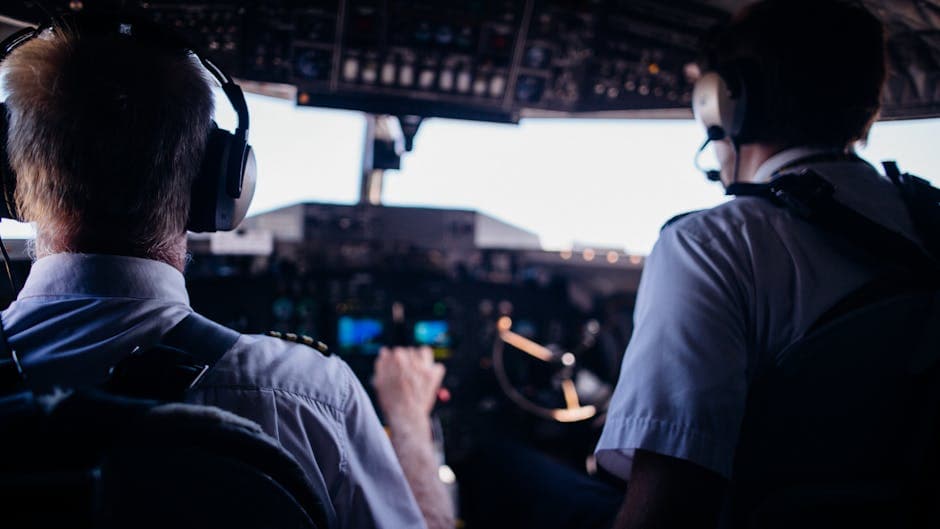
The dream of flying high and commanding an aircraft is a powerful motivator for many young individuals in India. A career as a pilot offers not only prestige and a competitive salary but also the opportunity to travel the world and experience a dynamic profession. With India's rapidly expanding aviation market, the demand for qualified pilots is consistently strong, making it an opportune time to consider this path.
The Directorate General of Civil Aviation (DGCA) in India sets the standards for pilot training and licensing, ensuring that all pilots meet rigorous safety and operational requirements. Understanding these regulations is the first critical step for anyone asking how to become a pilot in India. This guide will walk you through the essential stages, from initial eligibility to advanced certifications, and explore how international education can enhance your career trajectory.
Navigating the Path: How to Become a Pilot in India (DGCA Requirements)
Becoming a commercial pilot in India is a structured journey governed by the DGCA. The process involves several key stages, each with specific eligibility criteria and examinations. The foundational requirement is typically a Commercial Pilot License (CPL), which allows you to fly for remuneration. To progress to commanding larger passenger aircraft, you will eventually need an Airline Transport Pilot License (ATPL).
Eligibility Criteria
Key Eligibility Requirements for Pilot Training in India
Age
Minimum 17 years old to commence training; 18 years old to apply for a CPL.
Educational Qualification
Must have completed 10+2 (or equivalent) with Physics and Mathematics as core subjects. A minimum of 50% aggregate marks in these subjects is generally required.
Medical Fitness
Obtain a Class 2 Medical Certificate initially, followed by a Class 1 Medical Certificate from a DGCA-approved medical examiner. This is a stringent examination covering vision, hearing, cardiovascular health, and psychological fitness. Regular renewals are mandatory.
English Language Proficiency
Demonstrate proficiency in English, as all aviation communication is conducted in English. While specific tests like IELTS or TOEFL are not mandated by DGCA for licensing, strong English skills are crucial for training and operations.
The Step-by-Step Training Process
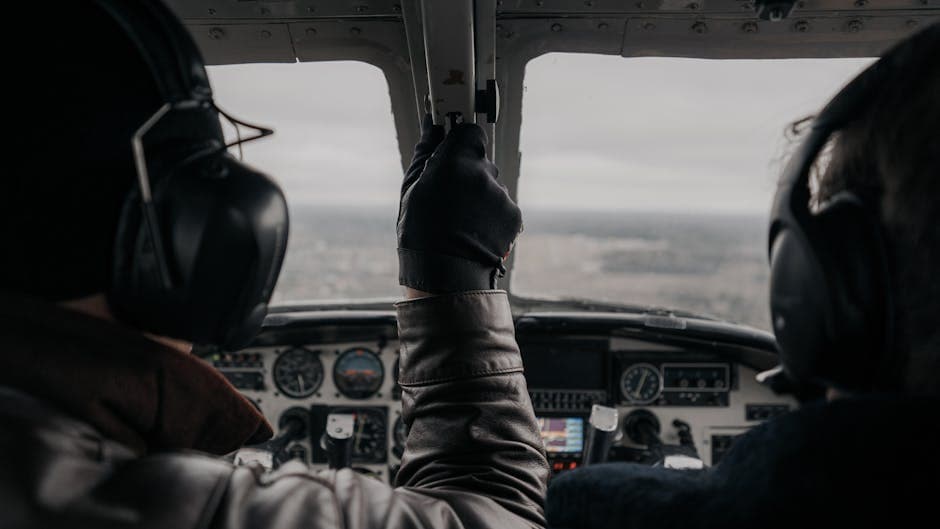
Once eligible, the training sequence typically unfolds as follows:
- Student Pilot License (SPL): This is the very first step, obtained after passing an oral examination conducted by the Chief Flying Instructor (CFI) of a DGCA-approved flying school.
- Private Pilot License (PPL): Involves approximately 40-60 hours of flying, including solo flights and cross-country navigation. This allows you to fly for recreational purposes, but not for hire.
- Commercial Pilot License (CPL): The core of becoming a professional pilot. This requires a minimum of 200 hours of flight time, including 100 hours of solo flight, 50 hours of cross-country solo, 10 hours of instrument flying, and 5 hours of night flying. Alongside practical training, you must pass several DGCA written examinations covering subjects like Air Regulations, Aviation Meteorology, Air Navigation, Technical General, and Technical Specific.
- Multi-Engine Rating (ME): Often integrated into CPL training, this qualifies you to fly aircraft with more than one engine.
- Instrument Rating (IR): Essential for flying in adverse weather conditions or solely by reference to instruments. This is also typically part of CPL training.
- Airline Transport Pilot License (ATPL): The highest level of pilot certification, required for commanding commercial airline flights. This involves passing advanced DGCA written exams and accumulating 1500 hours of flight experience, including specific multi-crew and jet time.
- Type Rating: After obtaining your CPL/ATPL, you will need a 'type rating' for a specific aircraft model (e.g., Airbus A320, Boeing 737) that you will be flying for an airline. This is typically sponsored by the airline upon recruitment.
For detailed and up-to-date regulations, prospective pilots should always consult the official website of the Directorate General of Civil Aviation (DGCA), India.
The Financial Flight Plan: Cost of Pilot Training in India
A significant consideration for anyone exploring how to become a pilot is the financial investment. Pilot training, particularly for a CPL, is a substantial expense. The costs can vary widely depending on the flying school, the type of aircraft used, and whether the training is conducted in India or abroad.
Cost Breakdown for CPL Training in India
As of May 2026, the approximate costs for obtaining a CPL in India typically range from ₹30 Lakhs to ₹70 Lakhs (approximately $36,000 to $84,000 USD). This figure generally includes:
- Flight Training Hours: This is the largest component, covering the 200 hours required for a CPL. Costs per hour vary, but this alone can account for ₹25-50 Lakhs.
- Ground School: Theoretical classes covering DGCA subjects. Some flying schools include this in their overall package, while others charge separately (₹2-5 Lakhs).
- DGCA Exam Fees: Fees for each written examination.
- Medical Examinations: Initial Class 2 and subsequent Class 1 medicals.
- Study Materials and Equipment: Textbooks, navigation charts, pilot uniform, headset, etc.
- Accommodation and Living Expenses: If you relocate for training, these costs can add significantly, especially in major cities.
| Component | Estimated Cost (INR) |
|---|---|
| Flight Training (200 hours) | ₹25,00,000 - ₹50,00,000 |
| Ground School | ₹2,00,000 - ₹5,00,000 |
| DGCA Exam Fees | ₹50,000 - ₹1,00,000 |
| Medical Examinations | ₹20,000 - ₹50,000 |
| Study Materials & Equipment | ₹50,000 - ₹1,00,000 |
| Total Estimated Cost (excluding living) | ₹28,20,000 - ₹57,50,000 |
Financing Options
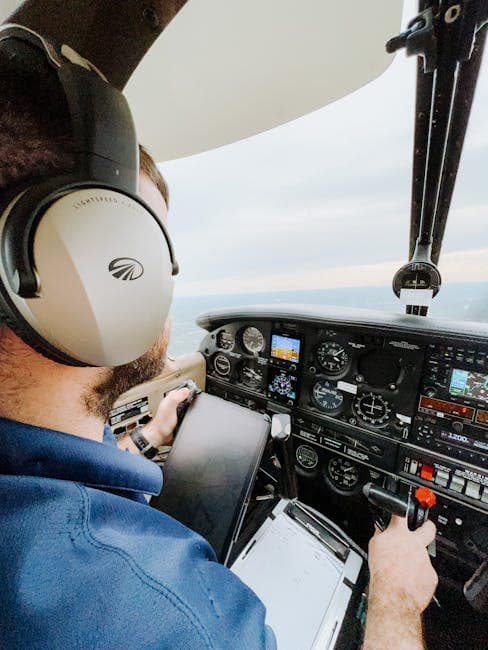
Given the high costs, many aspiring pilots rely on education loans. Several public and private banks in India offer specific education loan schemes for pilot training, often covering up to 80-90% of the course fees. Eligibility for these loans typically depends on academic performance, collateral, and the co-applicant's financial standing. It is advisable to research different bank offerings and their terms and conditions thoroughly.
India vs. Abroad: Where to Train for Your Wings?
While India has numerous DGCA-approved flying schools, many students consider pilot training abroad. The decision often hinges on factors such as cost, training duration, aircraft availability, and exposure to international aviation standards. Countries like the USA, Canada, Australia, and New Zealand have historically been popular choices due to their well-established aviation industries and training infrastructure.
Training abroad can sometimes offer a faster completion time due to better weather conditions and greater aircraft availability. However, it also introduces additional costs such as international travel, visa fees, and higher living expenses. Furthermore, pilots trained abroad must convert their foreign licenses to a DGCA license, which involves passing specific Indian aviation exams and fulfilling any additional hour requirements. This conversion process can add both time and expense to the overall journey to become a pilot in India.
Beyond the Cockpit: Aviation Management Degrees in North Cyprus
While direct flight training for a CPL is a specialized path, a robust academic background in aviation management or a related field can significantly enhance a pilot's career prospects, offering pathways into leadership, operations, or strategic roles within the global aviation industry. North Cyprus universities provide an excellent opportunity to gain such a qualification with strong international recognition.
Universities in North Cyprus, such as Near East University (NEU) and the University of Kyrenia (UK), offer comprehensive Bachelor's and Master's programs in Aviation Management and related disciplines. These programs cover critical areas like air traffic control, airline operations, airport management, aviation law, and logistics. For instance, the University of Kyrenia, with its strong focus on maritime and aviation studies, offers a Bachelor of Science in Aviation Management, preparing students for diverse roles within the sector.
Global Employability with EU Diploma Supplement and YÖK Accreditation
A distinct advantage of pursuing an aviation-related degree in North Cyprus is the dual accreditation and recognition system. Degrees from North Cyprus universities are issued with the EU Diploma Supplement, often referred to as the "blue diploma." This document signals clear recognition within the European Higher Education Area, making your qualification easily readable and accepted by European universities for further study and by European employers for work. This is particularly valuable in a globally interconnected industry like aviation, where cross-border professional standards are common.
Furthermore, these degrees are accredited by Turkey's Council of Higher Education (YÖK), ensuring academic equivalence to Turkish state-university degrees. This dual recognition provides graduates with robust international mobility, opening up realistic career and further-study opportunities across Europe, Turkey, and globally. For an aspiring pilot, an Aviation Management degree complemented by this international recognition can provide a strong foundation for a career that extends beyond the cockpit, into management or regulatory roles, or even facilitate advanced studies in aviation law or policy.
Choosing Your Flight School: Key Considerations
Whether you choose to train in India or pursue an aviation degree abroad, selecting the right institution is paramount. Here are critical factors to consider:
- Accreditation: Ensure the flying school is DGCA-approved in India, or recognized by its national aviation authority abroad. For academic degrees, verify university accreditation by bodies like YÖDAK (Higher Education Planning, Evaluation, Accreditation and Coordination Council) in North Cyprus.
- Fleet and Infrastructure: Look at the type, age, and maintenance of aircraft available. A diverse and well-maintained fleet is crucial for varied training.
- Instructor-to-Student Ratio: A lower ratio often means more personalized attention and faster progress.
- Safety Record: Research the school's safety history and protocols.
- Placement Assistance: Some institutions offer career support or tie-ups with airlines, which can be invaluable after graduation.
- Cost Transparency: Ensure all costs are clearly outlined, with no hidden fees.
Starting Your Journey: Application Process for Aviation Programs in North Cyprus
Applying to an aviation-related program at a North Cyprus university is a straightforward process designed to be accessible for international students. Unlike many Western countries, North Cyprus universities maintain one of the most open admissions policies in the region, making it an attractive destination for Indian students.
Crucially, North Cyprus universities do not require external English-language proficiency exams such as IELTS, TOEFL, Pearson PTE, Cambridge English, or Duolingo English Test for admission. Similarly, there are no requirements for standardized entrance exams like SAT, ACT, GRE, or GMAT, nor do universities administer a competitive entrance exam at the application stage. Admission is primarily based on your secondary-school transcript (and bachelor's transcript for graduate programs).
Applicants who do not already hold an English-language qualification (such as a high school diploma from an English-medium institution) will take an in-house English Proficiency Exam upon arrival at the university. This is a placement test, not an admission gate. If a student does not pass this in-house exam, they will enter the university's English Preparatory School, typically for one academic year, before commencing their degree program. This ensures all students have the necessary language skills to succeed without facing an admission barrier. To explore available programs and begin your application, visit our apply now page.
Frequently asked questions about becoming a pilot
Aviation Programs at North Cyprus Universities
Hand-picked programs from North Cyprus universities you can apply to directly.

Ready to Launch Your Aviation Career?
Whether you're pursuing flight training or an aviation management degree, North Cyprus offers globally recognized programs. Let us help you find the perfect fit.