Study Pilotage in North Cyprus
No IELTS or entrance exam required — admission is based on your transcript.

Introduction to a Career in Aviation

Becoming a pilot is a dream for many, offering a dynamic career path with unparalleled views and global travel opportunities. Whether you aspire to fly commercial airliners, cargo planes, or private jets, the journey to the flight deck is structured and demanding, requiring dedication, rigorous training, and a clear understanding of the necessary qualifications. This guide will walk you through the essential steps on how to be a pilot, from initial medical assessments to advanced flight certifications, and highlight how pursuing an aviation-related degree in North Cyprus can provide a distinct advantage in this competitive field.
The aviation sector is a cornerstone of global commerce and tourism, constantly evolving with technological advancements and increasing passenger traffic. This growth translates into a continuous need for skilled aviation professionals, including pilots. Understanding the various license types, training pathways, and the educational foundation that supports a successful aviation career is critical for prospective pilots. North Cyprus, with its internationally recognized university degrees, offers a strategic starting point for this ambitious journey.
The Step-by-Step Journey on How to Become a Pilot
The path to becoming a licensed pilot involves several distinct stages, each building upon the last. While specific regulations may vary slightly by country and regulatory body, the core process remains consistent globally. Here's a general outline of the journey:
Key Steps to Becoming a Pilot
Pass a Medical Examination
Aviation authorities require pilots to meet stringent health standards. This is the first critical hurdle.
Complete Ground School Training
Acquire theoretical knowledge in subjects like aerodynamics, navigation, meteorology, and aviation law.
Undertake Flight Training
Accumulate flight hours under the supervision of certified instructors, mastering practical flying skills.
Pass Practical Flight Tests
Demonstrate proficiency in various flight maneuvers and emergency procedures to an examiner.
Obtain Your Pilot License
Receive the appropriate license (PPL, CPL, ATPL) upon successful completion of all requirements.
Medical Certification
Before you even step into a cockpit, you must undergo a comprehensive medical examination by an authorized aviation medical examiner. For commercial pilot aspirations, you will need a Class 1 Medical Certificate, which assesses vision, hearing, cardiovascular health, neurological function, and overall physical and mental well-being. This certificate must be maintained throughout your career, typically renewed annually. Regulatory bodies like the European Union Aviation Safety Agency (EASA) or the Federal Aviation Administration (FAA) in the US set these strict standards to ensure pilots can safely perform their duties. You can find detailed requirements on the official EASA website: easa.europa.eu.
Ground School and Theoretical Knowledge
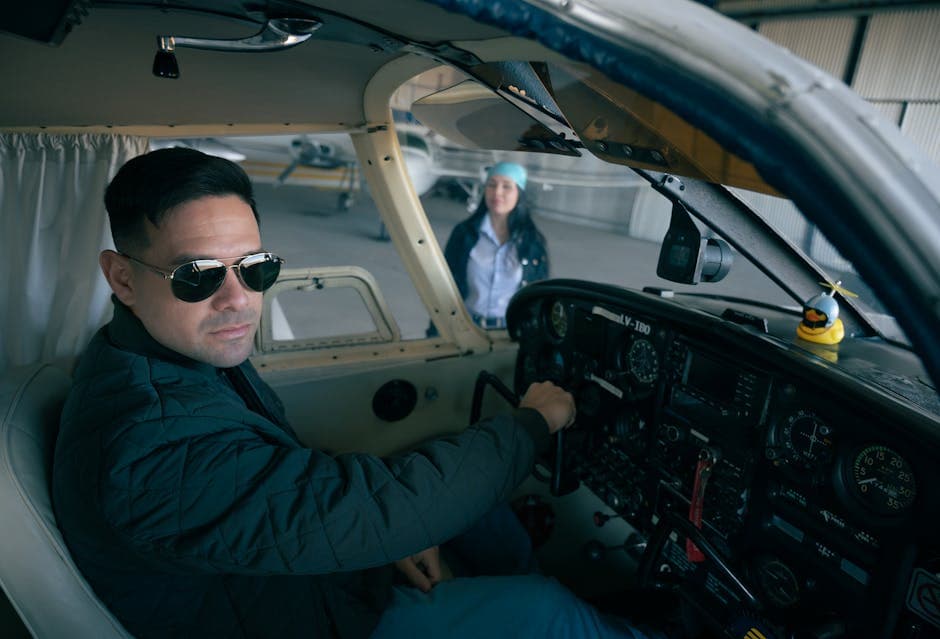
Ground school is the academic component of pilot training, where you learn the theoretical principles of flight. This typically covers subjects such as aerodynamics, aircraft systems, meteorology, navigation, flight planning, radio communication, and aviation law. Depending on the license you pursue, ground school can last from a few weeks to several months. Many universities in North Cyprus, such as the University of Kyrenia and Near East University, offer degree programs like Aviation Management or Professional Pilotage that integrate extensive ground school curriculum, providing a robust academic foundation alongside practical flight training.
Flight Training
The practical phase of training involves accumulating flight hours under the guidance of a certified flight instructor. This hands-on experience begins with basic maneuvers, takeoffs, and landings, progressing to cross-country flights, instrument flying, and emergency procedures. The number of flight hours required varies significantly depending on the type of license you are pursuing. For a Private Pilot License (PPL), a minimum of 40-45 hours is typical, while a Commercial Pilot License (CPL) requires around 200-250 hours, and an Airline Transport Pilot License (ATPL) demands 1,500 hours. This phase culminates in a practical flight test, often called a 'checkride,' where you demonstrate your proficiency to an examiner.
Understanding Pilot Licenses: PPL, CPL, ATPL
Pilot licenses are tiered, each granting different privileges and requiring increasing levels of training and experience. Understanding these distinctions is crucial for anyone asking how to become a pilot and planning their career trajectory.
Private Pilot License (PPL)
The PPL is the entry-level license, allowing you to fly an aircraft for recreational purposes, but not for hire or compensation. You can carry passengers and share operating expenses, but you cannot be paid to fly. Requirements typically include being at least 17 years old, completing a minimum of 40-45 hours of flight time (including solo and cross-country hours), passing a written knowledge exam, and successfully completing a practical flight test. This license is often the first step for aspiring commercial pilots, providing fundamental flying skills.
Commercial Pilot License (CPL)
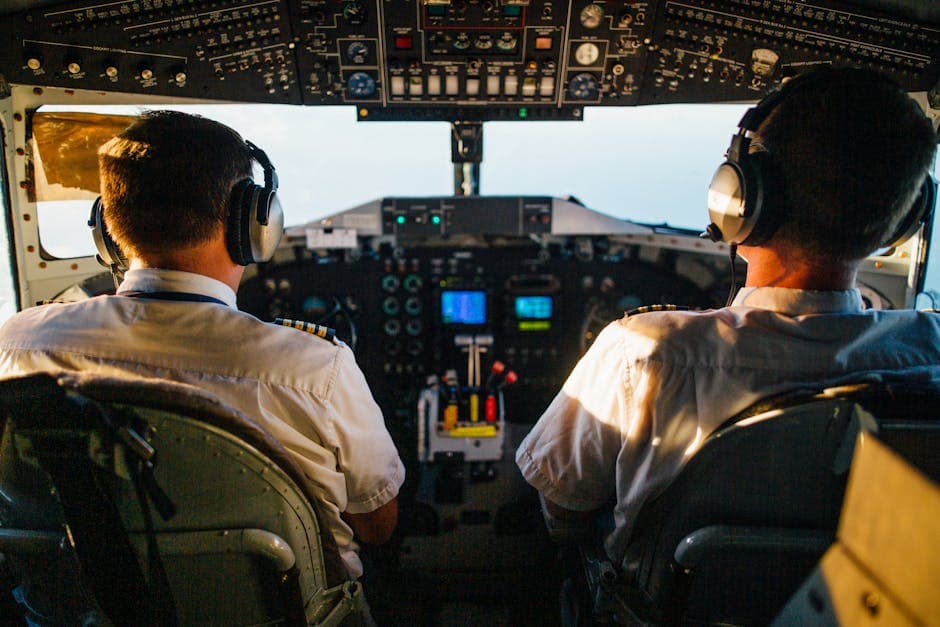
A CPL is necessary if you intend to fly for compensation or hire. This license allows you to act as pilot-in-command of an aircraft for various commercial operations, such as banner towing, aerial photography, flight instruction, or charter flights, provided you meet certain operational requirements. To obtain a CPL, you typically need to be at least 18 years old, possess a PPL, accumulate a minimum of 200-250 hours of flight time (with specific requirements for cross-country, night, and instrument flight), pass advanced written exams, and complete a more rigorous practical flight test. Many students pursuing degrees in Aviation Management or Professional Pilotage at institutions like Eastern Mediterranean University or Cyprus International University will work towards their CPL as part of their integrated training.
Airline Transport Pilot License (ATPL)
The ATPL is the highest level of pilot certification, required to act as pilot-in-command (captain) of an aircraft in scheduled airline operations. This license signifies a pilot's extensive experience and advanced proficiency. Requirements are substantial, typically including being at least 21 years old (23 for full ATPL privileges in some regions), holding a CPL, and accumulating a minimum of 1,500 hours of flight time, with specific minimums in multi-engine, instrument, and night flying. The ATPL also involves comprehensive theoretical exams and a final practical checkride. Many pilot training programs, including those integrated with university degrees, are designed to prepare students for the ATPL 'frozen' status, meaning they have passed the theoretical exams and accumulated significant hours, but need to reach the 1,500 flight hours minimum to unfreeze the license.
Training Costs and Duration: Global Perspectives
The cost and duration of pilot training are significant considerations for aspiring aviators. These factors can vary widely depending on the country, the training route (modular vs. integrated), the type of aircraft used, and the specific flight school. Generally, pilot training represents a substantial financial and time investment.
| License Type / Region | Estimated Cost (USD) | Estimated Duration |
|---|---|---|
| Private Pilot License (PPL) | $10,000 - $20,000 | 3-6 months |
| Commercial Pilot License (CPL) - Modular | $40,000 - $70,000 | 12-18 months (after PPL) |
| Airline Transport Pilot License (ATPL) - Integrated | $80,000 - $150,000+ | 18-24 months |
| Aviation Degree (e.g., BSc Aviation Management) | $6,000 - $12,000 per year (NC) | 3-4 years |
Integrated ATPL programs, which combine ground school and flight training into a continuous course, are often more expensive but can be completed in a shorter timeframe. Modular programs allow students to obtain licenses step-by-step, offering more flexibility but potentially extending the overall duration. Countries like the USA and some Eastern European nations might offer lower training costs compared to Western Europe or Australia, though quality and regulatory recognition should always be primary considerations. It's crucial to research accredited flight schools and understand all associated fees, including aircraft rental, instructor fees, examination fees, and study materials. For those considering a university degree alongside flight training, North Cyprus offers a compelling value proposition.
Complementary Aviation Degrees in North Cyprus

While direct flight training is essential, a university degree in an aviation-related field can significantly enhance a pilot's career prospects, offering a deeper understanding of the industry, management skills, and a broader professional network. North Cyprus universities provide excellent programs that can complement pilot training or lead to diverse careers within the aviation sector.
For instance, the University of Kyrenia is renowned for its Faculty of Aviation and Aeronautical Sciences, offering programs such as Professional Pilotage (BSc), Aviation Management (BSc), and Aeronautical Engineering (BSc). Similarly, Near East University provides degrees in Civil Aviation Management and Aeronautical Engineering, while Girne American University and Cyprus International University also feature strong programs in Aviation Management. These programs equip students with comprehensive knowledge in airport operations, airline management, air traffic control, aviation safety, and aircraft maintenance, providing a versatile skill set beyond just flying.
A key advantage of pursuing these degrees in North Cyprus is the international recognition they carry. All degrees issued by North Cyprus universities come with the EU Diploma Supplement. This document, recognized across the European Higher Education Area, ensures that your qualification is easily understood and accepted by European universities for further study and by European employers for work. Furthermore, these degrees are accredited by Turkey's Council of Higher Education (YÖK), granting them academic equivalence to degrees from Turkish state universities. This dual accreditation significantly boosts the global mobility and employability of graduates in fields with cross-border professional standards, such as aviation.
North Cyprus: A Gateway to Global Aviation Careers
The combination of specialized aviation education and international accreditation makes North Cyprus an attractive destination for aspiring pilots and aviation professionals. The EU Diploma Supplement ensures that your academic credentials are transparent and comparable across Europe, facilitating opportunities for advanced studies or employment within the European Union. Concurrently, YÖK accreditation provides a strong foundation for those considering career paths or further education in Turkey, a rapidly growing aviation hub.
Graduates from North Cyprus aviation programs are well-positioned for a variety of roles in the global aviation industry. Beyond the cockpit, these degrees open doors to careers in airline operations, airport management, air traffic control, aviation safety and security, logistics, and aircraft maintenance. The rigorous curriculum, often taught in English, combined with practical training opportunities, prepares students for the demands of a dynamic international sector. The International Civil Aviation Organization (ICAO) sets global standards for aviation, and North Cyprus universities align their curricula to these international benchmarks, ensuring graduates are prepared for a global workforce.
The North Cyprus Advantage: Admission and Support
North Cyprus universities maintain one of the most accessible admissions policies in the region, making the dream of an international aviation education achievable for many. Crucially, North Cyprus universities do not require external English-language proficiency exams such as IELTS, TOEFL, Pearson PTE, or Cambridge English for admission. Similarly, there are no requirements for standardized entrance exams like SAT, ACT, GRE, or GMAT, nor do universities administer competitive entrance exams at the application stage. Admission is primarily based on your secondary-school transcript (and bachelor's transcript for graduate programs).
Applicants who do not already hold an English-language qualification (such as a high school diploma from an English-medium institution) will take an in-house English Proficiency Exam upon arrival at the university. This is a placement test, not an admission barrier. If a student does not pass this in-house exam, they will enroll in the university's English Preparatory School for typically one academic year before commencing their degree program. This supportive approach ensures that all students have the necessary language skills to succeed academically. Furthermore, North Cyprus universities offer various scholarship opportunities, often covering 50% or more of tuition fees, making quality aviation education more affordable. You can explore specific programs and apply directly through our platform to browse all aviation programs.
Your Next Steps to Becoming a Pilot
Embarking on a career as a pilot is a challenging yet incredibly rewarding endeavor. By understanding the structured training path, the various license types, and the significant investment required, you can plan your journey effectively. For those seeking a strong academic foundation to complement their flight training and enhance their global career mobility, North Cyprus universities offer internationally recognized degrees in Aviation Management, Aeronautical Engineering, and Professional Pilotage. Start your application today to explore how these programs can launch your career in the skies.
Frequently Asked Questions About Becoming a Pilot
Explore Aviation Programs in North Cyprus
Hand-picked programs from North Cyprus universities you can apply to directly.

Launch Your Aviation Career in North Cyprus
Ready to take the first step towards becoming a pilot or an aviation professional? Tell us your academic background and career aspirations, and we'll match you with the ideal program in North Cyprus.