Understanding the UK Student Visa: Why Your Documents are Crucial
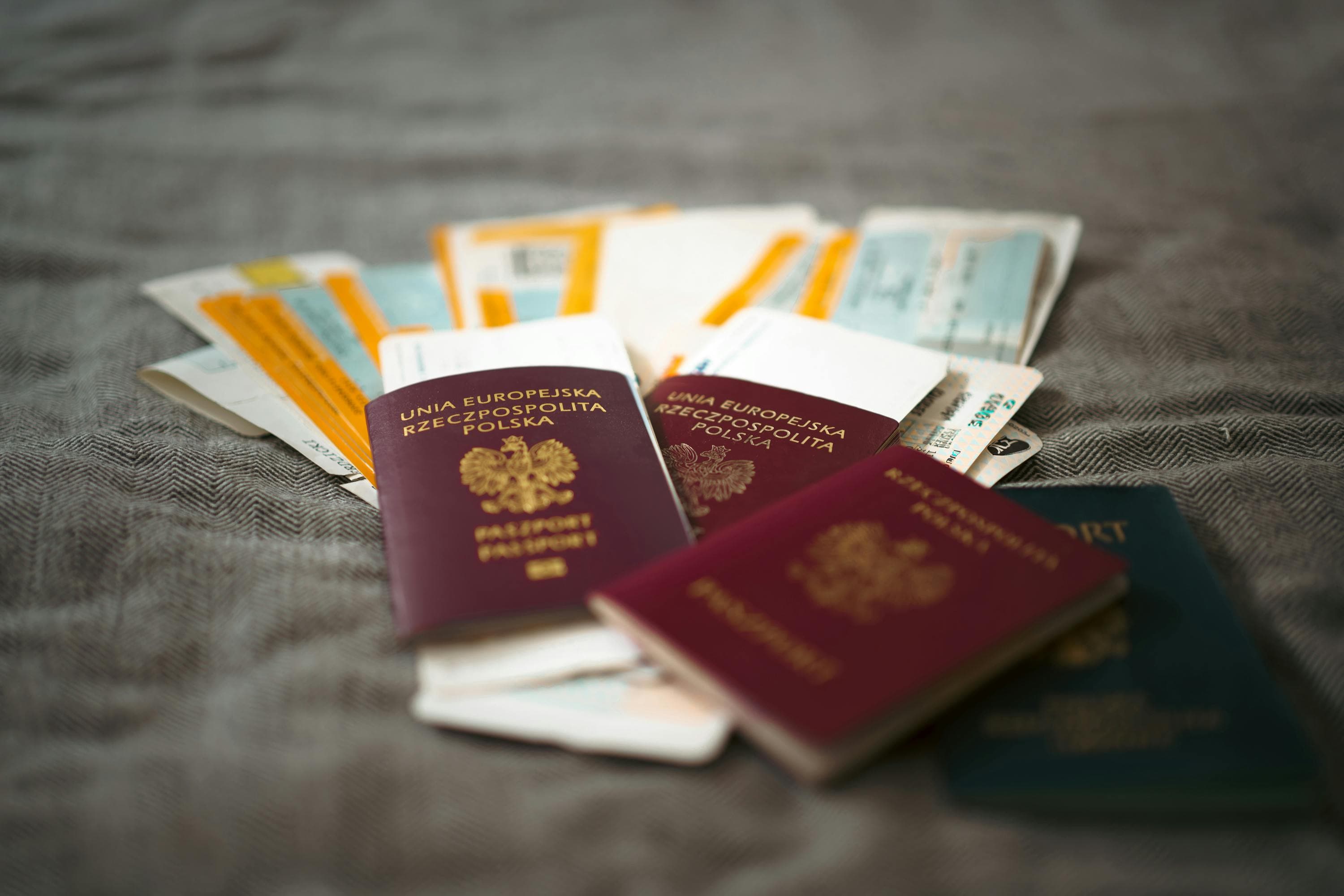
Securing a place at a UK university is a significant achievement, but it's only half the battle. The next, and arguably more challenging, hurdle is navigating the stringent uk student visa requirements. The UK Home Office operates a points-based system where your application must meet a specific score to be successful. The vast majority of these points are awarded based on the documents you provide, leaving no room for error, ambiguity, or omission. A single missing bank statement or a poorly formatted letter can lead to a costly and disheartening refusal.
This guide provides a rigorous, step-by-step breakdown of every piece of paper you'll need. We will dissect the purpose of each document, highlight common pitfalls, and offer a clear strategy for compiling a flawless application package. We will also contrast this complex process with the more streamlined and accessible student residence permit system in North Cyprus, offering a valuable perspective for students weighing their international education options. The goal is to demystify the process and empower you with the knowledge to assemble your student visa documents with confidence.
The Essential Checklist: Every UK Student Visa Document You'll Need
Your application is a portfolio of proof. Each document serves a specific purpose, from confirming your identity to proving your financial stability and academic intentions. Below is the definitive list of documents required for a standard UK Student Visa application as of May 2026. Organize them meticulously, as presentation and completeness are key.
Core UK Student Visa Document Checklist
Current Passport or Travel Document
You need a valid passport with at least one blank page for the visa sticker. It must be valid for the entire duration of your stay in the UK. If you have previous passports, you may need to provide them as well, especially if they contain prior UK visas.
Confirmation of Acceptance for Studies (CAS)
This is not a physical document you submit, but a unique reference number provided by your university after you've accepted their unconditional offer and paid your deposit. The Home Office uses this number to access an electronic record containing your course details, tuition fees, and personal information.
Proof of Financial Maintenance
This is the most critical and complex part. You must show you have enough money to pay for your first year of tuition fees (as stated on your CAS) plus a set amount for living costs. This is typically demonstrated through bank statements or an official letter from a financial sponsor.
Academic Technology Approval Scheme (ATAS) Certificate
Only required for postgraduate students in certain sensitive subjects (e.g., specific engineering, technology, and science fields). Your university will inform you if your course requires an ATAS certificate. The application is free but can take several weeks to process, so apply early.
Tuberculosis (TB) Test Certificate
Required if you are a resident of a country on the UKVI's specified list. The test must be taken at a Home Office-approved clinic. The certificate is valid for six months, so time your test accordingly.
Parental Consent (for Under 18s)
If you are 16 or 17, you must provide a letter of consent from your parent(s) or legal guardian(s). This letter must confirm their consent for your application, your living arrangements in the UK, and your travel plans. You'll also need to provide proof of your relationship, such as your birth certificate.
Official Translations
Any document that is not in English or Welsh must be accompanied by a fully certified translation from a professional translator. The translation must include the translator's credentials and confirmation that it is an accurate translation of the original document.
Proving Your Finances: A Deep Dive into Maintenance Funds

The financial requirement is non-negotiable and highly specific. Failure to meet it precisely is the most common reason for refusal. You must demonstrate that you have enough money to cover two components: your outstanding tuition fees for the first academic year and a fixed amount for living expenses (maintenance).
As of May 2026, the maintenance requirement is:
- £1,334 per month for up to 9 months (£12,006 total) if you will be studying in London.
- £1,023 per month for up to 9 months (£9,207 total) if you will be studying outside London.
The total amount (Tuition Fees + Maintenance) must be held in your bank account (or your parent's/guardian's account) for a consecutive 28-day period. The closing balance on the bank statement you submit must not be more than 31 days old on the date you submit your visa application. The bank statements must be on official letterhead and include all required details. Funds from certain financial institutions may not be accepted, and sources like crypto assets or property are not permissible as proof.
The Confirmation of Acceptance for Studies (CAS): Your Golden Ticket
The CAS is the cornerstone of your visa application. It is an electronic document generated by your chosen UK university once you have met all their conditions and paid a deposit. It contains a unique reference number that links your visa application directly to the university's sponsorship record with the UK Home Office. This number is valid for six months and can only be used for one application.
Your CAS statement will detail your personal information, passport details, course title, start and end dates, tuition fees for the first year, and any fees you have already paid. It is absolutely critical that you check every detail on the CAS for accuracy before you begin your visa application. Any discrepancy between the CAS and your other student visa documents, such as your passport, can lead to delays or refusal. If you spot an error, contact your university's admissions team immediately to have it corrected.
Academic and English Language Evidence

Your CAS will usually list the documents your university used to assess your academic suitability, such as your high school diploma, bachelor's degree certificate, and transcripts. While you may not always be required to submit these documents with your visa application (the Home Office may trust the university's assessment), you must have them available in case they are requested. This is known as the 'differentiation arrangement' and applies to students from certain countries.
Crucially, the uk student visa requirements mandate proof of English language proficiency at a specific level (typically B2 of the CEFR). This is almost always demonstrated through a Secure English Language Test (SELT) like IELTS for UKVI or Pearson PTE Academic UKVI. The specific score required is set by your university and will be stated on your CAS. This is a stark contrast to the admissions policy in North Cyprus, where universities like Eastern Mediterranean University (EMU) and Near East University (NEU) do not require external tests like IELTS or TOEFL for admission. Instead, students take an in-house proficiency exam upon arrival, with an English Preparatory School available for those who need to improve their skills before starting their degree program. This removes a significant barrier and expense for many international students.
Common Mistakes That Lead to Visa Refusal
A visa refusal can be devastating. Most refusals are not due to a student's ineligibility but to simple, avoidable errors in the application or the supporting documents. Here are the most common document-related mistakes:
- Incorrect Financial Evidence: The funds have not been held for the full 28 days, the bank statement is too old, the statement is not in the required format, or the money is in an unacceptable financial institution.
- Missing Documents: Forgetting to include a TB certificate when required, or failing to provide certified translations for documents not in English.
- Inconsistent Information: A name spelled differently on a bank statement compared to a passport, or an incorrect date of birth on the application form.
- CAS Errors: Applying with a CAS that has expired or contains incorrect information that was not flagged to the university.
- Lack of Credibility: During a potential credibility interview, being unable to answer basic questions about your chosen course, university, or how you plan to fund your studies can raise red flags, suggesting your primary motivation may not be education.
To avoid these pitfalls, create a personal checklist, double-check every document against official UKVI guidance, and review your entire application before submission. If you need assistance, our student visa guidance team can help you review your documents and prepare for the process.
UK Visa vs. North Cyprus Residence Permit: A Comparative Analysis
For many students, the complexity and cost of the UK visa process are significant deterrents. It's valuable to compare this with the more straightforward student residence permit process in North Cyprus. While the UK system is a pre-emptive barrier to entry, the North Cyprus system is a post-arrival registration process, reflecting a more open and welcoming admissions policy.
The difference is fundamental. In North Cyprus, you are admitted based on your academic transcripts. You receive an acceptance letter, travel to the island, and then complete the residence permit formalities with the full support of your university's international office. Universities like Cyprus International University (CIU) have dedicated teams to guide students through every step. This approach significantly reduces the upfront stress and financial burden. The required documents are simpler, and the financial proof is less prescriptive than the UK's 28-day rule. This process is overseen by the TRNC Ministry of Foreign Affairs and is designed to be facilitative rather than restrictive.
| Requirement | United Kingdom | North Cyprus |
|---|---|---|
| Application Process | Online application before travel, followed by biometrics appointment. | Apply for student permit after arrival, with university assistance. |
| Visa Application Fee | £490 (approx. $620 USD) | Minimal permit fee upon arrival (approx. €100-€150). |
| Immigration Health Surcharge (IHS) | £776 per year (approx. $980 USD), paid upfront for the entire course duration. | Mandatory local health insurance is part of the registration process, costing approx. €60-€80 per year. |
| Financial Proof | Strict: Tuition + £9,207-£12,006 held for 28 consecutive days. | Proof of tuition payment and sufficient funds for living costs shown upon arrival; no strict 28-day rule. |
| English Test Requirement | Mandatory (IELTS for UKVI, PTE for UKVI, etc.) before application. | None for admission. In-house placement test on arrival, with prep school option. |
| Processing Time | 3-8 weeks, can be longer during peak season. | Permit processed within a few weeks of arrival on the island. |
Moreover, the value proposition of a North Cyprus education extends far beyond a simpler entry process. Degrees from TRNC universities are accredited by YÖK (the Turkish Council of Higher Education), granting them equivalence with degrees from Turkish state universities. They also come with the EU Diploma Supplement, which ensures transparency and academic recognition across the European Higher Education Area, governed by the principles of the Bologna Process. This dual recognition creates powerful pathways for graduates seeking further education or careers in Europe, Turkey, and beyond.
Step-by-Step Guide to Organizing and Submitting Your Application
Once you have gathered all your student visa documents, the final steps are submission and waiting. Follow this sequence to ensure a smooth process:
- Receive Your CAS: Do not start your visa application until you have your CAS number from your university. Verify all details are correct.
- Complete the Online Application Form: Fill out the form on the official UK government website. The form is lengthy, so allocate several hours. Answer every question truthfully and consistently with your supporting documents.
- Pay the Fees: You will need to pay the visa application fee and the Immigration Health Surcharge (IHS) online with a credit or debit card. The IHS is mandatory and covers your access to the National Health Service (NHS).
- Book a Biometrics Appointment: After payment, you will be directed to book an appointment at a visa application centre (VAC) in your country. At this appointment, they will take your fingerprints and a digital photograph.
- Upload Your Documents: Most VACs now use a digital system where you upload scanned copies of your documents before your appointment. Ensure your scans are clear, in colour, and correctly labelled.
- Attend Your Appointment: Go to your appointment with your passport, the appointment confirmation, and any other required documents as instructed by the VAC.
- Wait for a Decision: After your appointment, your application is sent to UK Visas and Immigration (UKVI) for a decision. Standard processing times are around 3 weeks, but this can vary. You can track your application status online.
Frequently Asked Questions
Explore a Smarter Study Abroad Pathway
Tired of complex visa rules and high costs? Discover the world-class, affordable, and accessible education opportunities in North Cyprus. Let us help you find the right program with a straightforward admission process.