
Featured programs you can apply to
No IELTS or entrance exam required — admission is based on your transcript.


What is Architecture? More Than Just Buildings

At its core, architecture is the art and science of designing and constructing buildings and other physical structures. But this definition only scratches the surface. Answering the question 'what is architecture?' requires looking beyond blueprints and concrete. It is a discipline that shapes human experience, influences behavior, and solves complex societal problems. Architects are visionaries who must balance aesthetics with functionality, client desires with building regulations, and artistic expression with structural integrity.
The field is inherently interdisciplinary, drawing from engineering, sociology, psychology, art history, and environmental science. An architect doesn't just design a house; they create a home. They don't just plan an office building; they craft a productive and inspiring workspace. From the grand scale of urban planning that defines a city's flow to the intimate detail of a door handle, architecture is the silent narrator of our daily lives. It is a profession that demands both a creative soul and a rigorously analytical mind.
The Architect's Journey: From Bachelor's to Professional Practice
The path to becoming a licensed architect is a structured and demanding one, typically beginning with a professional degree. The most common undergraduate route is the Bachelor of Architecture (B.Arch), a five-year program that provides the comprehensive foundation needed for professional practice. The curriculum is intensive, built around the design studio, where students tackle progressively complex design problems under the guidance of experienced faculty. This hands-on work is supplemented by courses in architectural history and theory, building technology, structural systems, materials science, and professional ethics.
For students who have already completed a bachelor's degree in another field, or for those seeking advanced specialization, the Master of Architecture (M.Arch) is the next step. M.Arch programs can range from one to three years, depending on the student's undergraduate background. These programs delve deeper into advanced design theory, digital fabrication, sustainable design, and architectural research. Regardless of the specific degree, the goal is the same: to equip students with the knowledge and skills to design safe, functional, and beautiful spaces that serve the needs of society.
Core Skills Every Aspiring Architect Needs

While a talent for drawing is often seen as the hallmark of an architect, the required skill set is far broader. Success in this field hinges on a unique combination of creative and analytical abilities. Critical thinking is paramount; architects must constantly analyze constraints—budget, site conditions, zoning laws, client needs—and synthesize them into a cohesive design solution. Problem-solving is the daily reality, whether it's reconfiguring a floor plan to improve circulation or finding a sustainable material that meets performance standards.
Strong spatial reasoning, the ability to visualize and manipulate objects in three dimensions, is non-negotiable. This is complemented by growing technical proficiency. Modern architects are fluent in a suite of digital tools, including Computer-Aided Design (CAD) software like AutoCAD and Building Information Modeling (BIM) software like Revit, which are industry standards. Finally, communication skills are crucial. Architects must effectively convey their ideas to clients, collaborate with engineers and contractors, and present their work compellingly to review boards and the public. It is a profession built on collaboration and clear communication.
Essential Skills for Your Architectural Toolkit
Creative Vision & Design
The ability to generate innovative ideas and translate them into compelling visual and spatial concepts. This includes sketching, model-making, and digital rendering.
Technical & Software Proficiency
Mastery of industry-standard software like AutoCAD, Revit, SketchUp, and Adobe Creative Suite is essential for drafting, modeling, and presentation.
Analytical Problem-Solving
Deconstructing complex problems related to site, budget, materials, and regulations to develop functional and elegant solutions.
Communication & Collaboration
Clearly articulating design intent to clients, engineers, and construction teams, and working effectively within a multidisciplinary team.
Building Your Foundation: The Importance of a Strong Portfolio
For anyone planning to study architecture, the portfolio is the single most important part of the application. Unlike applications for many other fields that rely solely on grades and transcripts, architecture programs want to see your creative potential. A portfolio is a curated collection of your best creative work, designed to showcase your skills, your thought process, and your passion for design. It is your visual introduction to the admissions committee.
What should you include? The key is variety and quality. Your portfolio can feature freehand sketches, technical drawings, paintings, photography, digital graphics, or even photos of 3D work like sculptures or models. The goal is not to present yourself as a finished architect but as a candidate with a keen eye, a curious mind, and a developing skill set. Admissions tutors at universities like Eastern Mediterranean University (EMU) and Girne American University (GAU) look for evidence of creativity, an understanding of composition and form, and a passion for the built environment. Don't just show the final product; include process sketches to reveal how you think and develop ideas. A well-curated portfolio tells a story about your creative journey and your potential to succeed in a demanding design program.
Why Study Architecture in North Cyprus? A Gateway to Global Careers
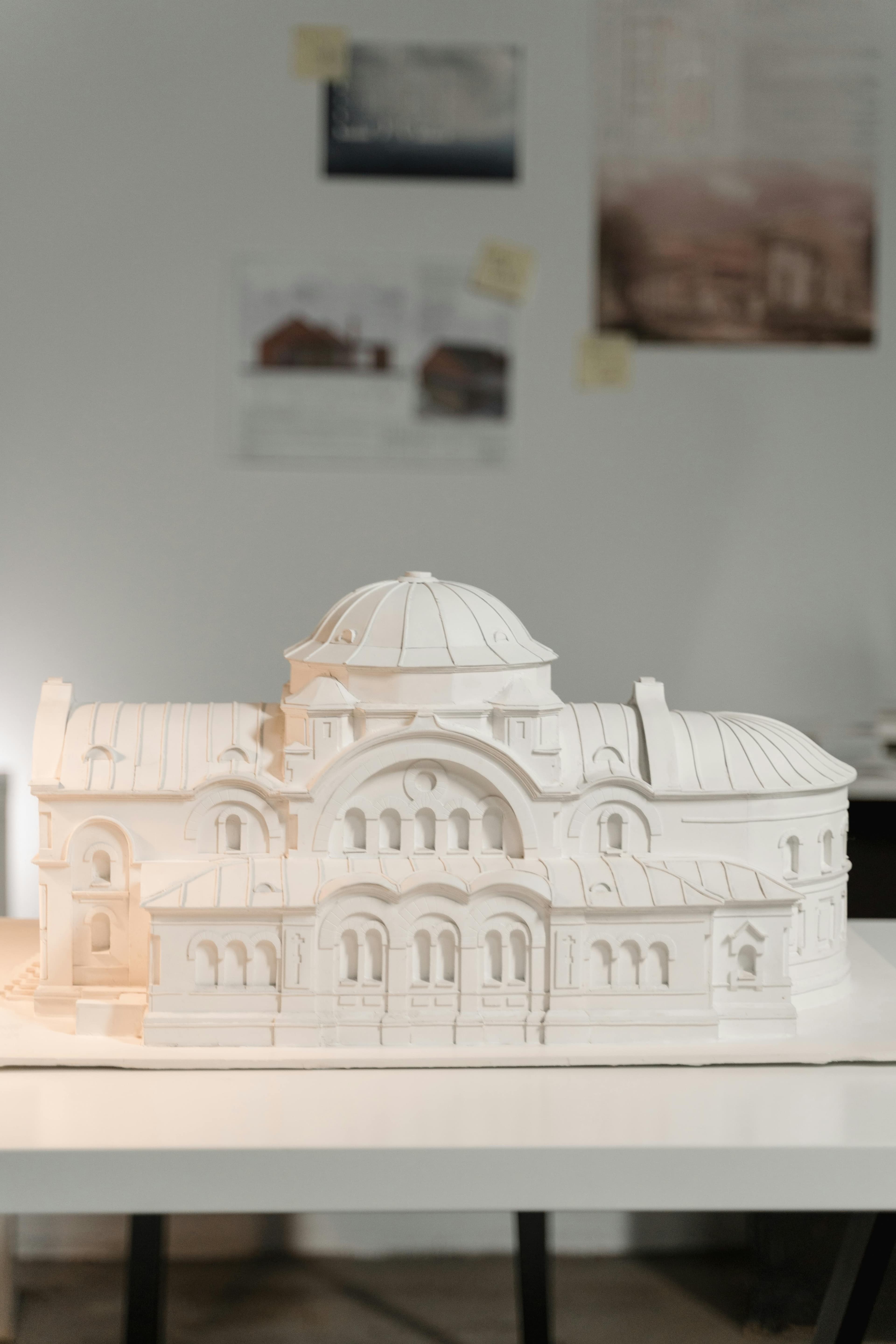
For international students seeking a high-quality, affordable, and globally-connected education, North Cyprus presents a compelling option. Its universities offer architecture programs taught entirely in English, situated in a multicultural and historically rich environment. But the most significant advantage lies in the structure of its higher education system, which is designed for international recognition and career mobility.
Degrees awarded by universities in North Cyprus come with two powerful credentials. First, they are fully accredited by Turkey's Council of Higher Education (YÖK). This means your architecture degree is considered equivalent to one from a state university in Turkey, opening up significant opportunities for postgraduate study or professional practice in a major regional economy. Second, and crucially for global ambitions, graduates receive the EU Diploma Supplement. This document, developed as part of the Bologna Process, provides a standardized description of the nature, level, context, content, and status of your studies. It makes your North Cyprus degree transparent and easily readable for employers and universities across the European Higher Education Area and beyond.
This dual system of recognition acts as a powerful career accelerator. An architecture graduate from a North Cyprus university holds a qualification that is understood and respected in both Turkey and Europe, providing a level of professional flexibility and mobility that is rare. It's a strategic choice for students who envision a career without borders. You can confidently start your application knowing your degree will have international currency.
Top Architecture Programs in North Cyprus: A Comparative Look
Several universities in North Cyprus have distinguished themselves with strong faculties of architecture and design. Eastern Mediterranean University (EMU) is particularly renowned, with a long-established Faculty of Architecture that is highly ranked and internationally recognized. Its programs emphasize a blend of theoretical knowledge and hands-on studio work. Girne American University (GAU) also offers robust architecture programs within its Faculty of Architecture, Design & Fine Arts, focusing on contemporary design practices and digital technologies. Cyprus International University (CIU) provides another excellent option, with a modern campus and a curriculum aligned with international architectural standards.
A significant draw for international students is the affordability. Tuition fees are considerably lower than in the US, UK, or Australia, and most universities offer substantial scholarships to international students, often ranging from 50% to 100% of the tuition fee. This makes a world-class architectural education financially accessible. The table below provides an illustrative comparison of standard annual tuition fees for Bachelor of Architecture programs before and after the typical 50% international student scholarship is applied.
| University | Standard Annual Tuition (EUR) | Est. Tuition with 50% Scholarship (EUR) |
|---|---|---|
| Eastern Mediterranean University (EMU) | €7,850 | €3,925 |
| Girne American University (GAU) | €6,500 | €3,250 |
| Cyprus International University (CIU) | €6,198 | €3,099 |
| Near East University (NEU) | €5,800 | €2,900 |
Note: Figures are for illustrative purposes and are subject to change. Scholarships are typically awarded based on academic merit upon application. For precise, up-to-date fee information and scholarship support, it is best to consult the university's official admissions page.
The North Cyprus Advantage: Accessible Admissions for Aspiring Architects

One of the most significant barriers for international students applying to universities in English-speaking countries is the requirement for standardized tests like the SAT, IELTS, or TOEFL. North Cyprus universities have adopted a more holistic and accessible admissions policy that removes this hurdle. Admission to architecture programs, like all other undergraduate programs, is based primarily on your secondary school academic performance.
There is no requirement to provide scores from external English proficiency exams for your initial acceptance. Instead of a pre-application entrance exam, universities administer their own English Proficiency Exam upon your arrival on campus. This is a placement test, not an admission gate. If you pass, you proceed directly to your first year of architecture studies. If your English level needs improvement, you are placed in the university's comprehensive English Preparatory School for one or two semesters. Upon successful completion, you automatically transition into your faculty. This system ensures that every qualified student has a direct pathway to their chosen degree, focusing on academic potential rather than standardized test-taking ability. All quality assurance is overseen by the local accreditation body, YÖDAK, ensuring these accessible standards are also high standards.
Career Paths After Your Architecture Degree
A degree in architecture opens a vast array of career opportunities. While many graduates pursue the traditional path to become a licensed architect by working in an architectural firm, the skills acquired during your studies are highly transferable to numerous related fields. The design thinking, project management, and technical expertise you develop are in high demand across the creative and construction industries.
Graduates can find fulfilling careers as urban planners, shaping the growth and development of cities. Others may specialize in landscape architecture, designing parks, public squares, and other outdoor spaces. Interior design offers a path to focus on the inside of buildings, creating functional and aesthetically pleasing environments. The construction industry offers roles in project management, where architects can oversee building projects from conception to completion. Other exciting avenues include historic building conservation, real estate development, architectural journalism, exhibition design for museums and galleries, and even set design for film and theater. The international recognition of a degree from North Cyprus, backed by the EU Diploma Supplement, ensures you are well-positioned to pursue these diverse careers anywhere in the world. You can browse all programs to find the specialization that fits your ambition.
Frequently Asked Questions About Studying Architecture
Architecture Programs in North Cyprus
Hand-picked programs from North Cyprus universities you can apply to directly.
Ready to Build Your Future?
Find the perfect architecture program in North Cyprus that matches your creative vision and career goals. Let our advisors help you navigate the application process and secure your scholarship.