Study Pilotage in North Cyprus
No IELTS or entrance exam required — admission is based on your transcript.

Introduction: Charting Your Course to Become a Pilot
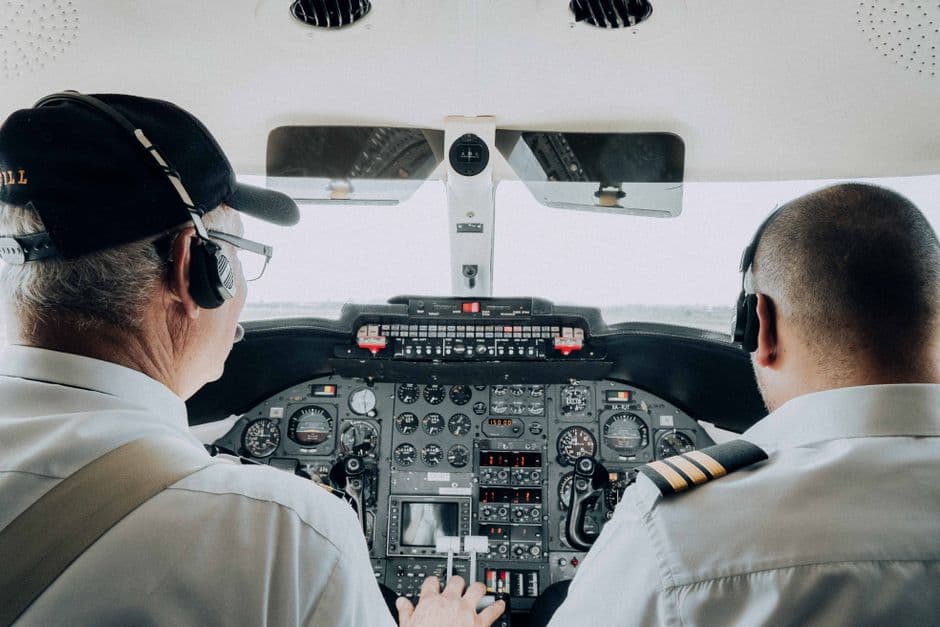
The allure of the skies, the precision of flight, and the responsibility of commanding an aircraft captivate many. For those asking what to do to become a pilot, the journey is rigorous but immensely fulfilling. It requires dedication, a strong academic foundation, and specialized flight training. This guide will meticulously detail every step, from initial education to advanced certifications, helping you navigate the complexities of becoming a professional pilot.
The aviation industry is experiencing significant growth, driven by increasing air travel and cargo demands. This expansion translates into consistent demand for qualified pilots across commercial airlines, cargo operations, private charters, and even specialized roles. Understanding the global landscape of pilot opportunities is crucial for anyone considering this career path, ensuring that your investment in training aligns with future employment prospects.
What Education is Needed Before Flight Training?
Before you even step into a cockpit simulator, a solid educational background is essential. Aspiring pilots typically need a high school diploma or its equivalent. While a university degree is not always a mandatory requirement for private or commercial pilot licenses, it is increasingly preferred, and often required, by major airlines for entry-level positions. A bachelor's degree demonstrates a higher level of commitment, analytical skills, and a broader knowledge base that can be invaluable in a dynamic aviation environment.
Focusing on subjects like mathematics, physics, and English during secondary school provides a strong foundation. These disciplines are critical for understanding aerodynamics, navigation, aircraft systems, and effective communication in the cockpit. Furthermore, pursuing a bachelor's degree in a related field such as Aviation Management or Aeronautical Engineering can significantly enhance your career prospects. Universities in North Cyprus, such as the University of Kyrenia (UK) and Near East University (NEU), offer programs like Aviation Management that provide a comprehensive understanding of the aviation industry, complementing your flight training with crucial theoretical knowledge.
The Path to the Cockpit: Licensing and Ratings

The journey to becoming a pilot involves a series of licenses and ratings, each building upon the last to grant increasing levels of privilege and responsibility. These certifications are standardized by international bodies like the International Civil Aviation Organization (ICAO), ensuring global recognition and safety standards. Understanding this progression is key to planning your training effectively.
Key Pilot Licenses and Ratings
Private Pilot License (PPL)
This is the first step. A PPL allows you to fly single-engine aircraft for recreational purposes, carrying passengers but not for hire. It typically requires 40-60 hours of flight time, including solo flights, cross-country navigation, and night flying. The PPL curriculum covers basic aerodynamics, aircraft systems, flight maneuvers, navigation, and aviation regulations.
Instrument Rating (IR)
After obtaining your PPL, an Instrument Rating allows you to fly under Instrument Flight Rules (IFR), meaning you can fly in conditions with limited visibility (e.g., clouds, fog) by relying solely on the aircraft's instruments. This rating is crucial for commercial operations and significantly enhances safety and operational flexibility. It involves additional flight and ground training focused on instrument navigation and procedures.
Commercial Pilot License (CPL)
The CPL is your gateway to a professional pilot career. It allows you to fly aircraft for hire, carrying passengers or cargo. Achieving a CPL typically requires a minimum of 200-250 hours of total flight time, including advanced maneuvers, complex aircraft operations, and extensive cross-country experience. This license is the minimum requirement for many entry-level commercial aviation jobs, such as flight instructors, charter pilots, or aerial tour pilots.
Multi-Engine Rating (ME)
Most commercial aircraft have more than one engine. A Multi-Engine Rating is an add-on to your CPL that qualifies you to fly aircraft with multiple engines. This is a crucial step for aspiring airline pilots, as it provides experience with the complexities of multi-engine aircraft systems and emergency procedures.
Airline Transport Pilot License (ATPL)
The ATPL is the highest level of pilot certification and is required to act as a captain or first officer for scheduled airlines. It demands significant experience, typically 1,500 hours of flight time, including specific requirements for cross-country, night, and instrument flight hours. The ATPL course involves advanced theoretical knowledge and practical examinations covering all aspects of airline operations. Many integrated flight training programs offer a 'frozen ATPL,' meaning you complete the theoretical exams and some flight hours, and the license becomes 'unfrozen' once you accumulate the required 1,500 hours.
How to Choose a Flight School: Integrated vs. Modular Training
Selecting the right flight school is one of the most critical decisions in your journey to become a pilot. Two primary pathways exist: integrated and modular training. Each has distinct advantages, costs, and time commitments.
Integrated Training: This is a full-time, structured program that takes you from zero flight experience to a 'frozen ATPL' in approximately 18-24 months. Integrated courses are highly intensive and often preferred by airlines because they produce pilots with a consistent training background and strong teamwork skills. They typically include ground school, simulator training, and flight instruction, all within a single institution. While often more expensive upfront, the condensed timeline can mean you enter the job market sooner.
Modular Training: This approach allows you to obtain each license and rating separately, at your own pace, and potentially at different flight schools. You might start with a PPL, then pursue an Instrument Rating, followed by a CPL, and finally the ATPL theoretical exams. Modular training offers greater flexibility, allowing students to work part-time or manage other commitments. It can be more cost-effective in the short term, as you pay for each module as you go, but the overall duration to reach a 'frozen ATPL' can be longer, often 2-4 years or more, depending on your pace.
| Feature | Integrated Training | Modular Training (PPL to fATPL) | Estimated Cost Range (USD) |
|---|---|---|---|
| Structure | Full-time, structured, single institution | Part-time, flexible, multiple institutions possible | |
| Duration | 18-24 months | 2-4+ years (self-paced) | |
| Initial Investment | Higher upfront cost | Lower per-module cost, spread out | |
| Total Cost (approx.) | $80,000 - $120,000 | $60,000 - $100,000 | |
| Airline Preference | Often preferred due to structured curriculum | Accepted, but may require more self-discipline | |
| Flexibility | Low | High |
When evaluating flight schools, consider factors such as accreditation (e.g., by EASA or FAA standards), fleet size and maintenance quality, instructor-to-student ratio, and post-graduation support. While North Cyprus universities do not currently offer full flight training for pilot licenses, they provide excellent academic programs like Aviation Management at the University of Kyrenia, which can be pursued modularly alongside external flight training or as a preparatory degree for a future pilot career. These programs are accredited by YÖDAK (Higher Education Planning, Evaluation, Accreditation and Coordination Council of North Cyprus) and YÖK (Turkish Council of Higher Education), ensuring a recognized academic foundation.
Medical Requirements for Pilots

A pilot's health is paramount for flight safety. All aspiring pilots must undergo stringent medical examinations to ensure they meet the physical and mental standards required to operate an aircraft. These examinations are conducted by aviation medical examiners (AMEs) certified by national aviation authorities.
For commercial pilots, a Class 1 Medical Certificate is mandatory. This is the most comprehensive medical examination and must be renewed annually for pilots under 60 years old (every six months for those over 60). The examination typically includes:
- Vision: Excellent vision, with or without corrective lenses, is required. Specific requirements for visual acuity, color vision, and peripheral vision must be met.
- Hearing: The ability to hear conversational speech at a certain distance without hearing aids.
- Cardiovascular Health: A thorough check of heart health, blood pressure, and absence of significant cardiovascular diseases.
- Neurological Health: Assessment for any neurological conditions that could impair judgment or motor skills.
- Mental Health: Evaluation for any psychological conditions that could affect flight safety.
- General Physical Examination: Overall health assessment, including blood tests, urine tests, and a review of medical history.
It is advisable to undergo an initial aviation medical examination early in your training process to identify any potential disqualifying conditions. While North Cyprus universities do not directly conduct these medical exams, the general health infrastructure supports students in maintaining their well-being throughout their academic studies.
Global Pilot Demand, Salaries, and Career Outlook
The global aviation industry is in a period of significant expansion, leading to a robust and sustained demand for qualified pilots. According to the 2023-2042 Boeing Pilot and Technician Outlook, the world will need 649,000 new commercial pilots over the next two decades. This demand is driven by fleet growth, pilot retirements, and new market development, particularly in Asia-Pacific, North America, and Europe.
Pilot salaries vary significantly based on experience, airline, aircraft type, and region. Entry-level commercial pilots (e.g., first officers for regional airlines) might start with annual salaries ranging from $40,000 to $70,000. Experienced captains at major international airlines, however, can command salaries upwards of $150,000 to $300,000 annually, sometimes even higher for specific long-haul routes or premium carriers. The career progression in aviation is clear, with increasing responsibilities and remuneration as pilots gain experience and move to larger aircraft and more senior roles.
Beyond commercial airlines, opportunities exist in cargo aviation, corporate jet operations, flight instruction, aerial surveying, and governmental roles. The career outlook for pilots remains strong, offering a stable and well-compensated profession for those who successfully complete the rigorous training. The international recognition of degrees from North Cyprus universities, thanks to the EU Diploma Supplement and YÖK accreditation, further enhances the global mobility and employability of graduates who choose to combine academic study with flight training.
Complementary University Programs in North Cyprus

While North Cyprus universities do not offer direct flight training for pilot licenses, they provide excellent academic programs that are highly complementary to a pilot career, offering a strong theoretical foundation and enhancing long-term career prospects. These programs are designed to give students a comprehensive understanding of the aviation industry's operational, management, and engineering aspects.
For instance, the University of Kyrenia (UK) is particularly strong in aviation-related fields, offering Bachelor's degrees in Aviation Management and Professional Pilotage (which focuses on the theoretical aspects and prepares students for flight school). Near East University (NEU) also features robust programs in Aviation Management and Aeronautical Engineering, while Eastern Mediterranean University (EMU) and Cyprus International University (CIU) offer strong engineering programs, including Mechanical Engineering, which can be highly beneficial for understanding aircraft systems and maintenance.
Studying these programs in North Cyprus offers distinct advantages. Degrees are issued with the EU Diploma Supplement, which signals recognition within the European Higher Education Area. This means your qualification is readable and accepted by European universities for further study and by European employers for work, providing strong international mobility. Additionally, these degrees are accredited by YÖK, Turkey's Council of Higher Education, ensuring academic equivalence to Turkish state-university degrees. This dual accreditation provides graduates with realistic career and further-study opportunities across Europe, Turkey, and globally, particularly in fields with cross-border professional standards like aviation.
Funding Your Pilot Training: Scholarships and Financial Aid
The cost of pilot training is substantial, making financial planning a critical component of your journey. While direct scholarships for flight training are less common than for academic degrees, several avenues can help mitigate the financial burden. Many flight schools offer payment plans, and some countries provide government-backed student loans for vocational training.
For students pursuing complementary academic degrees in North Cyprus, significant scholarship opportunities are available. North Cyprus universities offer generous scholarships to international students, often covering 50% or even 75% of tuition fees. For example, Cyprus International University (CIU) and Girne American University (GAU) consistently offer substantial tuition discounts for bachelor's programs. These scholarships can reduce annual tuition for programs like Aviation Management or Aeronautical Engineering from an average of $6,000-$8,000 to $3,000-$4,000, making a university education highly accessible.
Prospective students should actively research university-specific scholarships on our scholarship support page and apply early. Many scholarships are merit-based, requiring strong secondary-school academic performance. Combining an affordable, internationally recognized degree from North Cyprus with modular flight training can be a strategic and cost-effective way to achieve your dream of becoming a pilot. Remember, North Cyprus universities have an open admissions policy, primarily based on your secondary-school transcript, with no requirement for external English tests like IELTS or TOEFL for admission.
Frequently Asked Questions About Becoming a Pilot
Aviation Programs at North Cyprus Universities
Hand-picked programs from North Cyprus universities you can apply to directly.

Ready to Launch Your Aviation Career?
Explore top-tier aviation-related academic programs in North Cyprus and take the first step towards a globally recognized degree that complements your pilot ambitions.