Understanding the North Cyprus Student Visa Process in 2026
Securing your acceptance letter from a North Cyprus university is a moment of celebration, but it's the first of two key steps. The next crucial phase is navigating the student visa process. While North Cyprus is known for its accessible and welcoming approach to international students, the visa procedure requires precision, attention to detail, and a complete set of student visa documents. This guide provides an exhaustive, up-to-date checklist and walks you through each requirement to ensure your journey to the island is seamless.
The process is best understood in two distinct stages. First is the pre-arrival stage, where you gather and submit documents to your chosen university to receive a 'visa pre-approval letter'. This is the official document you will present to airline and immigration officials upon your departure. The second stage occurs post-arrival, where you use the same set of documents, plus a few local ones, to register for your official Student Residence Permit. This article focuses primarily on mastering the first stage, as getting your pre-arrival documents right is the foundation for everything that follows.
Several official bodies are involved in this journey. Your university's international admissions office is your primary point of contact. They assess your documents and issue the acceptance and visa letters. Behind the scenes, they liaise with the TRNC Ministry of National Education and the TRNC Ministry of Foreign Affairs, which set the overarching policies for international student entry. Understanding this structure helps clarify why each document is so important—it's about satisfying both academic and national immigration requirements.
The Core Document Checklist: What Every Applicant Needs
While minor variations can exist between institutions, the core list of required student visa documents is highly standardized across all major North Cyprus universities, from Eastern Mediterranean University (EMU) in Famagusta to Cyprus International University (CIU) in Nicosia. The key is not just having the documents, but ensuring they are in the correct format—official, correctly translated if necessary, and properly attested.
For undergraduate applicants, the cornerstone of your application is your secondary education record. This means your official High School Diploma or an equivalent certificate (e.g., WAEC/NECO for Nigerian applicants, HSSC for Pakistani applicants) and the corresponding transcripts showing your subjects and grades. For postgraduate applicants (Master's or PhD), you will need your Bachelor's degree certificate and official transcripts in addition to your high school documents. Always provide clear, legible color scans of the original documents. If they are not originally in English, they must be accompanied by a certified translation.
Essential Student Visa Documents Checklist
International Passport
A clear, color scan of the biodata page. The passport must be valid for at least two years from your intended date of entry into North Cyprus.
University Acceptance Letter
The official conditional or unconditional acceptance letter issued by the university's admissions office. This confirms your place in the program.
Academic Transcripts & Certificates
Official high school (for Bachelor's) or university (for Master's/PhD) transcripts and graduation certificates. These must be attested where required.
Proof of Tuition Fee Payment
A bank transfer receipt (SWIFT copy) showing payment of the initial deposit or first semester's tuition fee, as specified in your acceptance letter.
Passport-Sized Photographs
Typically 4-6 recent biometric photographs with a white background. You will need these for both the university and the final residence permit application.
Proof of Financial Sufficiency
An official bank statement from the student or their sponsor, proving adequate funds to cover tuition and living expenses for at least one academic year.
Health Certificate / Medical Report
A report from a recognized clinic or hospital confirming you are free from contagious diseases, particularly HIV, Hepatitis B & C, and Tuberculosis.
Financial Documentation: Proving Your Ability to Fund Your Studies
One of the most scrutinized student visa documents is the proof of financial capacity. The government of North Cyprus needs assurance that international students can comfortably support themselves financially throughout their studies. This prevents students from falling into hardship and ensures they can focus on their education. The requirement is not meant to be a barrier, but a safeguard for both the student and the country.
What constitutes sufficient proof? It is typically an official, stamped bank statement from the student or their sponsor (e.g., a parent or legal guardian). The statement should show a closing balance that covers the first year's tuition fees plus a reasonable amount for living expenses. While the exact amount can vary, a safe benchmark is to show the total annual tuition fee plus an additional €3,000 to €5,000. For example, if your tuition is €4,000 per year, a bank statement showing a balance of €8,000 or more would be considered strong. The statement should be recent, usually no older than one month at the time of submission.
If a sponsor is funding your education, you must also provide a formal Sponsorship Letter. This is a signed affidavit or declaration stating the sponsor's relationship to you, their commitment to covering all your educational and living costs, and their consent for you to study abroad. This letter must be submitted along with the sponsor's bank statement and a copy of their government-issued ID (e.g., passport). Our student visa guidance team can provide templates and advice on structuring this crucial document correctly.
Academic Credentials and Attestation: Getting it Right
Your academic documents are the primary evidence of your eligibility for your chosen program. It's vital to differentiate between a certificate and a transcript. The certificate (or diploma) is the single document confirming you have graduated. The transcript is a multi-page document that lists every subject you took and the grades you received. You must submit both. Universities need to see not just that you graduated, but that you have the required academic background for the degree you wish to pursue.
For applicants from many countries, particularly in Africa and South Asia (including Nigeria, Ghana, Pakistan, India, and Bangladesh), simple photocopies are not enough. Your academic documents must be attested or legalized. This is an official verification process where authorities in your home country affix stamps or seals to confirm that the documents are genuine. Typically, this involves two main bodies: the Ministry of Education (to verify the academic institution) and the Ministry of Foreign Affairs (to verify the document for international use). This process can take several weeks, so you should start it as soon as you decide to apply.
In some jurisdictions, a final attestation from the Turkish Embassy or Consulate in your home country may also be required. This is a direct result of the close political and educational ties between Turkey and North Cyprus. Degrees from accredited North Cyprus universities are recognized as equivalent to Turkish university degrees by Turkey's Council of Higher Education (YÖK), and this embassy attestation step reinforces that link at the application stage. Always check the specific requirements for your country with your university's admissions office.
Health and Character: Medical Reports and Police Clearance
Ensuring the health and safety of the campus community is a top priority for all universities. To this end, institutions like Near East University (NEU) and Girne American University (GAU) require a recent medical report as part of the application package. This report, issued by a licensed doctor or clinic, must state that you are in good general health and, crucially, have tested negative for major communicable diseases. The standard panel includes tests for HIV, Hepatitis B, Hepatitis C, and a chest X-ray for Tuberculosis (TB). The report must be in English or accompanied by a certified translation.
While not always mandatory for the initial visa letter from the university, a Police Clearance Certificate (PCC) is often required for the on-arrival residence permit application. It is highly advisable to obtain this document before you travel to avoid bureaucratic delays in North Cyprus. The PCC is an official document issued by the police or a designated government agency in your home country that certifies you do not have a criminal record. It serves as a character reference for the immigration authorities.
Timing is critical for both these documents. Medical reports and police certificates typically have a limited validity period, often just three to six months. You should plan to obtain them close enough to your travel date that they remain valid when you present them to the immigration authorities in North Cyprus. Applying for them too early could mean they expire before you can use them, forcing you to repeat the process.
Student Visa News: Recent Policy Updates and Trends for 2026
The landscape of international student mobility is constantly evolving, and it's important to stay informed about the latest student visa news. As mentioned, a significant development in 2026 has been the TRNC's move towards digital verification systems for academic credentials. This initiative aims to combat document fraud and significantly shorten the time it takes for universities to verify applicants' qualifications, leading to faster issuance of acceptance letters.
Another clear trend is the universal shift towards online application portals. Whereas in the past, applicants might have had to courier physical documents, today almost every university in North Cyprus facilitates the entire initial application process through a digital platform. You can start your application online, upload scanned copies of all your student visa documents, and receive your acceptance letter electronically. This has made the process more efficient, cost-effective, and accessible to students worldwide.
On the financial side, there is an increasing global trend, which North Cyprus authorities are also adopting, of scrutinizing bank statements more carefully. Immigration officials are becoming more adept at identifying 'funds parking'—where a large sum of money is temporarily deposited into an account solely for the visa application and withdrawn shortly after. To counter this, they may look for a consistent account history or ask for statements covering a period of 3-6 months. It is essential that the funds shown are genuine and readily available for your education.
Comparing Visa Processes: North Cyprus vs. Other Destinations
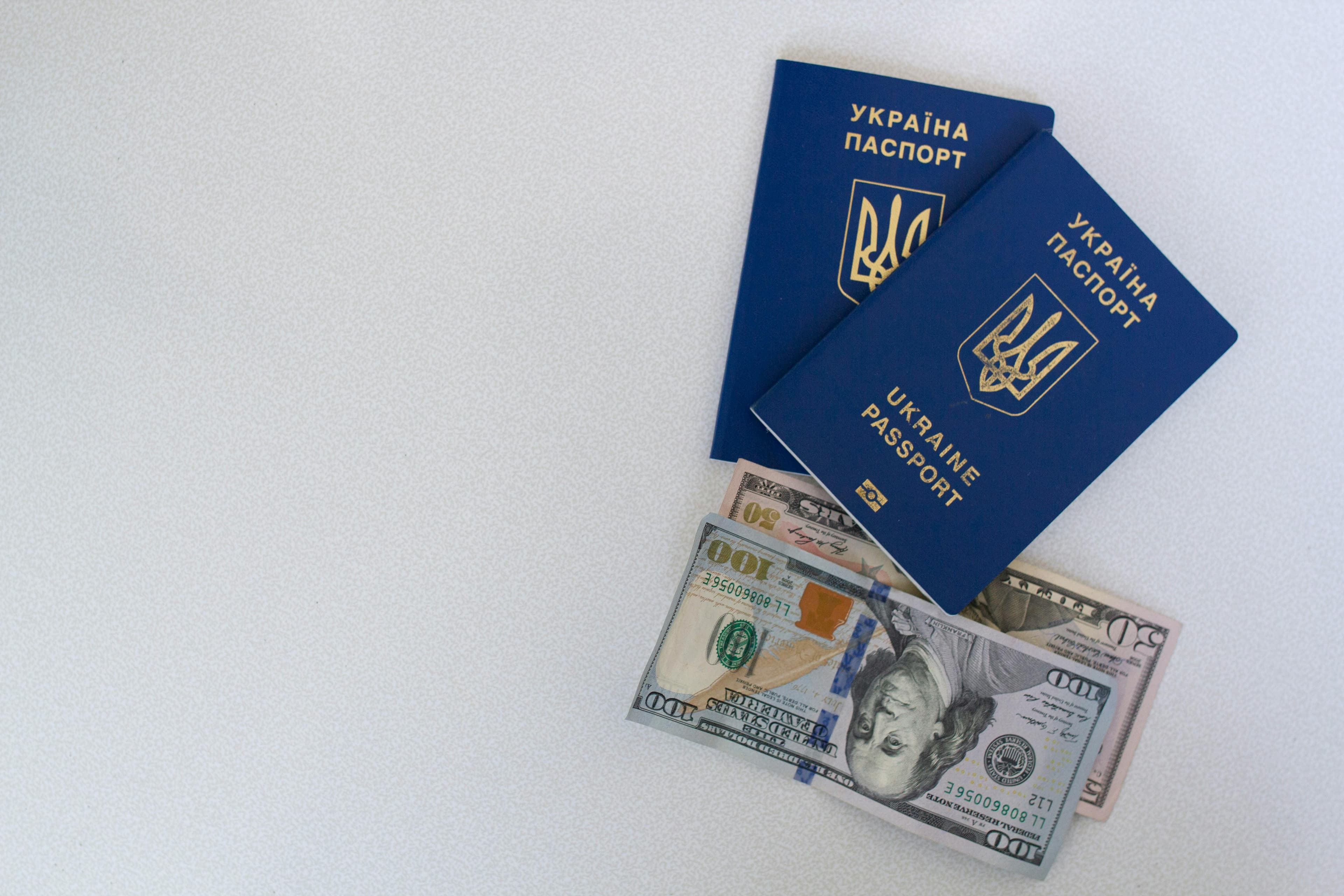
One of the most compelling advantages of choosing North Cyprus is the streamlined and accessible nature of its visa process compared to many Western countries. The system is designed to remove common barriers that often disqualify otherwise excellent students. The most significant difference is the absence of any requirement for standardized tests like IELTS, TOEFL, or SAT for admission or visa purposes. This single policy opens the door to countless students who may not have access to expensive test centers or perform well under high-pressure exam conditions.
Furthermore, the North Cyprus process does not involve a high-stakes, pre-travel visa interview at an embassy or consulate. In countries like the UK, USA, or Canada, this interview is often the final, most nerve-wracking hurdle where a visa can be denied based on the subjective judgment of an officer. In North Cyprus, the process is document-based. If you meet the academic and financial requirements and submit the correct paperwork, your entry is virtually guaranteed. This creates a much more predictable and less stressful application experience for students and their families.
| Feature | North Cyprus | UK / Canada / USA |
|---|---|---|
| English Test (IELTS/TOEFL) | Not required for admission or visa. Internal placement test on arrival. | Required, with strict minimum scores (e.g., IELTS 6.0+). |
| Pre-Travel Embassy Interview | No. The process is document-based. | Yes, a mandatory and often decisive interview is required. |
| Financial Proof Threshold | Bank statement showing tuition + approx. €3,000-€5,000 living costs. | Significantly higher. Often requires proof for the entire first year's living costs (e.g., CAD $20,635 in Canada). |
| Processing Time | 2-4 weeks for university visa pre-approval letter. | 4-12+ weeks for embassy visa decision after university acceptance. |
| Admission Basis | Primarily based on High School / Bachelor's transcript. | Holistic review including transcripts, standardized tests (SAT/ACT), essays, and interviews. |
Common Pitfalls and How to Ensure a Smooth Application
The vast majority of visa-related issues stem from simple, avoidable errors in the documentation. A single missing stamp, an expired document, or an incomplete form can cause significant delays or even lead to a refusal to issue the visa letter. By being aware of the most common mistakes, you can proactively ensure your application is flawless.
Top 5 Visa Application Mistakes to Avoid
Unattested or Incorrectly Attested Documents
Forgetting to get academic transcripts and certificates stamped by the required ministries (Education, Foreign Affairs) is the most frequent error. Check the specific attestation rules for your country.
Insufficient or Poorly Presented Financial Proof
Submitting a bank statement that is too old, doesn't meet the minimum required balance, or is from an unverified financial institution can lead to rejection. Ensure the statement is official and clear.
Expired Passport or Short Validity
Immigration rules require your passport to be valid for an extended period beyond your entry date, typically at least two years. A passport nearing its expiry date will not be accepted.
Name Mismatches Across Documents
The name on your international passport must exactly match the name on your academic records, bank statements, and all other supporting documents. Even minor variations can cause problems.
Missing University Deadlines
Universities have firm deadlines for receiving documents for the Fall (September) and Spring (February) intakes. Submitting your documents late may mean you have to defer your admission to the next semester.
The Final Step: From Visa Letter to Student Residence Permit
Once your university has approved all your submitted documents, they will issue the official visa pre-approval letter. You will use this letter, along with your passport and original documents, to board your flight and present to the immigration officer upon arrival at Ercan Airport (ECN) in North Cyprus. The officer will grant you an entry visa, typically valid for 30 or 60 days.
This initial entry stamp is temporary. Within this 30-60 day window, you must complete your university registration and begin the process of applying for your Student Residence Permit. Your university's international office will guide you through this. It involves an online application, a local health check, and submitting your original documents to the district immigration office. Once approved, you will receive a permit that is valid for one year, renewable annually for the duration of your studies.
This entire process culminates in you becoming a fully registered student on a path to a globally valuable degree. A key benefit of graduating from a North Cyprus university is that your diploma is issued with the EU Diploma Supplement. This document makes your degree easily understandable and accepted by employers and universities across Europe, facilitating mobility within the Bologna Process framework. This, combined with the aforementioned YÖK accreditation in Turkey, provides graduates with a powerful combination of recognition, opening doors for careers or further studies in Europe, Turkey, and beyond. You can explore the wide range of available programs that offer this distinct advantage.
Frequently Asked Questions
Ready to Start Your Journey to North Cyprus?
Don't let paperwork stand in your way. Our expert advisors can guide you through the entire process, from choosing a university to preparing your student visa documents.